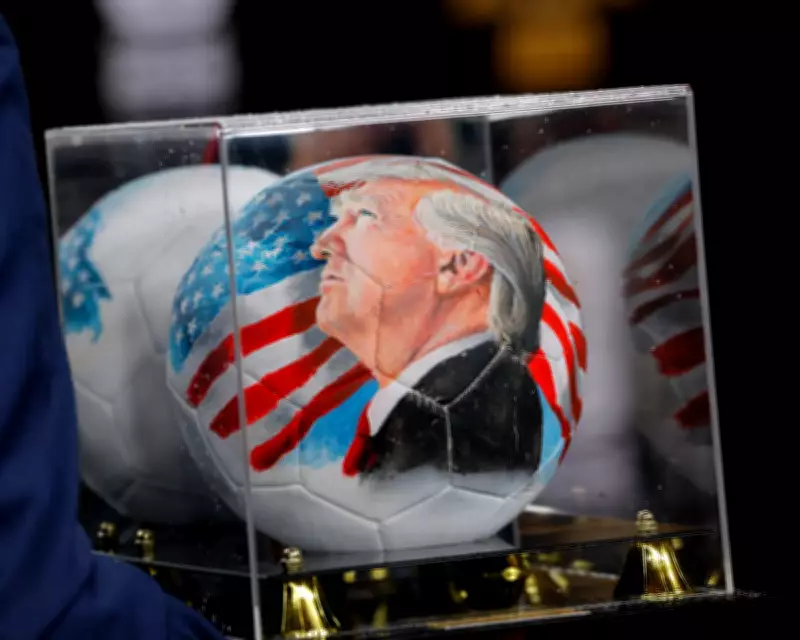
Germany's Football Federation Stands Firm Against World Cup Boycott Calls
In a significant statement addressing growing political tensions, Germany's football federation (DFB) has categorically ruled out any boycott of the upcoming 2026 FIFA World Cup. This decision comes despite internal calls from within German football circles to make a political statement against US President Donald Trump's recent international actions.
Unifying Power of Sport Takes Priority
The DFB released an official statement emphasising their commitment to football's global unifying potential. "We believe in the unifying power of sport and the global impact that a FIFA World Cup can have," the federation declared. "Our goal is to strengthen this positive force – not to prevent it."
This position directly counters proposals first raised last week by DFB vice-president Oke Göttlich, who also serves as president of Bundesliga club St Pauli. Göttlich had suggested that Germany should "seriously consider" boycotting the tournament in response to Trump's recent international policies and statements.
Internal Debate Versus Public Statements
In what appears to be a public rebuke to Göttlich's position, the DFB stressed that "debates on sports policy should be conducted internally and not in public." The federation confirmed that their executive committee had thoroughly discussed the boycott option during recent meetings but concluded it was not a viable course of action.
"A boycott is not currently under consideration," the DFB stated definitively. "The DFB is in contact with representatives from politics, security, business, and sports in preparation for the tournament."
Broader Political Context
The boycott discussion emerges against a backdrop of increasing European concern about Trump's foreign policy approach. Recent controversies include:
- The US president's attempted takeover bid for Greenland
- Threats to impose tariffs on European countries opposing his policies
- American actions in Venezuela
- The handling of domestic protests in US cities
These developments have created diplomatic tensions that have spilled into the sporting world, with former FIFA president Sepp Blatter recently advising fans to avoid the tournament entirely.
German Football Community Responds
Within Germany's football community, reactions to the political situation have been mixed. Bayern Munich midfielder and Germany international Leon Goretzka expressed that Trump's actions have reinforced his European identity, stating they made him feel "not only German but also European."
Meanwhile, the DFB headquarters in Frankfurt remains focused on tournament preparation, with the federation emphasising their desire for Germany to compete fairly against other qualified teams next summer.
International Perspective
France has taken a similar position to Germany, with French sports minister Marina Ferrari stating: "As it stands now, there is no desire from the ministry for a boycott of this great competition." Ferrari added that she believes in keeping sport separate from politics, describing the World Cup as "an extremely important moment for those who love sport."
Practical Tournament Concerns
Beyond political considerations, practical issues could affect the 2026 tournament experience:
- High ticket prices have already raised concerns among supporters
- Travel restrictions imposed by the Trump administration might prevent fans from certain competing nations from attending
- Logistical challenges of a tournament spread across three host countries
Germany's World Cup Ambitions
Despite the political backdrop, Germany's national team remains focused on their footballing objectives. The four-time World Cup champions will face Curaçao in Houston, Côte d'Ivoire in Toronto, and Ecuador in New Jersey during the group stage.
The DFB expressed hope that "fans worldwide will celebrate a peaceful festival of football in the stadiums and at fan zones" similar to the atmosphere experienced during the 2024 European Championship hosted in Germany.
As political tensions continue to simmer, Germany's football authorities have drawn a clear line between sporting competition and international diplomacy, choosing to prioritise football's traditional role as a unifying global force over making political statements through tournament boycotts.