The Day That Changed Everything: Guardiola's Arrival in English Football
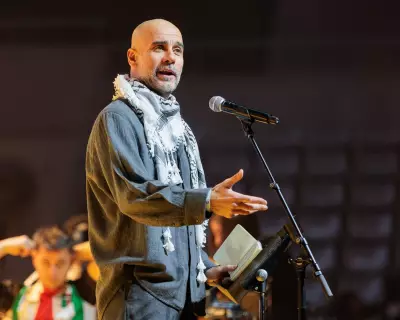
Ten years ago, a simple press release from Manchester City announced what would become the most transformative appointment in English football history. On 1 February 2016, the club revealed that Pep Guardiola would become their manager the following summer, setting in motion a tactical revolution that would reshape the national game from top to bottom.
A Humble Beginning With Revolutionary Ambitions
Guardiola's first Premier League season offered little indication of the dominance that would follow. Arriving with a glittering reputation from Barcelona and Bayern Munich, where he had won six league titles and two Champions League trophies, his initial campaign in England proved unexpectedly challenging. Manchester City suffered heavy defeats including a 4-2 loss to Leicester and a 4-0 humiliation at Everton, while experiencing Champions League disappointments against Barcelona and Monaco.
These early struggles prompted scepticism from traditionalists who questioned whether Guardiola's possession-based philosophy could succeed in England's more physical football environment. The manager's response to criticism about his team's tackling statistics after the Leicester defeat became emblematic of his approach. "I'm not a coach for the tackles," he declared, "It's another aspect of football but in the end we're not going to win or lose for the tackles."
The Tactical Transformation Takes Hold
What followed was nothing short of a footballing revolution. Guardiola's second season brought Manchester City's first Premier League title under his leadership, achieved with a record 100 points. Over the subsequent decade, his team would claim six Premier League championships while fundamentally altering how English football is played at every level.
The transformation has been comprehensive:
- Goalkeepers and defenders now routinely build play from the back, even in lower divisions
- Full-backs have evolved into midfield creators rather than traditional defenders
- Positional rotation and false nines have become standard tactical tools
- Even smaller clubs have adopted more progressive, attacking approaches
Jordi Cruyff's 2016 prediction that English football would adapt to Guardiola's methods rather than the reverse has proven remarkably prescient. "If you look at the Premier League nowadays," he recently observed, "you see a lot of teams playing from the back, taking all kinds of risks... Even smaller clubs that historically had a different way of playing are more open, [commit to] crazy attacks and just go for it."
An Unlikely Footballing Bromance
Perhaps the most surprising development of Guardiola's decade in England has been his relationship with Neil Warnock, the veteran manager renowned for his commitment to direct, physical football. The 77-year-old has become a regular visitor to Manchester City's training ground, with Guardiola even inviting him to address players including Kevin De Bruyne and Erling Haaland.
Warnock's admiration for Guardiola is unequivocal: "He's been the best manager in my lifetime, the most influential... I've never seen anything like his intensity." For his part, Guardiola values Warnock's traditional approach and humour, lamenting the modern game's focus on data and statistics at the expense of personal connection.
Adaptation and Evolution
While Guardiola has transformed English football, he has also adapted his own approach. The signing of goalkeeper Ederson provided a long-passing option to bypass opposition presses, while the incorporation of more physically dominant players like Erling Haaland demonstrates tactical flexibility. The manager's willingness to play four centre-halves in defence during the 2022-23 season acknowledged football's increasing physical demands.
Yet recent seasons have seen something of a tactical counter-revolution, with set pieces, long throws and direct football proving effective against possession-based teams. Warnock expresses bafflement that it took coaches so long to realise that attempting to out-pass Guardiola's teams played directly into their strengths.
The Legacy and Future
As Guardiola approaches what might be his final years in English football, his influence is undeniable. From grassroots coaching to Premier League tactics, his philosophy has permeated every level of the game. Warnock believes the manager will follow Sir Alex Ferguson's example, seeking to prove his supremacy one more time before concluding his remarkable tenure.
The past decade has witnessed English football's complete transformation under Guardiola's guidance. What began as scepticism about whether his methods could succeed in England has evolved into wholesale adoption of his principles across the footballing landscape. As the tactical revolution continues to unfold, Guardiola's legacy as the most influential manager in modern English football history appears secure.