Hockey's Unlikely American Renaissance
Hockey, that most impish of sports where beefy individuals in colorful sweaters chase a tiny puck on ice skates, is having a strange American moment. What was once considered a niche sport dominated by Canadian influence has suddenly found itself at the center of cultural conversations spanning from LGBTQ+ representation to White House politics.
The Heated Rivalry Phenomenon
HBO Max's series Heated Rivalry has become an absolute cultural phenomenon, enthralling American audiences despite multiple factors that might normally limit its appeal. The show features two hockey players from opposing teams who fall in love, blending erotic scenarios with the sport's traditional physicality. Remarkably, this gay romance about one of America's less popular major team sports has become a major hit, doing significant work for healthy LGBTQ+ representation in mainstream media.
The series presents hockey as the perfect vehicle for exploring tender, sensitive versions of hypermasculine sports ideals. Hockey uniquely combines twee elements like skating with traditionally macho aspects like punching, creating what some have called a "peanut-butter-and-chocolate sport" that can appeal to different audiences depending on perspective. To conservatives, it represents frozen gladiator warfare; to liberals, it offers a cute Canadian singles mixer with progressive themes.

Olympic Triumphs and Political Theater
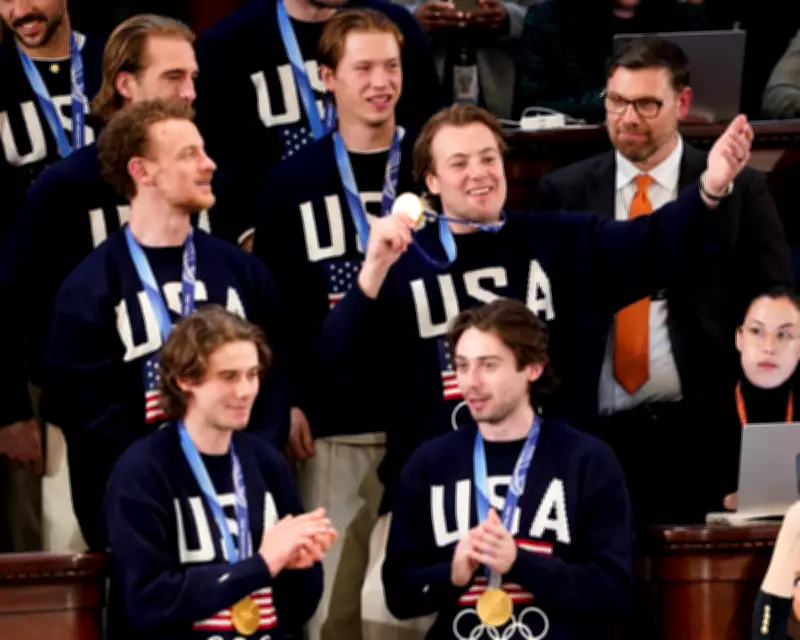
The 2026 Winter Olympics provided real-world drama to match the fictional narratives. Both American men's and women's hockey teams defeated Canada in thrilling 2-1 victories, achieving what some called "true gender equality" in sports achievement. However, these athletic accomplishments quickly became entangled with political theater.
FBI Director Kash Patel chartered a Bureau private jet to celebrate with the triumphant men's team, with photos and videos of him spraying alcohol on gold medal winners going viral immediately. During the celebration, Patel put former President Donald Trump on speakerphone, who invited both teams to the White House while joking about potential impeachment if he didn't include the women's team.
The political spectacle continued with the men's team appearing at the State of the Union address and White House social media accounts posting AI-generated videos taunting Canada and inserting Trump into game footage. American player Brady Tkachuk, who plays professionally for Ottawa in Canada, expressed discomfort with videos depicting him slandering his host country, potentially threatening sponsorship opportunities.
Culture War Battleground
Jingoism in sports is hardly new, particularly during Olympics where national pride becomes central to the event. Politicians routinely use athletic achievements to advance both national image and their own political agendas. However, hockey's current moment represents something more complex—a sport being pulled between progressive cultural representation and conservative political appropriation.
The US women's team declined the White House invitation citing scheduling conflicts, while rapper Flavor Flav offered to host an alternate celebration. This divergence highlights how athletes navigate being used as "political props" in America's ongoing culture wars. Despite athletes' desires to distance themselves from political manipulation, public figures increasingly become tools in the game of cultural politics.
The Niche Sport's Uncertain Future
As the Heated Rivalry craze eventually subsides and White House attention shifts to other matters, hockey will likely return to its status as a niche sport in America. Yet this moment reveals how even relatively minor sports can become flashpoints in broader cultural conflicts. The sport's dual nature—both violent and graceful, traditional and progressive—makes it particularly susceptible to being weaponized in political discourse.
Athletes, celebrities, and public figures have become equipment in what some describe as "the game of life in 2026," a contest with more losers than winners. Hockey's current American moment serves as a microcosm of how sports intersect with representation, politics, and cultural identity in contemporary society, demonstrating that no arena remains untouched by America's persistent culture wars.