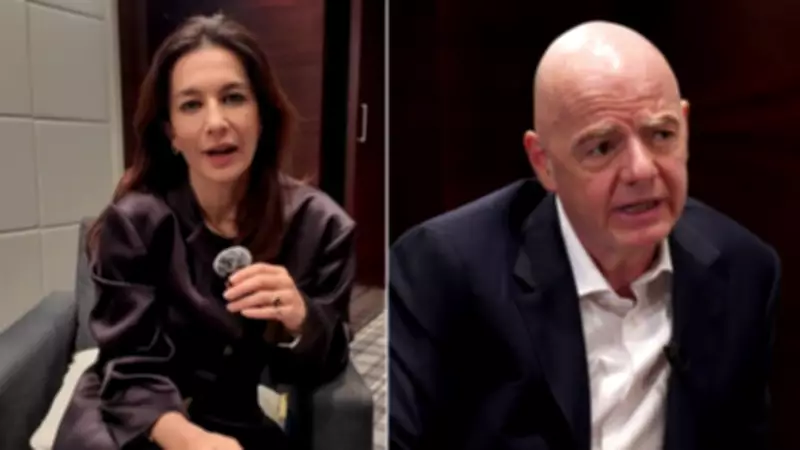
FIFA President Issues Apology Over Controversial British Fans Remark
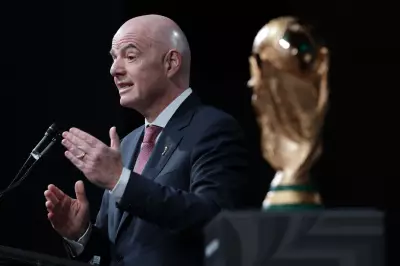
Gianni Infantino, the president of world football's governing body FIFA, has formally apologised to British football supporters following a joke that sparked significant backlash across the United Kingdom. The controversial comment was made during the World Economic Forum in Davos last month, where Infantino quipped: "For the first time in history... no Brit was arrested during a World Cup. Imagine! This is something really really special."
Clarifying Intentions and Addressing Criticism
In an extensive interview with The World with Yalda Hakim, Infantino explained that his remarks were intended as light-hearted commentary meant to highlight the peaceful nature of the 2022 Qatar World Cup. "It was meant to be more of a light-hearted remark," he stated, emphasising that the tournament represented "a celebration" and "a peaceful event."
The FIFA president specifically apologised to fans from Scotland, Wales, and Northern Ireland, acknowledging that offending them was "not my intention." He went further to clarify his position on English football, stating: "I'm a huge fan of English football," while distinguishing between genuine supporters and those who engage in violence, whom he referred to as "criminals" rather than fans.
Defending the Controversial Peace Prize Decision
Infantino faced additional scrutiny over FIFA's decision to award its newly established peace prize to former US President Donald Trump. Despite recognising the "strong reaction" to this decision, the FIFA president firmly defended the choice, asserting that Trump "objectively, he deserves it."
He elaborated on FIFA's philosophy, stating that the organisation's slogan - football unites the world - "goes hand in hand with peace." Infantino highlighted Trump's role in conflict resolution, noting that "he was instrumental in resolving conflicts and saving lives and saving thousands of lives." He also referenced praise from Venezuelan opposition leader Ms Machado and mentioned that a Nobel Peace Prize winner had supported this view.
Opposition to Football Bans and Boycotts
The FIFA president took a strong stance against banning countries from international football competitions. When questioned about potentially lifting the ban on Russia - imposed by FIFA and UEFA in 2022 following the invasion of Ukraine - Infantino was unequivocal: "We have to. Definitely."
He argued that the ban "has not achieved anything, it has just created more frustration and hatred." Infantino suggested that "having girls and boys from Russia being able to play football games in other parts of Europe would help" foster better relations.
Similarly, he opposed any ban on Israel, describing such measures as "a defeat." The FIFA boss proposed that the organisation should consider changing its rules to "enshrine in our statutes that we should actually never ban any country from playing football because of the acts of their political leaders."
Engagement Over Confrontation in Women's Football Development
Infantino discussed FIFA's approach to developing women's football in challenging environments, emphasising engagement over confrontation. He explained how progress has been achieved in countries like Iran and North Korea through persistent dialogue rather than threats or sanctions.
"These are things that take years," he noted, "and you don't achieve this with threats or sanctions. You achieve this by engaging." In Iran, he described how multiple meetings with officials led to women being allowed into stadiums after being banned since the 1979 revolution.
The FIFA president also highlighted efforts to support Afghan women footballers following the Taliban's return to power, with some players receiving assistance to train in the UK. "Ultimately, we managed to, not just to help get these girls and women out and help them to have a new life, but also to give them a real purpose in football," he stated.
Infantino concluded by emphasising FIFA's role in fostering connections through football, particularly in a divided world. "I think, in our divided world, in our aggressive world, we need occasions where people can come, can meet around the passion [for football]," he said, reinforcing his opposition to boycotts of major tournaments like the 2026 US World Cup.