FIFA President Issues Apology to British Supporters Over Qatar Remarks
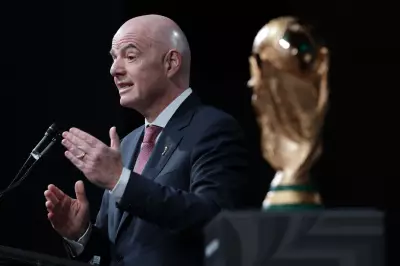
Gianni Infantino, the president of FIFA, has formally apologised for comments he made regarding British football fans during last year's World Cup in Qatar. The remarks, originally delivered at the World Economic Forum in Davos, suggested the tournament was special because "for the first time in history no Brit was arrested."
This statement drew sharp criticism from the Football Supporters' Association, which labelled it a "cheap" joke, and from UK football policing lead Chief Constable Mark Roberts, who called it "neither helpful nor accurate." In response, Infantino told Sky News that his intention was to highlight the peaceful nature of the event, acknowledging it was meant as a lighthearted observation.
Defending the Controversial FIFA Peace Prize for Donald Trump
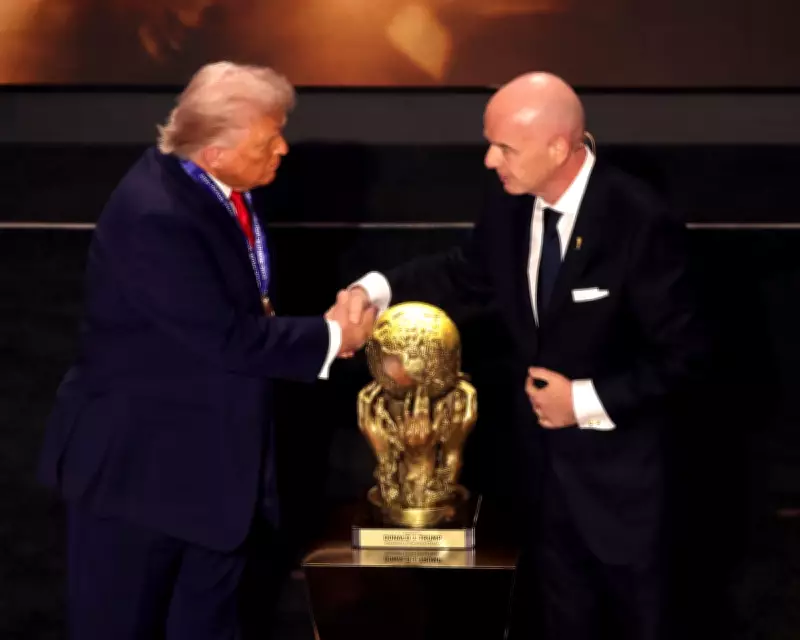
In the same interview, Infantino robustly defended FIFA's decision to award its inaugural peace prize to former United States President Donald Trump. The presentation took place during December's World Cup draw in Washington DC, a move that faced significant backlash given Trump's controversial policies and actions, including threats involving military force in Greenland and the seizure of Venezuelan president Miguel Maduro.
When questioned about the award, Infantino stated unequivocally, "Objectively, he deserves it." He elaborated by pointing to Trump's role in brokering a ceasefire between Israel and Hamas, arguing that this intervention was instrumental in resolving conflicts and saving thousands of lives. This defence comes amidst ongoing scrutiny of FIFA's alignment with political figures and its broader mission to promote peace through sport.
Potential Readmission of Russia into International Football
Shifting focus to geopolitical issues in football, Infantino indicated that FIFA and UEFA must reconsider the ban on Russia from international competitions. The ban has been in place since Russia's invasion of Ukraine in 2022, but with the International Olympic Committee now recommending that Russian teams be allowed to compete at youth levels, Infantino sees an opportunity for change.
He argued that the current ban has not achieved its intended goals, instead fostering more frustration and hatred. Infantino suggested that allowing Russian youth teams to participate in European football matches could help bridge divides and promote understanding. This stance aligns with FIFA's recent announcement of new U-15 festivals open to all member associations, including Russia, scheduled for boys in 2025 and girls in 2027.
Dismissing Boycott Concerns Over Upcoming World Cup
Addressing potential boycotts of future tournaments, Infantino dismissed the notion that there might be protests against this summer's World Cup due to policies of the Trump administration. He highlighted unrest in US cities over immigration enforcement and concerns among European allies but maintained that football should remain a unifying force.
Infantino questioned why football alone should face boycotts when businesses do not, emphasising that in today's divided world, events like the World Cup provide crucial opportunities for people to come together around their shared passion for the sport. This perspective underscores FIFA's commitment to keeping politics separate from the game, even as it navigates complex international relations.