Iranian Women's Football Team Faces Dire Consequences Over National Anthem Silence
Uncertainty and fear surround the Iranian women's football team as they face potential severe repercussions upon returning home from the Asian Cup in Australia. The players have been criticized in Iranian media for refusing to sing their national anthem during a match, sparking international calls for their protection.
Growing Safety Concerns and International Pressure
The Australian government and football authorities are being urged to ensure the team's safety after reports emerged that the players could "face dire consequences" in Iran. This follows their silent protest during the national anthem before their match against South Korea last week, which Iranian state media condemned as the "pinnacle of dishonor."
Mohammad Reza Shahbazi, a presenter on Islamic Republic of Iran Broadcasting, stated that "traitors during wartime must be dealt with more severely," according to Reuters. While some interpreted the team's silence as an act of resistance against the regime, others viewed it as mourning following recent US-Israel joint attacks on Iran.

Team's Subsequent Actions and Mounting Tensions
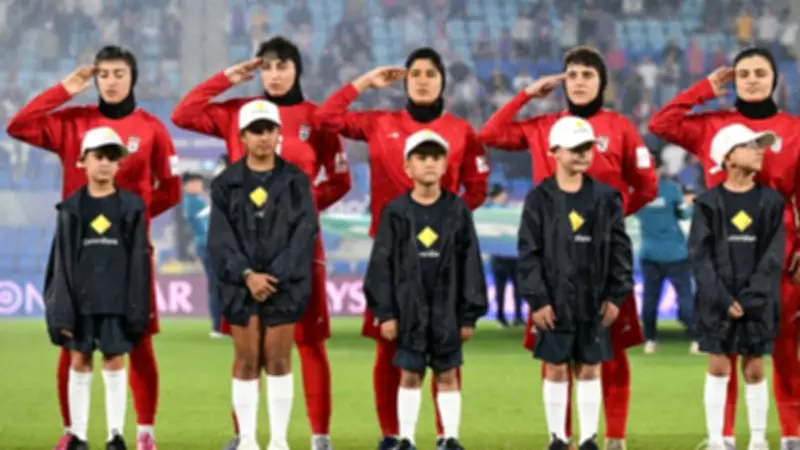
The team has not publicly commented on their stance, but they later sang and saluted the national anthem before matches against Australia and the Philippines. This reversal has raised concerns that they were coerced into compliance under pressure from Iranian authorities.
After failing to progress beyond the group stages of the tournament, the team's situation became more precarious. FIFPRO, the global players' union, expressed being "really concerned" about the players' welfare and reported difficulties in contacting them directly.
Public Demonstrations and Distress Signals
Following Sunday's match against the Philippines on the Gold Coast, dozens of supporters surrounded the team bus, chanting "let them go" and "save our girls." Police and security teams intervened to create a safe passage for the bus to depart the stadium.
Disturbingly, supporters reported seeing at least three players on the bus making the international hand signal for help, as confirmed by CNN. This visible distress has amplified fears for their safety upon returning to Iran.
Political Figures and Advocacy Efforts
Iran's exiled crown prince, Reza Pahlavi, has publicly stated that the team faces an "ongoing threat" following their "brave act" of civil disobedience. On social media, he emphasized that the players are under "significant pressure" from the Islamic Republic and called on the Australian government to provide safety and support.
The Australian Iranian Council has contacted Australia's government, urging protection for the squad members during their stay. They have also launched an online petition demanding that no team member depart Australia while credible safety fears persist.
Government Response and International Solidarity
Australian Foreign Minister Penny Wong declined to comment on whether the government had made direct contact with individuals but acknowledged the emotional impact of seeing the Iranian team in Australia. She noted the "evocative moment" when Australia's women's team swapped jerseys with them and condemned the Iranian regime's brutal oppression of women.
The situation highlights the intersection of sports, politics, and human rights, with the team's silent protest resonating globally as a symbol of resistance against oppression.