John Roberts, a revered football and tennis writer who passed away last Wednesday at the age of 84, left an indelible mark on British sports journalism. His career spanned major publications including the Guardian, Daily Express, and Independent, where he was instrumental in reshaping sports coverage with a blend of traditional reporting and sharp news instincts.
A Legacy of Rigorous Reporting
In the late 20th century, John Roberts brought a transformative approach to the Guardian's sports desk. Hailing from a background at the Daily Express, where he worked for nearly two decades, Roberts infused the Guardian with the rigorous news-gathering techniques characteristic of popular newspapers of that era. This fusion of hot news pursuit with the paper's established virtues made him a pivotal figure in evolving Guardian sport into a more professional and dynamic section.
Unparalleled Connections and Storytelling
Roberts was renowned for his extensive network within the sports world. His son Chris recently discovered his father's old contacts book, which read like a who's who of sporting legends, alongside numbers for friends and colleagues. This resource underscored Roberts' ability to secure exclusive stories, such as when he once made a lengthy phone call from a quiet corner of the office to uncover the full details of a breaking news item, leaving colleagues in awe.

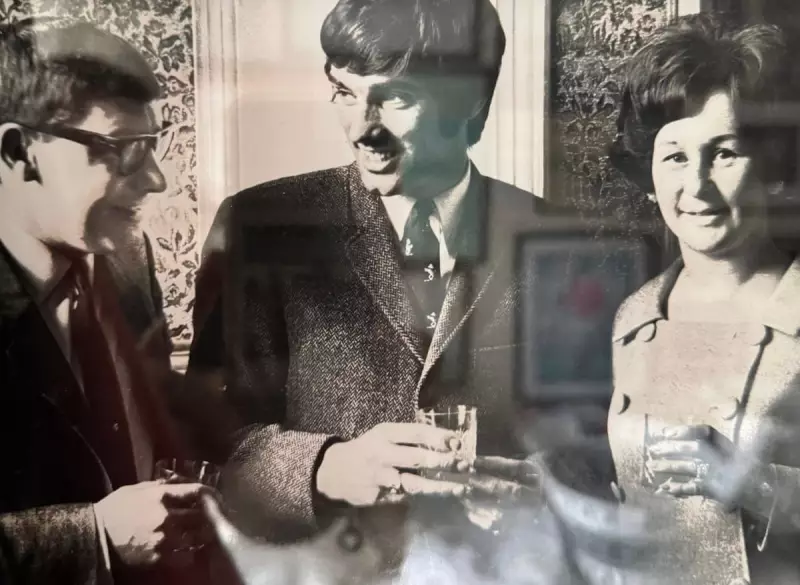
Born in Stockport in 1941, Roberts began his journalism career at the Stockport Express at just 15, becoming sports editor by 19. At 21, he joined the Daily Express in Manchester, later taking up a post in Belfast. This move proved fortuitous, as he met and married his wife Phyllis, with whom he shared 58 years, and befriended the iconic Ulsterman footballer George Best.
Collaboration with George Best
Roberts' friendship with George Best led to his role as ghostwriter for Best's autobiography. However, this collaboration came during a tumultuous period in Best's life, with Roberts often grappling with uncertainty over the footballer's whereabouts and activities. Despite the challenges, this partnership highlighted Roberts' deep involvement in the sports community and his skill in capturing complex narratives.
Transition to Tennis and Lasting Impact
After growing disenchanted with football, Roberts switched to the Daily Mail and later became the tennis correspondent for the Independent in 1986, a position he held for 20 years until retirement. He thrived on the tennis circuit, earning admiration for his storytelling and meticulous prose. Colleagues, such as the Guardian's Steve Bierley, praised him for never speaking ill of anyone and for his engaging anecdotes.
Roberts' writing was celebrated for its precision, though it sometimes tested subeditors under tight deadlines. He represented a vanishing breed of journalists who, without university education, communicated with exceptional clarity and insight. His travels took him worldwide, yet he remained rooted near Stockport, eschewing fancy foods for a simpler life.
Enduring Contributions and Family
John Roberts is survived by his wife Phyllis, their children Chris, Leanne, and Gerard, and four grandchildren. His legacy includes several books, notably The Team That Wouldn't Die, a definitive account of Manchester United after the Munich air crash, and memorable quotes like describing Kevin Keegan as "not fit to lace George Best's drinks."
Forty-five years after his departure from the Guardian, Roberts' influence endures, having sharpened and professionalised the paper's sports coverage. His dedication to storytelling and news excellence continues to inspire journalists across the UK.