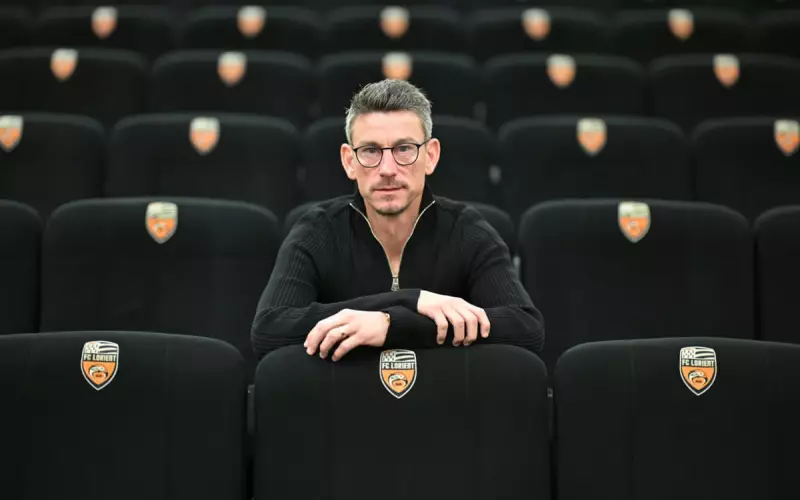
Returning to the coastal town of Lorient was a natural homecoming for Laurent Koscielny. The former Arsenal and France defender, who first left the club for North London in 2010, is now spearheading its future as sporting director.
"My wife and I were keen to come back, it's a beautiful region, and the people are welcoming and kind," Koscielny says of the Breton area, famed for its Celtic music festival and naval history.
From the Pitch to the Boardroom
After a difficult end to his playing days at Bordeaux, Koscielny's journey back to Lorient began with a role coaching the youth teams. His path shifted dramatically when Les Merlus were relegated in 2024, prompting his move into upper management.

"The challenge was to return to Ligue 1 the next season for the club's centenary year," he explains. The mission was a resounding success, with the club winning promotion straight back to the top flight as champions.
While he initially explored various career paths, including coaching and sports management courses, the 40-year-old has found his calling. "As sporting director, I get to have a relationship with everyone at the club," he says. "I really have an overall view of things, whether it's finances, marketing, or what happens on the pitch."
A Model of Sustainability and Smart Partnerships
Koscielny repeatedly emphasises pérennité – sustainability – as the core of his philosophy. "It's good to be ambitious, it's even better to be grounded," he states, pointing to the cautious, successful model of neighbours Stade Brestois, whose own remarkable rise led to Champions League football.
He acknowledges the tough financial climate in French football, worsened by broadcasting rights crises. "I've arrived during a difficult period for French football," he admits. "It does allow us to get back to what we're good at, though. When you have money, you want to spend it."
A key strategic relationship is with Bournemouth owner Bill Foley, who is set to become the majority shareholder. Koscielny sees clear parallels. "We're both in seaside towns, with stadiums on the smaller side, and we develop young players," he notes, while cautioning against a simple copy-paste approach.
This summer, he nearly pulled off a major coup, attempting to lure his former Arsenal teammate Olivier Giroud back to France. "I tried to nudge him a bit to test the waters, but it didn't happen in the end," he reveals, with Giroud opting for Lille instead.
Legacy, Recruitment, and Looking Ahead
The overarching strategy remains focused on youth development. The signing of 21-year-old left-back Arsène Kouassi from Ajaccio is a prime example of this model in action.
In recruitment, Koscielny values human connection as much as data. "My questions to players are straightforward," he says. "Why did you start playing football? What are your dreams? Based on their responses, you can find out a lot about their love for football."
On the pitch, Lorient are embroiled in a relegation battle, despite some encouraging performances like a recent draw with Paris Saint-Germain. "We knew it would be a tough season," he concedes. "We're playing well but we need to rediscover that scoring touch. I'm confident in the squad and in the coaching staff."
His professional blueprint remains Arsène Wenger. "Over those 23 years, he managed to develop the club in every aspect," Koscielny states, admiring the cultural and infrastructural legacy alongside the on-pitch success.
He is unsurprised by Mikel Arteta's success at Arsenal, recalling his former teammate's considered and energetic nature. He also stays in touch with Per Mertesacker, now Arsenal's academy manager, and sees echoes of their own partnership in the current central defensive duo of Gabriel and William Saliba.

Reflecting on his own controversial 2019 departure from Arsenal, Koscielny addresses the strained relationships and the infamous kit-reveal video. "I understand the fans' reaction to the video, it wasn't my idea and I apologised afterwards," he says. "I've always respected the club and the fans. I developed as a player and as a person during my time there."
Despite the manner of his exit, his attachment to the club remains strong, a testament to nine formative years in North London.