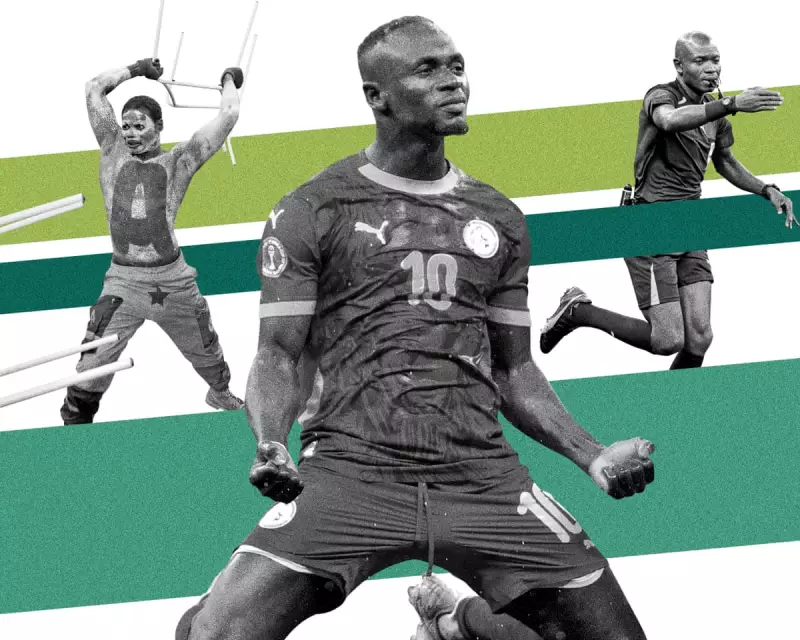
In a dramatic turn of events that threatened to overshadow the Africa Cup of Nations final, veteran forward Sadio Mané played his most crucial role yet – not as a goalscorer, but as a peacemaker and leader. His decisive intervention prevented his Senegal teammates from quitting the showpiece match in protest, averting what could have been a historic embarrassment for African football.
The Moment of Crisis: Senegal's Walk-Off Protest
The tension erupted deep into injury time during Sunday's final against hosts Morocco. With the score level and just eight minutes of added time played, the referee awarded a controversial penalty to Morocco. The decision followed a VAR review for slight contact between Senegal's El Hadji Malick Diouf and Morocco's Brahim Díaz during a corner.
This call proved the final straw for a Senegal squad already feeling aggrieved. Just minutes earlier, in the 92nd minute, they had seen a potential winning goal disallowed for what was deemed innocuous contact between Abdoulaye Seck and Achraf Hakimi. The referee's whistle blew before the ball crossed the line, preventing any VAR intervention.

Fuelled by frustration, and encouraged by coach Pape Thiaw, the Senegalese players made the extraordinary decision to walk off the pitch in protest. African football's premier event teetered on the brink of absolute chaos.
Mané's Decisive Intervention
As his teammates headed for the tunnel, Sadio Mané remained. The 33-year-old, who had confirmed this would be his final Cup of Nations appearance, sought urgent counsel from veteran French coach Claude Le Roy and former Senegal star El Hadji Diouf on the touchline.
Understanding the magnitude of the situation, Mané then sprinted down the tunnel to confront his fellow players. In a breathless post-match interview, he explained his reasoning. "I think we would be crazy not to play this game because the referee gave a penalty and so we go out," Mané stated. "I think this was going to be the worst thing in, especially, African football... I would rather lose than this kind of thing happen."
His impassioned plea worked. He successfully persuaded the squad to return to the pitch and see out the match, a decision that ultimately led to victory after Díaz's penalty was saved and Senegal triumphed.
A Broader Context of Grievance
The walk-off threat did not emerge from a single decision. Senegal had lodged an official protest with the tournament's Local Organising Committee, citing several attempts to undermine their campaign. Their complaints included:
- A lack of security upon their arrival at Rabat-Agdal train station.
- Substandard initial accommodation and training facilities.
- A severe shortage of tickets for travelling Senegalese fans.
- Repeated attempts, including by ball boys and substitutes, to steal goalkeeper Édouard Mendy's towel – a tactic previously used against Nigeria.
Furthermore, the tournament had been dogged by refereeing controversies, with Tanzania, Cameroon, and Nigeria all previously complaining that Morocco received preferential treatment from officials.
A Legacy Beyond Football
Mané's actions cemented a legacy defined by responsibility. This was his second Africa Cup of Nations triumph with Senegal, placing him in an elite club alongside legends like Roger Milla and Ahmed Hassan as a two-time winner of the tournament's best player award.
Yet his influence extends far beyond the pitch. In his hometown of Bambali, he has funded a hospital, a school providing free education, and infrastructure like electricity and wifi. This profound sense of duty was recognised by his teammates when suspended captain Kalidou Koulibaly insisted Mané join him to lift the trophy.
While Senegal now faces potential sanctions from the Confederation of African Football for their conduct, the final will be remembered for Mané's leadership in a moment of crisis. His calm prevented a catastrophic walk-off and preserved the integrity of the continent's most important football match.