Behind every successful Premier League team lies a complex web of decision-makers, with the sporting director often at its heart. This pivotal role, blending talent identification, negotiation, and long-term strategy, varies dramatically from club to club. While some organisations run like well-oiled machines, others appear mired in confusion, with the balance of power between manager and executive constantly shifting.
The Architects and the Power Players
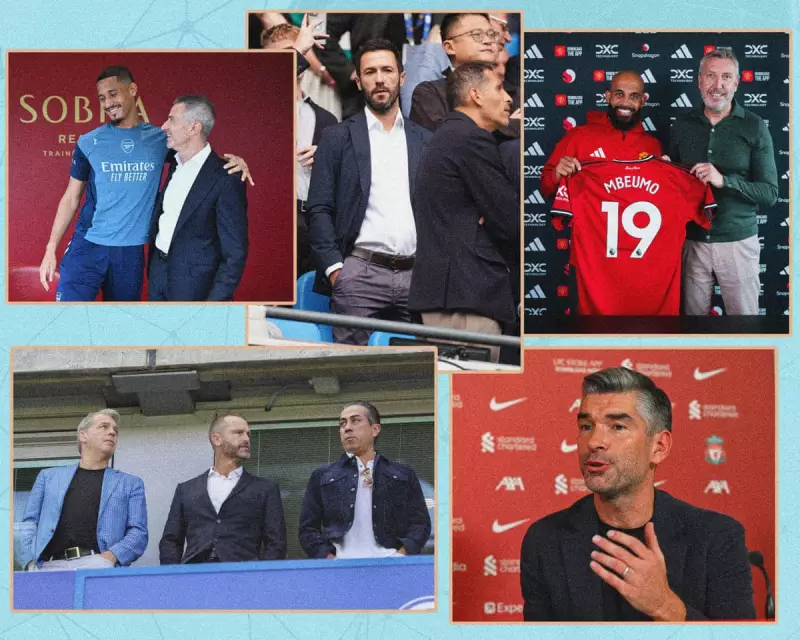
Several clubs have placed their faith in highly-regarded individuals to steer their football operations. Arsenal's appointment of Andrea Berta in March was met with fanfare, given his stellar decade at Atlético Madrid. The shrewd Italian, a former finance professional, swiftly orchestrated a summer spend exceeding £250 million on stars like Viktor Gyökeres. He works in concert with manager Mikel Arteta and CEO Richard Garlick.
At Liverpool, the dynamic duo of Michael Edwards and Richard Hughes exemplifies a trusted partnership. Hughes, appointed by his long-time friend Edwards, was instrumental in identifying and appointing successor Arne Slot after Jürgen Klopp's departure and led a record-breaking recruitment drive. His low-profile but influential style, honed at Bournemouth, is now central to Liverpool's future.

In contrast, Manchester City operates a seamless model where new sporting director Hugo Viana slotted into a best-in-class structure. Replacing the legendary Txiki Begiristain, Viana's first window—bringing in talents like Rayan Cherki and Gianluigi Donnarumma—has been hailed a success, supporting Pep Guardiola in a club built for sustained achievement.
Contrasting Models: From Committees to Chaos
The approaches across the league could not be more different. Chelsea's much-scrutinised structure features a staggering five sporting directors, a system implemented post-takeover to distribute power. Paul Winstanley and Laurence Stewart lead recruitment, supported by specialists like Joe Shields (scouting) and Sam Jewell (global recruiting), requiring head coach Liam Rosenior to navigate a crowded field.
Brentford offers a masterclass in a singular, data-driven vision. Phil Giles, the director of football since 2015 with a background in mathematics, is the architect of the club's philosophy. His absolute faith in structure was evident when he promoted set-piece coach Keith Andrews to manager after Thomas Frank's exit, continuing a tradition of internal appointments.
Meanwhile, Manchester United presents a case study in turbulence. Jason Wilcox's tenure, which began in June, has been rocky. A summer window criticised for its imbalance, followed by a very public disagreement with former manager Ruben Amorim and a farcical interim appointment process, has placed his role under intense scrutiny.
Managerial Influence and Restructured Operations
At some clubs, the manager remains the undisputed kingmaker. Unai Emery holds supreme authority at Aston Villa, with his appointment of former teammate Roberto Olabe as president of football operations solidifying his control. Similarly, Eddie Howe wields considerable power at Newcastle, a factor in the short tenures of previous sporting directors. The club now hopes Ross Wilson, appointed in October after success at Nottingham Forest, can bring stability and emotional intelligence to the role.
Other clubs have recently overhauled their models. Everton, under new CEO Angus Kinnear, dismantled the director of football position, arguing the responsibilities were too vast for one person. They now operate a football leadership team featuring Nick Cox (technical director) and James Smith (director of scouting), with manager David Moyes retaining final transfer say.

Brighton also saw change, appointing Jason Ayto as sporting director in September after his interim stint at Arsenal. He now oversees all football areas, balancing the club's famed data-driven recruitment with player performance, working alongside technical director Mike Cave.
The landscape of Premier League leadership is diverse and decisive. From the smooth planning of Brentford and Manchester City to the multi-headed hydra of Chelsea and the evident struggles at Manchester United, the sporting director's influence—or lack thereof—continues to shape the fortunes, ambitions, and very identities of England's top football clubs.