The United Strand: How a Haircut Pledge Became Football's Viral Phenomenon
In an era where football narratives increasingly revolve around digital content rather than on-pitch results, the curious case of Frank Ilett—now famously known as "The United Strand"—has captured the imagination of fans and media alike. What began as a personal vow in October 2024 has evolved into a cultural touchstone, exposing the intricate relationship between modern football and the attention economy.
The Viral Pledge That Captured Football's Imagination
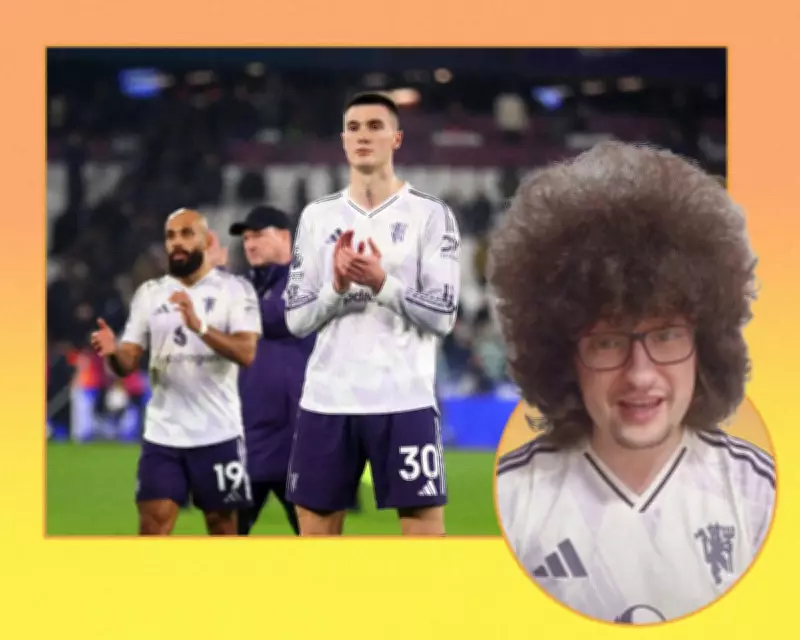
Ilett, a lifelong Manchester United supporter, made a seemingly simple commitment: he would not cut his hair until his beloved team secured five consecutive victories across all competitions. This personal challenge quickly transcended fan forums and social media circles, becoming a mainstream media spectacle that overshadowed actual football matches. During United's 1-1 Premier League draw against West Ham at the London Stadium, the "Haircut Game" became less about the football and more about whether Ilett would finally visit a barber.
The phenomenon reached astonishing proportions when a quarter of a million viewers tuned into a live stream on Kick to watch Ilett watching United play. As the team struggled on the pitch, Ilett's hair grew longer, his Instagram following expanded exponentially, and corporate interest surged. Brands recognized the marketing potential, with Argos even announcing an official partnership, promising to deliver trimmers and styling products once the "curse" was broken.

Football's Shifting Priorities: Content Over Competition
What makes Ilett's story particularly revealing is how it reflects broader changes in football's ecosystem. Players themselves have acknowledged the phenomenon, with Matheus Cunha discussing "the pressure of the haircut" in United's dressing room—a phrase that has entered football's lexicon alongside traditional concerns like "the weight of the shirt." This linguistic shift underscores how peripheral narratives can become central to football discourse.
The deeper question raised by this viral saga concerns football's fundamental purpose. In an age dominated by algorithms and attention metrics, does winning and losing football matches remain the sport's primary focus? Or has football evolved into an entertainment product where generating content and capturing attention matter as much as—or perhaps more than—competitive success?
The Content Economy's Influence on Modern Football
Ilett's transformation from anonymous fan to content creator with talent agency representation and multiple endorsements illustrates football's new reality. The spectacle of United's struggles has created opportunities for various satellite characters, from social media personalities to content creators, all benefiting from the team's performance issues. As Liverpool manager Arne Slot recently emphasized Champions League qualification for financial rather than competitive reasons, it becomes clear that modern football clubs increasingly function as content generation machines.
This phenomenon extends beyond Manchester United. Across sports, we see examples where attention and content creation sometimes outweigh athletic achievement. From influencer boxers to social media-focused athletes, the lines between sport and entertainment continue to blur. India's cricket dominance persists regardless of match outcomes, while clubs like Wrexham generate immense interest irrespective of their league position.
A Mirror to Our Digital Age
Critics might dismiss Ilett as merely capitalizing on United's misfortunes, but his story reflects broader societal shifts. In a world where social media algorithms dictate visibility and success, individuals navigate digital landscapes using whatever tools available. Ilett's "shameless grift," as some might characterize it, represents one adaptation to this new reality—a reality where everyone from global celebrities to ordinary fans competes for attention in the same digital space.

The United haircut saga ultimately serves as a revealing mirror to contemporary football culture. It demonstrates how personal narratives can eclipse sporting events, how brands capitalize on viral moments, and how the attention economy reshapes traditional sports fandom. As football continues evolving in the digital age, the tension between competitive purity and content generation will likely define the sport's future direction more than any single match result ever could.