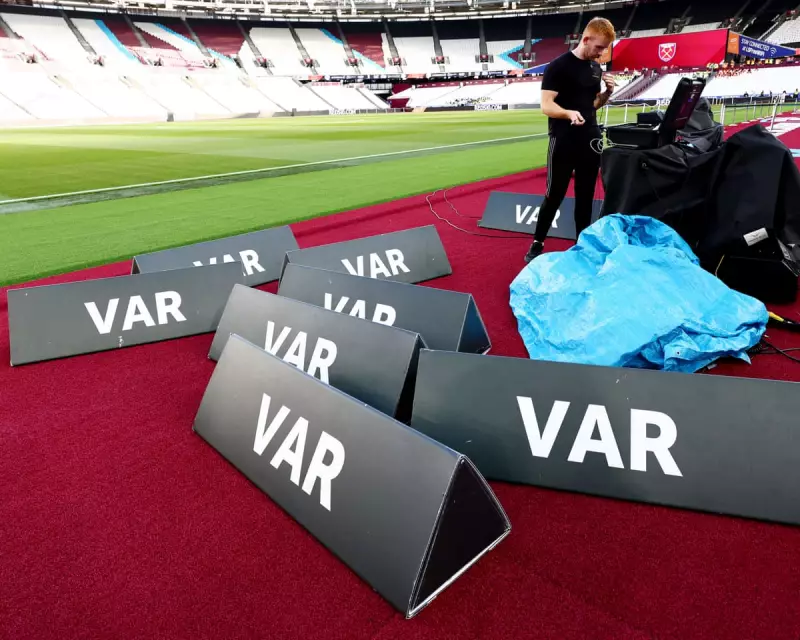
Football's VAR System Expands to Cover Second Yellows and Corners
The International Football Association Board (Ifab) has approved significant extensions to the Video Assistant Referee (VAR) system, allowing it to intervene on second yellow card decisions and the awarding of corners. These changes, described as specific extensions of the existing VAR framework, aim to enhance accuracy while maintaining the flow of the game.
New VAR Interventions and Time Limits
Under the new rules, VAR will review second yellow cards only when there is clear factual evidence that a wrong decision has led to a red card. Similarly, corner decisions can be checked if they are clearly incorrect, provided the review is immediate and does not delay the restart of play.
Ifab has also introduced stricter time limits to prevent disruptions:

- Goalkeepers must release the ball within eight seconds during goal-kicks and throw-ins, extending the existing countdown principle.
- Players have a 10-second limit to leave the field when substituted.
Focus on Game Flow and Limited Expansion
These measures were backed at Ifab's annual business meeting and are likely to be ratified at the organisation's AGM next month. Ifab emphasised that it does not support a broader expansion of VAR's remit, which should remain focused on decisions involving goals, penalties, red cards, and mistaken identity.
The board stated that most of the new rules are designed to limit disruptions to play, addressing growing concerns among lawmakers and competition organisers across Europe about the pace of matches.
Mixed Reactions and Recent Challenges
The news of extended VAR powers may not be welcomed by all supporters, as frustration with the video technology persists despite ongoing efforts to improve its processes. For instance, last week's Carabao Cup tie between Newcastle and Manchester City experienced a five-minute delay when semi-automated offside technology failed to identify the ball's location, leading to a disallowed goal.
This incident highlights the ongoing challenges in balancing technological accuracy with the seamless flow of football, even as Ifab pushes forward with these latest adjustments to the game's laws.