European Football Confronts Unthinkable World Cup Boycott Scenario
In what would have been considered unimaginable just months ago, senior figures within European football are now seriously discussing the possibility of boycotting the 2026 World Cup. This unprecedented conversation emerges as Donald Trump's ambiguous statements regarding Greenland's potential annexation create a diplomatic crisis that threatens to engulf the world's most popular sport.
The Greenland Question and Football's Moral Compass
The situation reached a critical juncture this week when informal discussions among national association heads at a Hungarian FA anniversary event turned to how European football might respond collectively to what many are calling "the US-shaped problem." While flexibility remains essential in this volatile political climate, there's growing consensus that football's governing bodies cannot afford complacency should decisive action become necessary.
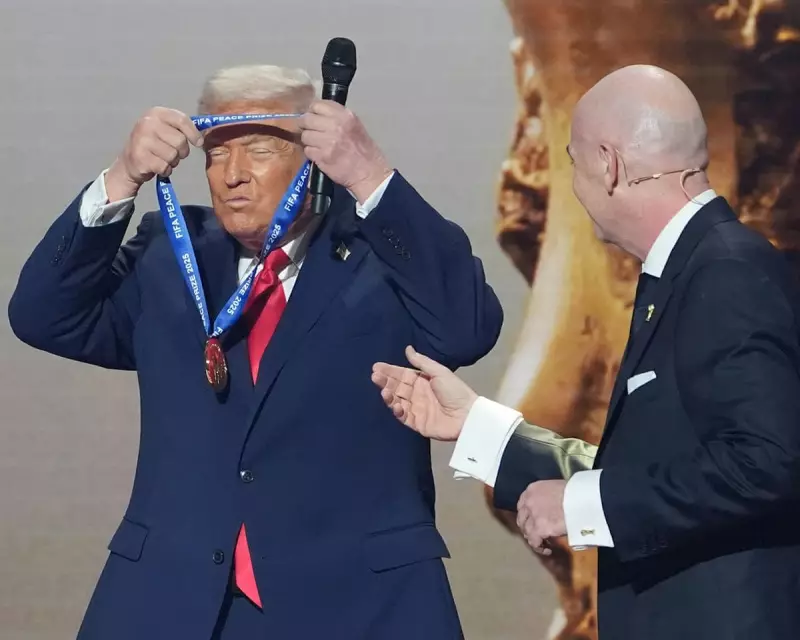
This represents a dramatic shift from December, when some federations found humour in the spectacle of Trump receiving FIFA's inaugural Peace Prize from President Gianni Infantino. Today, the gravity of geopolitical developments has eliminated any room for levity, particularly given Greenland's status as territory belonging to Denmark—a UEFA member nation.

Precedent and Principle: Russia's Shadow Looms Large
The memory of Russia's swift exclusion from international competition following its 2022 invasion of Ukraine provides a powerful precedent that informs current discussions. Many within European football circles question why the United States should receive different treatment if military aggression against Greenland materialises. The fundamental principle remains consistent: countries refusing to compete against aggressor nations.
Military action appears to represent the breaking point for most European federations. As one source explained, "While whispers about a boycott remain hushed for now, the threshold for action becomes clear if troops are deployed." This position reflects growing concern about FIFA's perceived politicisation under Infantino's leadership and his administration's tight bond with Trump's White House.
Political Paralysis and Football's Potential Power Play
European governments have demonstrated cautious responses to the developing crisis. France's sports minister Marina Ferrari stated her country has "no plan to boycott as it stands now," while Germany's Christiane Schenderlein deflected decision-making to "competent sports associations." This political prevarication has created a vacuum that some football leaders believe their organisations could fill.
Trump's personal investment in the World Cup project—frequently referencing his role in securing the 2026 hosting rights during his first term—makes the tournament particularly vulnerable to symbolic protest. Visible damage to what the president considers a personal achievement could prove politically costly, potentially forcing Infantino into diplomatic engagement over Greenland.
Internal Divisions and External Pressures
Within UEFA, opinions diverge regarding appropriate responses. Some factions would welcome an opportunity to challenge Infantino's authority, recalling last May's public falling-out over his conduct at the FIFA congress in Paraguay. More moderate voices caution against incendiary moves during an already uncertain period for global football governance.
Public sentiment appears increasingly supportive of decisive action, demonstrated by initiatives like the popular Dutch petition urging World Cup boycott. This growing grassroots pressure suggests football associations might find public backing should they choose to take a stand where politicians hesitate.
Navigating Uncharted Waters
The sport finds itself in unprecedented territory, forced to consider responses to geopolitical developments that extend far beyond traditional football matters. While a boycott remains what most describe as a "far-flung prospect," the mere fact of its serious discussion represents a seismic shift in how football perceives its role on the global stage.

As one senior figure noted, "The hypotheticals can no longer be dismissed as mere speculation. Recent events have demonstrated that football's leadership must maintain agility and preparedness for scenarios that would have seemed impossible just months ago." The pitch has been quietly rolled for what could become football's most significant political intervention—with the enduring hope that circumstances never require its use.