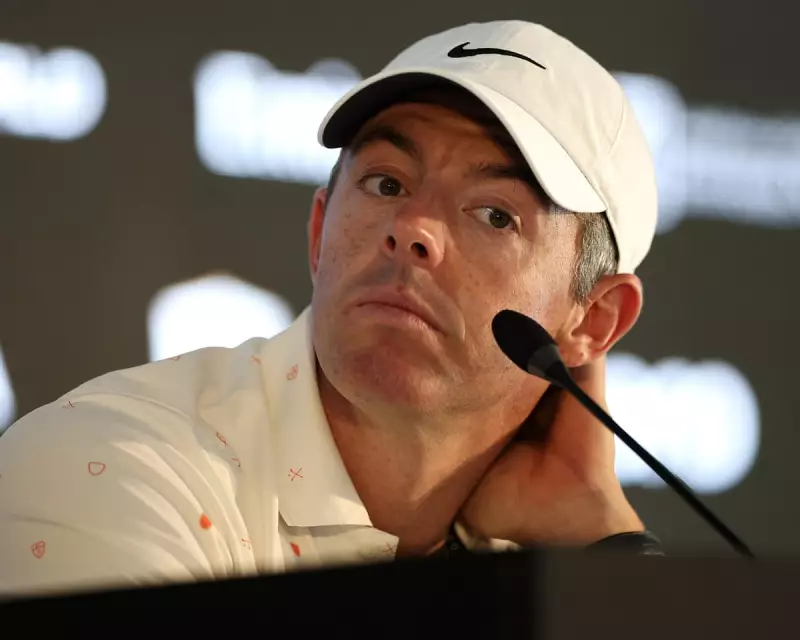
Rory McIlroy has issued a direct challenge to fellow golfers Tyrrell Hatton and Jon Rahm, urging them to settle substantial fines imposed by the DP World Tour for their involvement with the LIV Golf circuit. The four-time major champion emphasised that paying these penalties would demonstrate genuine commitment to the European Ryder Cup team, a sentiment he believes is crucial given past criticisms of American players receiving payment for the prestigious biennial event.
A Call for Accountability in Golf's Divided Landscape
McIlroy's comments come at a time of significant tension within professional golf, as the sport grapples with the ongoing schism between traditional tours and the Saudi-backed LIV Golf series. The Northern Irish star pointedly referenced Europe's victory at Bethpage in September, where team members highlighted their willingness to play for pride rather than financial reward, contrasting with reports that US competitors received appearance fees.
'We went really hard on the Americans about being paid to play the Ryder Cup and we also said that we would pay to play in Ryder Cups,' McIlroy stated firmly. 'There's two guys that can prove it.' This remark underscores the principle that European players should uphold their voluntary participation ethos, particularly when questioning others' motivations.

Understanding the Financial and Regulatory Stakes
The fines facing Hatton and Rahm reportedly amount to several million pounds, stemming from tournament conflicts between LIV Golf events and DP World Tour schedules. Both golfers remain members of the European tour despite their LIV affiliations, having signed annual agreements committing to its rules and regulations. Their appeals against these sanctions, lodged in 2024, remain unresolved, creating uncertainty ahead of future Ryder Cup selections.
McIlroy defended the DP World Tour's position, noting: 'What the DP World Tour are doing is upholding their rules and regulations. We, as members, sign a document at the start of every year, which has you agree to these rules and regulations. The people that made the option to go to LIV knew what they were.' This perspective highlights the contractual obligations that professional golfers accept, with consequences for breaching tour protocols.
Reactions and Implications for Team Europe
Hatton, who is paired with McIlroy for the opening rounds of the Dubai Desert Classic this week, offered a measured response when questioned about the fines. The defending champion stated: 'I don't have anything to add. I have always been extremely proud to be a member of the DP World Tour.' He expressed hope for continued Ryder Cup participation, attributing potential future absences to age or emerging talent rather than disciplinary matters.
However, the situation presents a potential dilemma for European captain Luke Donald, who is expected to lead the team again in 2027. Integrating players who have outstanding fines or unresolved disputes with the tour could complicate team dynamics and selection criteria. McIlroy's stance is believed to reflect broader sentiment among senior European players, who value consistency in applying tour standards.
The Broader Context: Golf's Unification Challenges
Beyond immediate fines, McIlroy addressed the wider fragmentation in professional golf, expressing scepticism about reunification between the PGA Tour, DP World Tour, and LIV Golf. 'I just don't see a world where it can happen at this point,' he admitted, citing entrenched positions and conflicting interests. While acknowledging improved relationships between organisations, McIlroy suggested that substantive compromise remains elusive, with each entity prioritising its own operational model.
This assessment underscores the complex negotiations that have characterised golf's governance in recent years, including collapsed talks between the PGA Tour and LIV. The persistence of separate tours continues to influence player commitments, tournament schedules, and team competitions like the Ryder Cup, where allegiance and availability are increasingly scrutinised.

As the Dubai Desert Classic progresses, attention will remain on how Hatton and Rahm navigate both their golfing performances and the unresolved financial penalties. McIlroy's public challenge adds pressure for resolution, reinforcing the expectation that professional obligations should align with team representation honours in one of sport's most celebrated contests.