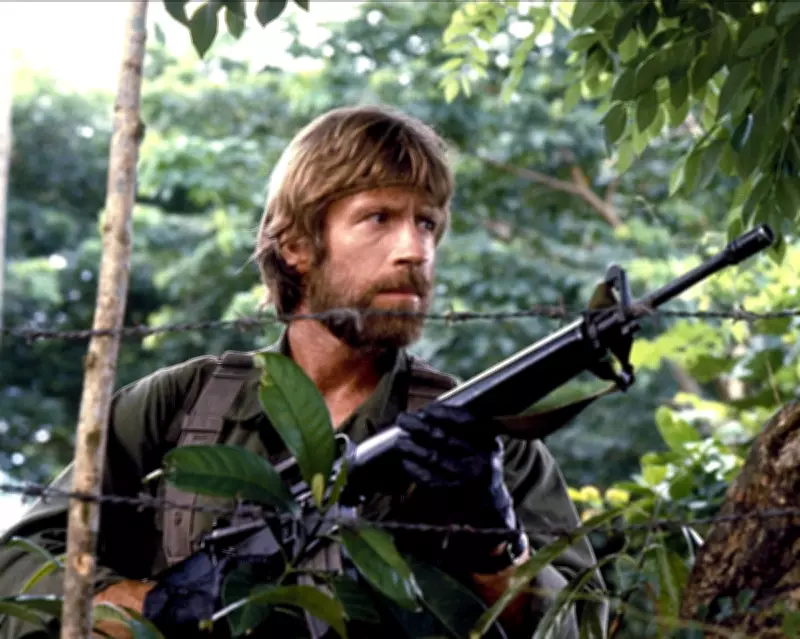
Chuck Norris, Martial Arts Legend and 1980s Action Star, Passes Away at 86
The world of action cinema has lost one of its most enduring figures. Chuck Norris, the martial arts champion who rose to fame as a star of 1980s blockbusters and later as the wholesome hero of the television series Walker, Texas Ranger, has died at the age of 86. His career spanned decades, blending physical prowess with a steadfast conservative philosophy that resonated with audiences globally.
From Karate Champion to Silver Screen Star
Born Carlos Ray Norris in Ryan, Oklahoma, Norris first made his mark as a six-time world middleweight karate champion, retiring undefeated in 1974. He operated a successful chain of karate schools, where one of his notable students, actor Steve McQueen, encouraged him to pursue acting. His early screen appearance came in Bruce Lee's The Way of the Dragon (1972), where the two martial artists choreographed and performed high-kicking combat sequences without stunt doubles, showcasing their authentic skills in medium and wide shots.
Following Lee's premature death in 1973, Norris stepped into the void as a martial arts movie superstar. He developed a sizable following in the 1980s with gung-ho hits such as Lone Wolf McQuade (1983), Missing in Action (1984), and Invasion USA (1985). These films were violent and explosive, but Norris insisted on a moral core: "I don't initiate violence, I retaliate," he said, emphasizing that his characters were forced into situations they had to cope with.

A Conservative Voice in Hollywood
Norris positioned himself as a corrective to the antiheroes of the 1960s and 70s, stating, "The movie industry is in dire need of this kind of image on screen after the antiheroes ... who were advocating the use of drugs and who were detrimental to society." A self-described "real flag waver" and fan of Ronald Reagan, his films often mixed combat with conservatism. For instance, Missing in Action re-fought the Vietnam War, ending with the hero shaming politicians by producing rescued prisoners of war at a press conference.
Unlike contemporaries like Arnold Schwarzenegger and Sylvester Stallone, Norris carried an air of humility and serenity. He noted that real tough guys don't need to boast, pointing out Stallone's use of bodyguards as a contrast to his own philosophy: "The paradox of karate is that I'm well equipped to defend myself and never fight." Critics praised his competence and unique presence, with the New York Times describing him as having "a kind of remarkable competence."
Television Success and Later Years
In the 1990s, Norris found renewed success with Walker, Texas Ranger, a TV series that ran for nine seasons from 1993. He played Cordell Walker, a wholesome hero who used martial arts to fight crime, further cementing his image as a moral guardian. Despite his popularity, he never reached the cult status of Bruce Lee, but he gained ironic fame in the 21st century through internet memes that humorously exaggerated his invulnerability, such as "Chuck Norris makes onions cry."
Norris embraced this meme culture on-screen in The Expendables 2 (2012), where he quipped about surviving a cobra bite. However, his later years were also marked by controversial political views, including promoting the "birther" movement against Barack Obama and writing for far-right websites. He dedicated his autobiography to a Columbine shooting victim while remaining a vocal supporter of the firearms industry, highlighting complex contradictions in his public persona.
Personal Life and Legacy
Norris's personal life included two marriages. He is survived by his second wife, Gena O'Kelley, and their twin daughters, Dakota and Danilee, as well as sons Mike and Eric from his previous marriage to Dianne Kay Holecheck, and another daughter, Dina, from a relationship during that marriage. His legacy endures through his films, television work, and the cultural impact of his martial arts ethos, leaving an indelible mark on action entertainment and conservative narratives in media.