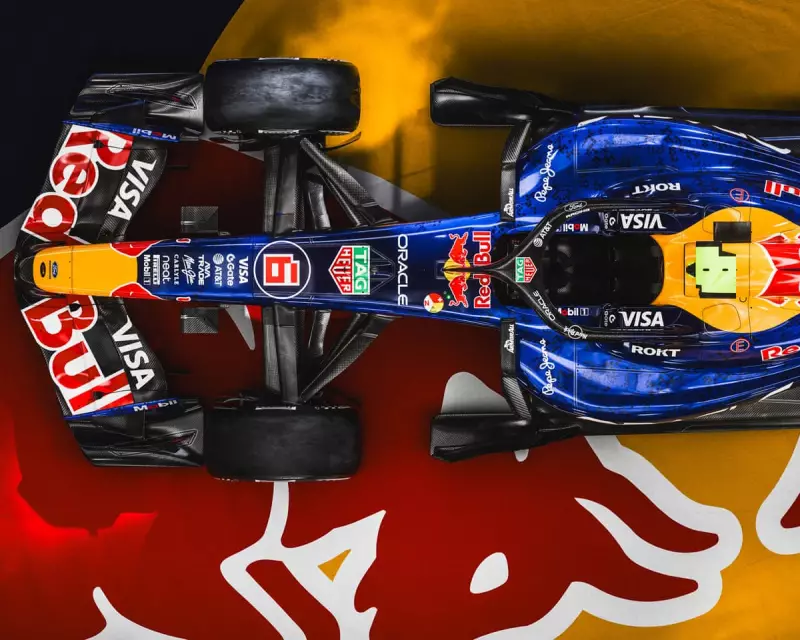
F1 2026 Season Overshadowed by Engine Regulation Controversy
The unveiling of Red Bull's new season colours has been overshadowed by a growing storm over technical regulations, with compression ratios at the heart of a fierce debate that could define the 2026 Formula One championship. As teams prepare for pre-season testing in Barcelona, the FIA has scheduled a crucial meeting with engine manufacturers to address mounting concerns that Mercedes and Red Bull may have gained an unfair advantage through innovative engineering interpretations.
Technical Loopholes Spark Fears of Two-Tier Competition
With sweeping new engine and chassis regulations coming into effect this season, teams' adaptation strategies have become paramount to success. However, before a single competitive lap has been completed, serious questions are being raised about whether some manufacturers have discovered loopholes that could create significant performance disparities. The controversy centres on how teams are interpreting compression ratio regulations – specifically the 16:1 limit measured at ambient temperature when cars are stationary.
Multiple sources within the sport suggest that Mercedes and Red Bull may have developed materials and designs that exploit thermal expansion during actual track running. This technical approach allegedly allows their engines to operate with higher compression ratios – and consequently greater power output – while still complying with static measurement requirements. Industry insiders estimate this could translate to a lap time advantage of 0.3 to 0.4 seconds, a substantial margin in the closely contested world of Formula One.

Manufacturers Voice Concerns Ahead of Crucial FIA Meeting
The situation has become so concerning that Ferrari, Audi, and Honda have formally written to the FIA expressing their apprehensions. These concerns will be thoroughly examined during Thursday's meeting between the governing body and engine manufacturers, scheduled just before pre-season testing commences. Honda's recent engine launch in Tokyo, which should have been a celebratory occasion, instead highlighted the underlying tensions within the sport.
Honda's chief executive Toshihiro Mibe acknowledged the regulatory challenges, stating: "Regulations do not have everything listed very clearly, bit by bit. There is a lot of room for interpretation as well and this is a part of the race." His comments reflect a broader concern that the spirit of the regulations might be compromised by technical interpretations that push legal boundaries to their absolute limits.
Red Bull's Technical Director Defends Team's Approach
Red Bull, developing their own engines for the first time this season, have vigorously defended their engineering practices. Technical director Ben Hodgkinson, who previously spent two decades working on Mercedes' power units, asserted that his team's work remains entirely within regulatory boundaries. "I know what we're doing. I'm confident that what we're doing is legal," Hodgkinson declared. "Of course, we've taken it right to the very limit of what the regulations allow. I'd be surprised if everyone hasn't done that."
Hodgkinson further emphasised that understanding material behaviour under different conditions represents fundamental engineering knowledge in Formula One. "Any engineer that doesn't understand about thermal expansion doesn't belong in this sport, doesn't deserve to be an engineer really," he added, suggesting that rival teams' concerns might stem from their own technical shortcomings rather than any regulatory violation.
Audi and Honda Express Performance Concerns
Audi, entering Formula One as a new engine manufacturer, voiced significant concerns during their car launch in Dresden. Chief operating officer Mattia Binotto acknowledged the potential performance implications, stating: "If it's real, it is certainly a significant gap in terms of performance and lap time, and that would make a difference when we come to competition." The German team's technical director James Key called for regulatory clarity, expressing confidence that the FIA would address any issues that contravened the regulations' intent.

Honda's representatives were notably candid about their development challenges. F1 project leader Tetsushi Kakuda admitted their power unit development was "not necessarily" progressing as expected, while Honda Racing Corporation president Koji Watanabe warned that "perhaps we will struggle" under the new regulatory framework. These admissions will concern Aston Martin, who rely on Honda power units, and Ferrari, who face the prospect of competing in what could become a two-tier championship if performance disparities prove substantial.
Regulatory Uncertainty Clouds Season Outlook
The FIA has indicated that while measurement procedures are unlikely to change immediately, regulations could potentially be revised at some point. This creates an uncertain environment for all teams, particularly those who believe they may be at a competitive disadvantage from the season's outset. The governing body faces the delicate task of balancing regulatory enforcement with maintaining competitive fairness across the grid.
As the 2026 season approaches, this compression ratio controversy represents more than just a technical dispute – it threatens to undermine competitive integrity during a period of significant regulatory transition. With Mercedes supplying engines to defending champions McLaren, Williams, and Alpine, and Red Bull developing their own power units for the first time, the implications of any performance advantage could reverberate throughout the entire championship. The coming days' discussions between teams and the FIA will prove crucial in determining whether Formula One begins its new era on a foundation of fair competition or regulatory controversy.