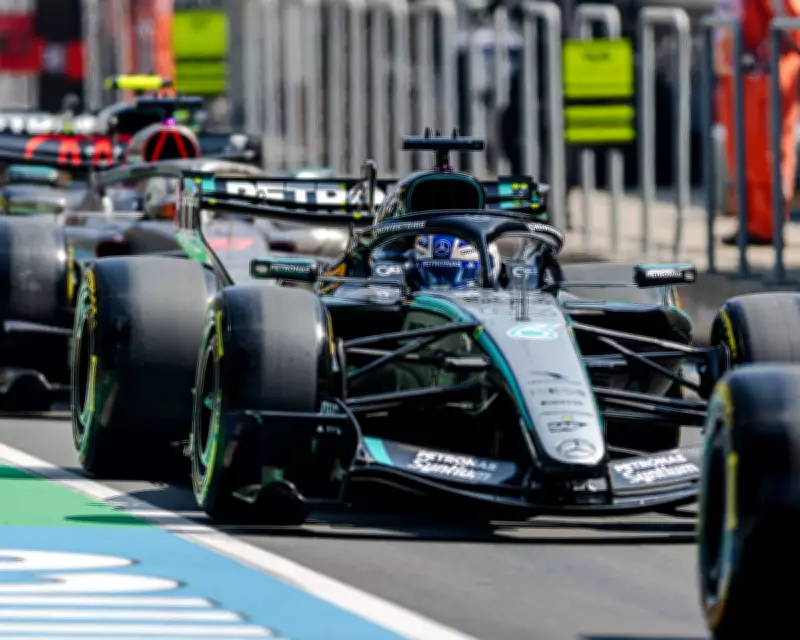
Mercedes Secures Commanding Victory in F1 Season Opener
Mercedes has emerged as the dominant force in the opening round of the 2026 Formula One season, with drivers George Russell and Kimi Antonelli delivering a stunning one-two finish at the Australian Grand Prix. The team's exceptional performance underscores their mastery of the new energy management regulations, positioning them as clear favorites for the upcoming race in Shanghai.
Unmatched Performance in Australia
Russell's qualifying lap in Australia was a remarkable eight-tenths of a second faster than the nearest competitor, Red Bull's Isack Hadjar. During the race, Russell maintained a commanding lead, finishing 15 seconds ahead of third-placed Charles Leclerc from Ferrari, even after easing off in the final stages. Antonelli secured second place, completing Mercedes' dominant display.
The performance gap was stark, with last year's world champion Lando Norris qualifying nearly a second behind Russell and finishing fifth, more than 50 seconds adrift. This significant margin is particularly notable given that McLaren uses the same Mercedes power unit, highlighting Mercedes' superior optimization of their engine.

The Crucial Role of Energy Management
Under the new 2026 regulations, Formula One engines now feature an almost equal split between internal combustion and electrical energy. With limited electrical energy available, its deployment and recharging have become critical factors in race performance. Mercedes has excelled in this area, leveraging their extensive experience with their own power unit to optimize energy usage.
McLaren team principal Andrea Stella described this new approach as "a new language and also a new way of thinking." The ability to manage energy deployment and recharging effectively has become as important as aerodynamic advantages were under previous rules. Small details in energy management can accumulate significant advantages over a lap, as demonstrated by Russell's ability to open a substantial lead in Australia once free from direct competition.
Driver Adaptation and Technical Superiority
Russell's performance highlighted not only Mercedes' technical prowess but also the importance of driver adaptation to the new regulations. Drivers must now focus extensively on how they "drive" the power unit, with energy management becoming a crucial skill. Russell demonstrated this effectively, gaining an advantage over even his teammate Antonelli in identical machinery.
McLaren's Oscar Piastri emphasized the significance of this shift, stating that "the difference you can make by optimizing the power unit is an order of magnitude bigger than anything you can do with the setup of the car." This new dynamic has reshaped competitive priorities within the sport.
Looking Ahead to the China Grand Prix
The Shanghai International Circuit presents a different challenge from Melbourne's energy-starved Albert Park. With heavy braking zones and medium-speed corners, Shanghai is considered "energy-rich," offering more opportunities for energy recovery. The long back straight to turn 14 will be a key area for energy deployment testing.
Mercedes enters the China Grand Prix with clear advantages in both car performance and energy management expertise. Their dominance in Shanghai will provide further insight into the extent of their superiority under the new regulations. Meanwhile, discussions about potential rule changes regarding energy management are expected following the race, reflecting the ongoing evolution of Formula One's technical landscape.