China's Winter Paralympic Dominance: A Remarkable Transformation
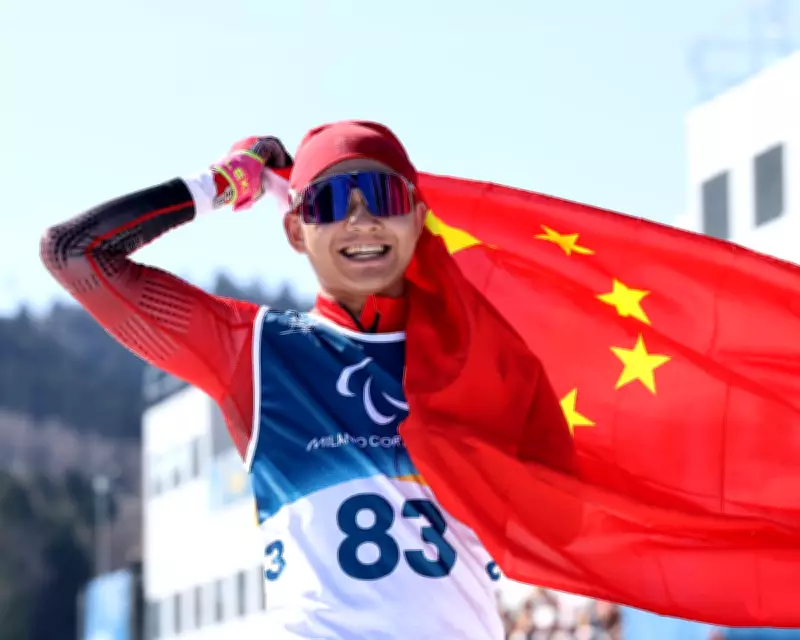
With only two days remaining in the Winter Paralympics competition, China has firmly established itself as the undisputed leader of the medal table. By Friday's close, the Chinese delegation had accumulated an impressive total of 33 medals, matching the combined tally of their closest competitors, the United States and Italy. This commanding performance becomes even more extraordinary when considering that merely eight years ago, China stood as a minor participant in winter para-sports.
From Humble Beginnings to Paralympic Powerhouse
At the 2018 Pyeongchang Games, China managed to secure just a single medal—a gold in mixed team curling. Fast forward to the current Milano Cortina competition, and three members of that original team are competing once more. Among them is Wang Meng, who has already claimed gold in the inaugural mixed doubles curling event alongside her partner Yang Jinqiao, defeating a Korean pair 9-6 in a thrilling tie-break conclusion.
"I'm very, very proud, very, very honored, and also very grateful," Wang Meng expressed following her victory. "I'm so grateful to so many people who have helped us along the way, and finally standing on this podium."

Infrastructure and Investment Driving Success
Wang Meng's acknowledgment of support reflects China's substantial investment in para-sports infrastructure. The National Ice Sports Arena for People with Impairments in Beijing, spanning over 13,000 square meters and opened in 2020, serves as both a training hub for elite athletes and an accessible facility for ordinary people with disabilities interested in winter sports. This striking architectural achievement, resembling a pair of wings, represents just one component of a nationwide network comprising 40 similar venues constructed across the country.
Paralympic executives have expressed astonishment at China's rapid ascent from obscurity to medal table leadership. The host nation's performance at the Beijing Games was particularly dominant, with China securing 61 medals—more than a quarter of the total available. This winter sports transformation mirrors China's earlier success in summer Paralympics, where they first claimed the top position at the 2004 Athens Games and have maintained that status ever since.
Grassroots Development and Talent Identification
The strategic approach that propelled China to summer Paralympic dominance has been effectively adapted for winter sports. Beyond infrastructure development, the China Disabled People's Federation launched a grassroots 'winter sports season' initiative in 2016. By the time of the Beijing Games, this program had reached participants across 31 different regions, with official estimates suggesting approximately 300 million people had engaged with winter sports activities.
This expansive outreach enabled the Chinese National Paralympic Committee to select from a talent pool exceeding 1,000 para-athletes in 2021—a dramatic increase from the mere 50 athletes available when the program commenced. Financial resources have been readily available to support this development, with China recruiting leading winter para-sport coaches from around the world to accelerate their program's growth.
Population Advantage and Systematic Excellence
China benefits from a significant natural advantage in para-sports development: its enormous population. Applying the Paralympic movement's statistic that 15% of people worldwide have some form of disability to China's 1.4 billion citizens yields a potential pool exceeding 200 million individuals. Even conservative estimates suggest tens of millions could possess para-sport potential, creating an exceptionally large talent base from which to develop elite athletes.
"China's population means it can field many elite athletes, and that only the most competitive Chinese athletes get selected," explains Chinese sports expert Mark Dreyer. "If there's a Chinese athlete in your race, there's a good chance they will finish on the podium."

The Next Generation of Champions
The partnership between Wang Meng and Yang Jinqiao exemplifies China's winter para-sport progress. At just 24 years old, Yang was the youngest competitor in the mixed doubles curling event and arguably its most impressive performer. His precise draws during crucial moments proved decisive against both Great Britain in the round robin stage and Korea in the final. Yang began his curling career at a regional level in 2018—the same year Wang Meng won her first Paralympic medal.
"When I saw China won the gold of wheelchair curling in Pyeongchang, I was so excited and proud of them," Yang recalled after their victory.
"So you were inspired by me? You took me as a role model?" Wang Meng playfully responded.
Yang smiled, nodded, and confirmed: "Yes. For sure."
China's winter Paralympic journey represents one of the most remarkable transformations in modern sports history—from winning a solitary medal eight years ago to establishing comprehensive dominance across multiple disciplines through strategic investment, infrastructure development, and effective talent identification systems.