The Ultimate Rowing Rivalry: Oxford vs Cambridge Boat Race Through History
Once each year, the sport of rowing captures the nation's attention as hundreds of thousands of spectators gather along the banks of the River Thames to witness Britain's most celebrated sporting rivalry. The Oxford vs Cambridge Boat Race represents a unique collision of athleticism, tradition, and unpredictable drama as university crews battle on the typically turbulent waters toward Chiswick Bridge.
The 171st Edition: Historic Firsts and Current Standings
This year's 171st Boat Race takes place on Saturday, April 4, 2026, with the women's competition scheduled for 2:21 PM followed by the men's event at 3:21 PM. Both crews will navigate the challenging Championship Course—a demanding 6.8-kilometer (4.25-mile) stretch from Putney to Mortlake, finishing just before Chiswick Bridge.
Cambridge currently maintains the advantage in both competitions, with 88 victories to Oxford's 81 in the men's head-to-head and a 49 to 30 lead in the women's contest. The 2026 race marks a particularly historic moment as sisters Lilli and Mia Freischem become the first siblings to compete against each other in the event's illustrious history, representing Oxford and Cambridge respectively.

Most Extraordinary Moments in Boat Race History
If there's one constant throughout the Boat Race's nearly 200-year legacy, it's the remarkable drama that has unfolded on the Thames. From stricken vessels to controversial decisions and political protests, these moments have defined the event's enduring appeal.
The Blind Judge and Controversial Dead Heat (1877)
The 1877 race stands officially recorded as a Dead Heat in Boat Race history, with both teams supposedly crossing the finish line simultaneously. The reality, however, proved far more complicated. Umpire "Honest John Phelps," who was over seventy years old, blind in one eye, and frequently discovered intoxicated beneath bushes, oversaw the contentious event.
Phelps himself admitted his boat had drifted behind multiple spectator vessels, completely blocking his view of the finish line. Despite fierce wind and rain conditions, both crews were recorded completing the race in exactly 24 minutes and eight seconds, though numerous spectators insisted they witnessed Oxford—known as the Dark Blues—cross approximately six feet ahead of their opponents.
Sink or Swim: The Double Sinking of 1912
Taking place once more in dreadful weather conditions, 1912 witnessed an extraordinary double sinking as both men's crew boats filled with substantial amounts of water. While Cambridge sank completely, Oxford managed to bail out their vessel, return to the river, and ultimately reach the finish line.
Nevertheless, Umpire Frederick Pitman had already declared a No Race by that point and scheduled a re-row for the following Monday. The rematch faced similarly appalling weather, but Oxford ultimately emerged victorious, securing a hard-fought triumph against the elements.
The Most Famous Sinking of All Time (1978)
By 1978, several boats had gone down during the event's history, but that particular year's incident remains the most unforgettable. Exceptionally stormy and treacherous conditions tested both crews, with Oxford managing slightly better by maintaining their advantageous inside lane position.
As the contest progressed, Cambridge—known as the Light Blues—struggled badly, and while passing beneath Barnes Bridge, their vessel filled with water and went under completely. James Crowden, who served as umpire that year and had previously rowed for Cambridge in 1951, recalled: "I will always remember the 1978 race because the water was so shockingly rough."
Sorry for 'Barging' In: The 1984 Collision
Fortune deserted Cambridge from the very outset in the 130th Boat Race, as their men's crew struck a moored barge right at the beginning and went down before racing had even commenced. The contest was delayed until the next day—marking the first Boat Race held on a Sunday—and compounding Cambridge's misery was a convincing Oxford triumph in the rescheduled event.

Chaos, Drama, Protests, and Fainting: The 2012 Spectacle
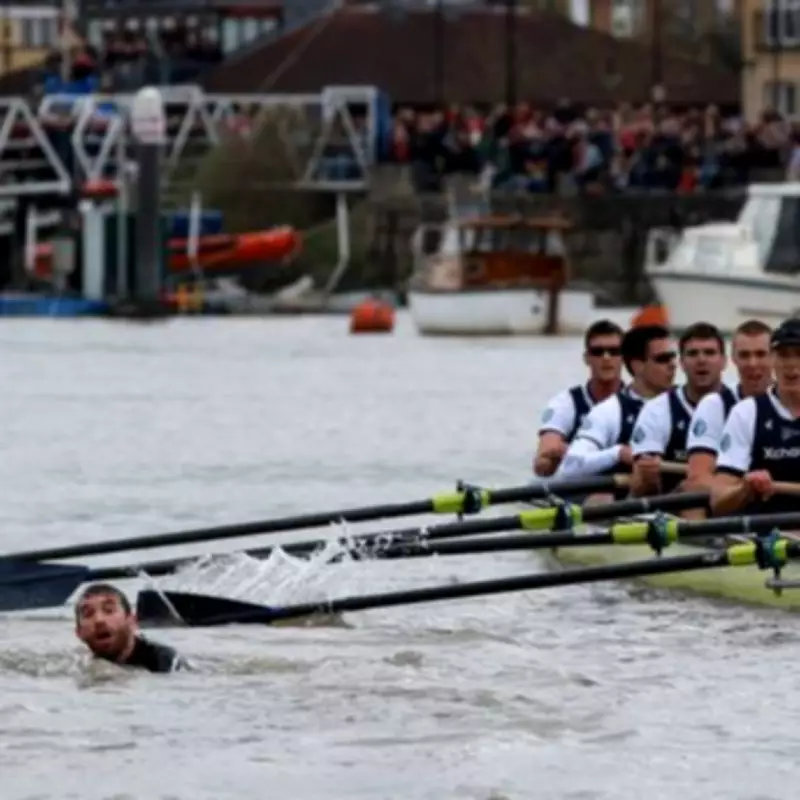
2012 arguably stands as the Boat Race's most dramatic year, packed with incident and spectacle throughout. Australian Trenton Oldfield, aged thirty-six, sparked mayhem at the 158th Boat Race when he plunged into the icy waters of the Thames, swimming directly into the path of the competing crews.
His reasoning? Oldfield felt compelled to demonstrate against elitism and its injustices, claiming he had "no choice but to swim." Both teams were neck-and-neck when the aquatic protest unfolded, resulting in the race being restarted thirty minutes later. The misfortune continued, however, as Oxford snapped an oar and Cambridge claimed victory.
Oldfield was found guilty of being a "public nuisance," receiving a six-month custodial sentence for his demonstration and ordered to pay £750 in fines. Yet the drama was far from finished. While Cambridge rowed triumphantly to the finish line, Oxford commanded everyone's attention as crew member Alex Woods was spotted slumped at the stern of the boat, having collapsed throughout the entire ordeal.
Boat Meets Water: The 2016 Battle Against Conditions
2016 proved to be another gripping year at the races, with Cambridge delivering a spirited performance from beginning to end as onlookers watched their vessel steadily take on considerable volumes of water along the course, beginning at Barnes Bridge. Upon the umpire's instruction to steer toward the bank, the team duly obliged and, having confirmed they were capable of continuing, the Light Blues put up a formidable challenge against that year's Oxford champions.
As the 171st Boat Race approaches, these extraordinary moments remind us why this historic rivalry continues to captivate audiences—not just for the athletic competition, but for the unpredictable drama that has become an integral part of its nearly two-century legacy on the River Thames.