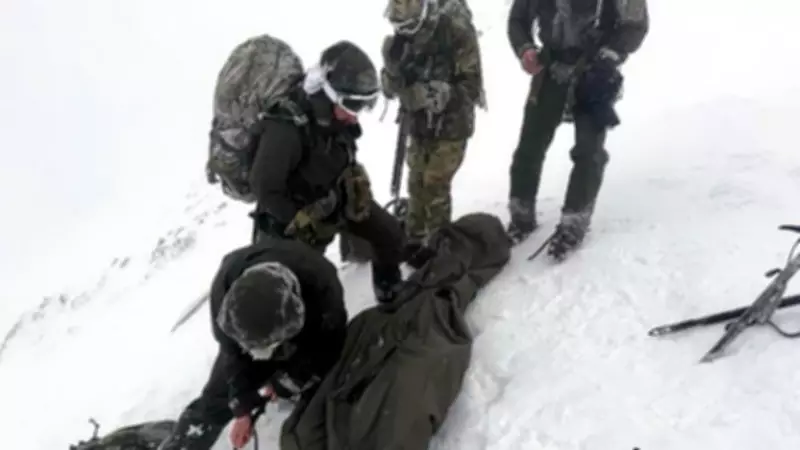
In a dramatic mountain rescue, Royal Marine Reserves and Dutch marines saved the life of a stranded climber who was succumbing to severe exposure on Ben Nevis during treacherous blizzard conditions. The incident occurred on 24 January 2026, when the military team discovered the man curled up in the snow near the summit of Scotland's highest peak.
Freezing Conditions and Critical Discovery
The rescue squad, consisting of Scottish Royal Marine Reserves (RMR) and the Dutch Korps Mariniers, were conducting mountain training as part of Exercise Highland Warrior when they made the life-saving discovery. RMR Colour Sergeant McKenzie described finding the climber with solid blocks of ice clinging to his eyebrows, hat, and gloves – clear evidence of prolonged exposure to freezing temperatures.
The climber had become separated from his two friends and was completely disoriented about their whereabouts. With temperatures plunging during the blizzard and wind gusts estimated at around 40mph, the wind chill factor reached between -15C and -20C, causing any exposed skin to sting almost instantly upon contact with the air.

Deteriorating Condition and Improvised Rescue
As the marines attempted to assist the climber down the mountain, his condition rapidly deteriorated. Two Dutch marines supported him by holding his arms on either side, but the awkward spacing caused multiple crampons to become knocked loose, forcing several halts to resecure them.
During one such stop, Colour Sergeant McKenzie observed unmistakable signs of decline. "His posture sagged, his coordination faltered, and his responses slowed," he reported. The climber then revealed he couldn't bend his leg, indicating that cold, exhaustion, and exposure were severely affecting his physical functions.
The marines quickly recognized he was entering hypothermia and would be unable to walk independently. They created an improvised stretcher using available equipment including a bivvy sack, ropes, a mat, and a jacket to transport him safely down the mountain.
Life-Saving Intervention
Sergeant Onno Lankhaar, section commander for the Dutch marines, emphasized the critical nature of their intervention. "If we hadn't seen him, he certainly would not have survived," he stated, highlighting the extreme danger posed by the conditions.
The rescue team managed to bring the climber down to the snowline, where his condition improved sufficiently to walk independently. As a precautionary measure, he was then handed over to emergency services for further assessment and care.
This incident occurred during Exercise Highland Warrior, a joint mountain-training event between the Royal Marine Reserves and Dutch marines. The climber's walking equipment showed signs of the ordeal, with one pole bent and the other either broken or fully collapsed, illustrating the challenging conditions faced on the mountain that day.