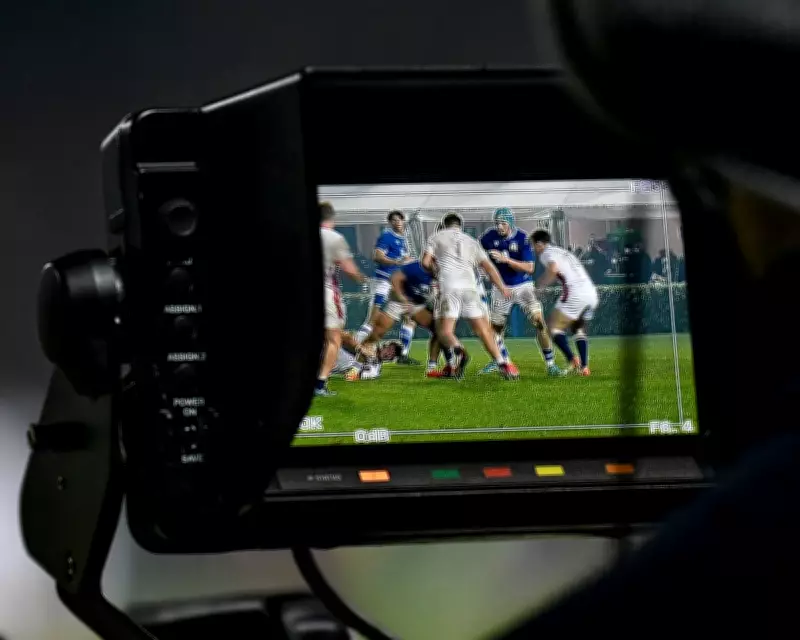
In a significant broadcasting development, ITV will introduce in-game commercial breaks for the first time during its coverage of the Six Nations Championship. This innovative approach begins with Thursday's tournament opener between France and Ireland at the Stade de France, marking a historic shift in how rugby is presented to television audiences in the United Kingdom.
A New Era for Rugby Broadcasting
The Guardian has learned that ITV's new rights agreement includes provisions for two split-screen advertisements during each half of every Six Nations match. These commercials will be strategically placed before scrums are set, ensuring minimal disruption to the flow of play. The screen will be divided vertically, with live rugby action continuing on the left side while twenty-second advertisements occupy the right portion.
Strategic Commercial Partnerships
ITV has reportedly secured in-game advertising deals with two major brands, though specific companies remain undisclosed. This split-screen format represents a careful balancing act between commercial interests and viewer experience, allowing broadcasters to generate revenue without completely obscuring the sporting action or commentary.

The technology behind this advertising approach has been utilised by American television networks for several years and is currently being trialled by RTE in their Irish racing coverage. Its implementation in the Six Nations represents a significant test case for premium sports broadcasting in the UK market.
Broader Broadcasting Implications
Should the Six Nations experiment prove successful, ITV is considering extending in-game advertising to its coverage of this summer's Rugby World Cup. This would align with tournament regulations that already incorporate three-minute water breaks in each half to help players manage extreme heat conditions.
The broadcaster has recently commenced a new four-year partnership with the BBC for Six Nations coverage, with ITV securing ten of the competition's fifteen annual matches, including every England fixture. Industry sources suggest ITV contributes more than two-thirds of the £63 million annual rights fee, making advertising revenue crucial for recouping this substantial investment.
Expanding Rugby Portfolio
Beyond the Six Nations, ITV has committed £80 million annually for exclusive rights to the new Nations Championship, launching this summer. This twelve-team competition will feature the traditional Six Nations participants alongside southern hemisphere powerhouses including South Africa, New Zealand, Australia, Argentina, Fiji, and Japan.
ITV's rugby broadcasting heritage dates back to 1991, having covered every men's Rugby World Cup since that inaugural tournament. However, negotiations for the 2027 Australian tournament remain ongoing, highlighting the competitive nature of sports rights acquisition.
Strategic Audience Targeting
This substantial investment in rugby broadcasting forms part of ITV's deliberate strategy to broaden its appeal among sports enthusiasts, particularly targeting male ABC1 viewers who represent a highly desirable demographic for advertisers. The network aims to strengthen its position in the competitive sports broadcasting landscape through premium rugby content.
Tournament Scheduling Innovations
In another historic development, the Six Nations Championship commences on a Thursday for the first time in its long history. This scheduling adjustment responds to ITV's request to avoid clashing with the Winter Olympics opening ceremony in Milan on Friday. The BBC will broadcast and live stream the opening match alongside ITV's coverage.
The championship format has also undergone restructuring this year, reducing from seven to six weeks duration. One rest week has been eliminated to accommodate the expanding international rugby calendar, particularly creating space for the new Nations Championship. This revised schedule features three consecutive weeks of fixtures, followed by a single fallow week, then two final weeks to conclude the tournament.
These broadcasting and scheduling changes collectively represent the most significant transformation in Six Nations presentation for decades, potentially establishing new precedents for how premium rugby content reaches television audiences across the United Kingdom and beyond.