Six Nations Embraces Thursday Kick-Off to Sidestep Winter Olympics Showdown
It feels distinctly unusual to be anticipating the start of the Six Nations rugby championship on a Thursday evening. Yet, that is precisely the scenario unfolding as Ireland prepare to take on reigning champions France in Paris tonight. This scheduling adjustment is a deliberate and strategic move by tournament organisers, designed to prevent a direct clash with the opening ceremony of the Winter Olympics in Milan tomorrow.
A Pragmatic Decision for Maximum Audience Reach
At first glance, one might interpret this shift as rugby lacking confidence to compete with the quadrennial spectacle of the Winter Olympics, or perhaps a failure to plan the opening round across a traditional Saturday and Sunday. However, the reality is quite the opposite. This represents a savvy and considerate decision by rugby union authorities, who have astutely recognised the competitive landscape and wisely chosen to yield ground for the greater good of both sporting events.
What possible advantage would there be for rugby's premier annual tournament to go head-to-head with a Winter Olympics hosted in the same European time zone, just across the Alps? The answer is none whatsoever. This is a genuinely smart manoeuvre.

Protecting Viewership and National Pride
While the Friday night fixture would undoubtedly have attracted a substantial audience, it risked losing viewers from competing nation Italy. Italian fans will be eagerly anticipating their country's moment in the spotlight during tomorrow's opening ceremony, hoping for a surge of national pride akin to Danny Boyle's celebrated London 2012 spectacle.
Furthermore, for neutral viewers seeking free-to-air entertainment, the artistic grandeur of an Olympic opening ceremony often holds a unique appeal that can overshadow even a top-tier rugby match. There is also a distinct brand of patriotism surrounding Team GB during an Olympics that, for the casual sports fan, does not always translate directly to support for England, Ireland, or Scotland in the Six Nations context.
Setting the Stage for a Thrilling Tournament
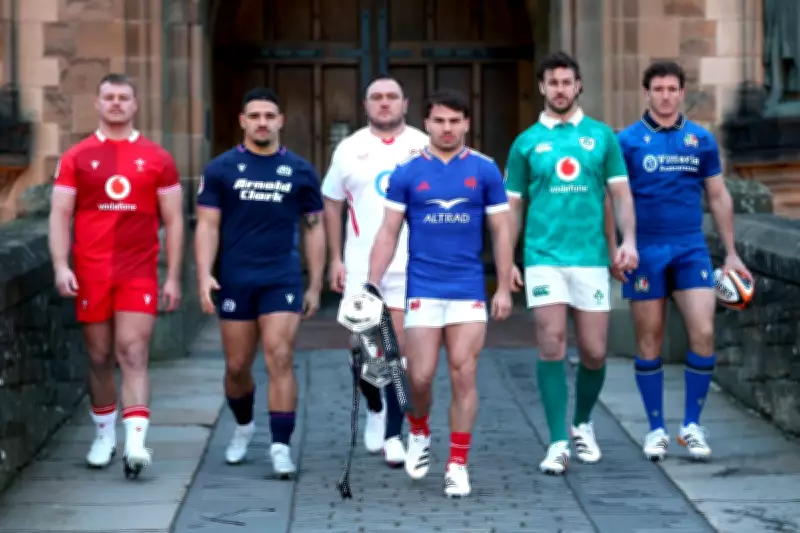
The intelligent decision by tournament chiefs ensures the widest possible audience can be captured for what promises to be a highly exciting championship. The opening clash between Andy Farrell's Ireland and Fabien Galthié's Les Bleus could prove pivotal in shaping the title race as it unfolds towards March.
The weekend's other fixtures, featuring Italy versus Scotland and the historic England against Wales encounter, are equally poised to generate significant headlines and drama.
A Tournament in Robust Health
The Six Nations finds itself in a strong position, particularly with England's matches secured on free-to-air television until the end of the decade. Following a positive 2025 campaign where they suffered only a single defeat, England's title aspirations may hinge on a crucial final-round trip to France, where a victory could be essential for championship glory.
Credit must be given to the Six Nations organisers for proactively identifying a potential television scheduling conflict this weekend and implementing a sensible solution. There is a reason why mega-events like the FIFA World Cup and the Olympic Games meticulously avoid overlapping; such clashes are detrimental to both. They occupy their own established slots, often spaced months or years apart, to guarantee maximum exposure and engagement.
The Six Nations has demonstrated commendable foresight on this occasion. Now, the responsibility falls to the six competing nations to deliver fifteen matches that live up to the heightened anticipation. With the prospect of an intensely close tournament, this is precisely the kind of compelling competition needed to build momentum ahead of the forthcoming Nations Championship.