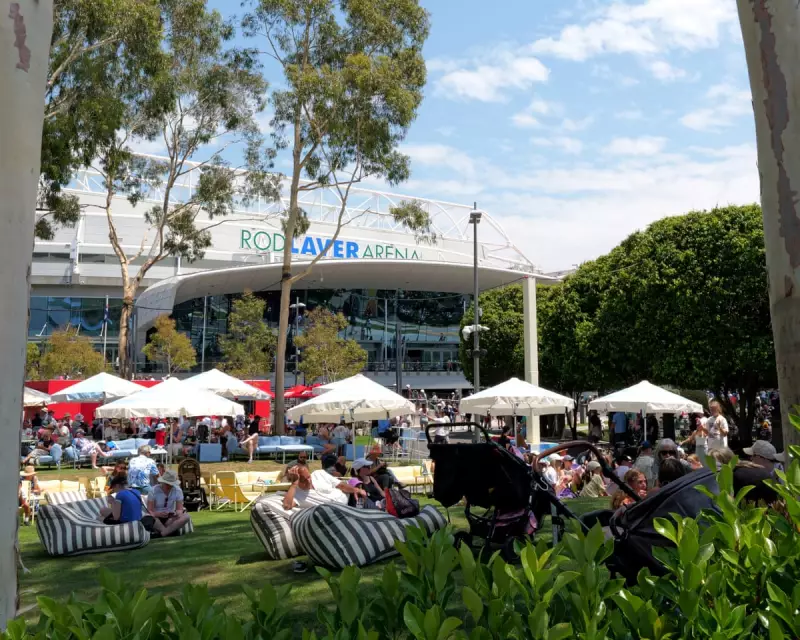
The Australian Open has boldly redefined the grand slam experience, stretching into a 21-day sporting and entertainment extravaganza. The tournament's newly christened 'Opening Week', once a free-to-attend qualifying stage, now requires a paid ground pass, a move that has not deterred fans as record crowds flock to Melbourne Park.
A New Era for the Summer Slam
Under the leadership of Tennis Australia's chief executive, Craig Tiley, the objective is clear: to own the month of January. The event, which expanded to 15 days in 2024, has now been supercharged with a full 'Opening Week' packed with activities. This strategic shift aims to maximise the festival atmosphere, blending world-class tennis with music, food, and wellness experiences.
"It doesn't feel like it's the first day of qualifiers, it feels in many ways like it's the first day of the event," Tiley remarked on a record-breaking Monday. The first day of the 2026 tournament attracted a staggering 29,261 spectators, nearly quadruple last year's figure, despite headliner Bernard Tomic being the biggest name in action.

Paying for the Premium Experience
The transition to a paid model marks a significant change. Where fans once enjoyed free entry to watch qualifying matches, a daily ground pass now costs $20, slowly closing the gap to the $65 main draw ticket. This new revenue stream supports an enhanced offering, including sold-out concerts by acts like Hot Chip and The Presets, and a new opening ceremony featuring tennis legend Roger Federer.
The centrepiece of the entertainment is the lucrative 'One Point Slam'. This high-profile exhibition, now a $29 ticketed event, pits top professionals like Carlos Alcaraz and Nick Kyrgios against celebrities and qualified amateurs for a staggering $1 million prize purse. Tiley revealed that international organisations are keenly observing this initiative for its success in connecting community and professional tennis.
Despite premium prices on-site—such as $15.60 for a beer or $18.90 for a small pizza—the cost does not appear to be a deterrent. The 'kids go free' promotion has been instrumental in driving family attendance, with Tiley forecasting that Opening Week attendance could double or triple this year, with an ambitious future target of half a million visitors.
Investing in Fan Experience and Future Growth
The commercial success is evident; Tennis Australia's annual revenue surged by $102 million to $693 million last year. Tiley insists this growth is purposeful, focused on promoting the sport and improving the fan experience. Recent investments include larger shaded areas and improved amenities to combat Melbourne's heat and crowding.
Future plans are even more ambitious. Tiley floated the idea of sinking outside courts further into the ground and raising grandstands to create a continuous elevated walkway, enhancing spectator views and flow. Such a project would require significant investment and government support, especially following the precinct's recent $1 billion redevelopment.
For fans like Alan Preston from Ireland, who compared the experience favourably to Wimbledon, the effort is paying off. He praised the excellent signage, player access, and overall organisation. As the Australian Open continues to evolve from a pure tennis tournament into a month-long cultural festival, it is setting a new benchmark for how global sporting events can captivate an audience.