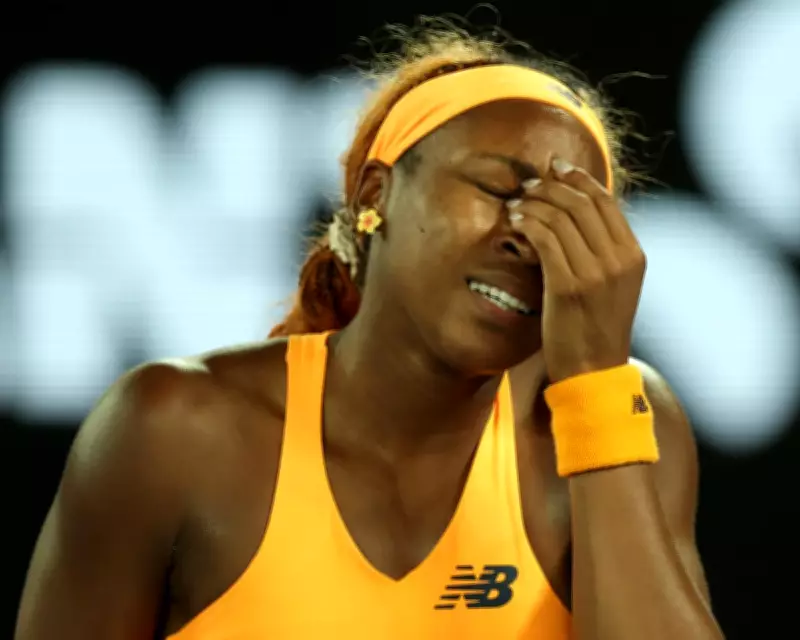
Coco Gauff experienced the full sting of her comprehensive 6-1, 6-2 defeat to Elina Svitolina at the Australian Open in Melbourne, a loss that triggered a private emotional outburst which rapidly became public property. The incident has ignited a significant conversation about the boundaries of privacy for professional athletes in the modern, hyper-surveilled sporting landscape.
From Private Vent to Public Spectacle
Following her disappointing exit from the tournament, Gauff sought a moment of solitude. She left the court, entered a service corridor at Melbourne Park she believed was secluded, and unleashed her frustration by smashing a racket on the concrete floor. Her intention was a private release of emotion, away from the public eye. However, she had underestimated the pervasive network of cameras installed throughout the tournament grounds.
"I tried to go somewhere where they wouldn't broadcast it, but obviously they did," Gauff later reflected with a sigh during her press conference. "So yeah, maybe some conversations can be had, because I feel like at this tournament the only private place we have is the locker room." Her actions, meant to be hidden, were swiftly picked up by broadcasters and disseminated across the internet, transforming a personal moment into a global talking point.

A Chorus of Concern from the Tour
Gauff's experience has resonated powerfully with her fellow professionals, who have voiced unanimous concern over the erosion of their privacy. The issue transcends typical tennis disagreements, uniting players in a call for greater respect.
- Novak Djokovic expressed a grim resignation about the trend, quipping, "I'm surprised that we have no cameras while we are taking a shower. I mean, that's probably the next step. I'm against it."
- Jessica Pegula highlighted the unsettling feeling of constant surveillance, noting instances where cameras had zoomed in on players' personal phones. "That's so unnecessary. I just think it's really an invasion of privacy," she stated.
- Even Iga Swiatek, fresh from her own frustrating loss, powerfully framed the dilemma: "The question is, are we tennis players or are we animals in the zoo where they are observed even when they poop?"
The 'Big Brother' Reality of Modern Tennis
The Australian Open's infrastructure is a case study in pervasive observation. Cameras are ubiquitous, not just on court but in corridors, gyms, the media centre, and transport hubs. A dedicated tournament livestream on YouTube broadcasts players navigating these 'private' areas for hours each day.
While there is a commercial logic to this 'fly-on-the-wall' content—it satisfies fan curiosity and can humanise stars like the often-reserved Jannik Sinner—the line is frequently crossed. Pegula referenced an incident where Carlos Alcaraz's phone screen was visible to a camera, leading fans to scrutinise and speculate about his private activity.
Governing Bodies Respond
The reaction from tennis authorities has been notable. The Women's Tennis Association issued a strong statement of support, asserting that "players deserve spaces away from competition where they can recover in private." Craig Tiley, CEO of Tennis Australia, struck a more conciliatory note, promising to listen to player feedback and consider adjustments.
This response, however, underscores a deeper issue: the unilateral imposition of conditions by grand slam tournaments. Players, regardless of their substantial earnings, often have little say in their working environment. The debate sparked by Gauff's racket smash challenges the notion that every aspect of an athlete's professional life should be consumable content. It raises fundamental questions about consent, dignity, and the right to private emotional expression within the workplace of elite sport.
The fallout from that moment in a Melbourne corridor continues to echo, forcing the tennis world to confront the uncomfortable reality of life under an unblinking digital eye.