Aryna Sabalenka's Grand Slam Final Demons Return in Melbourne
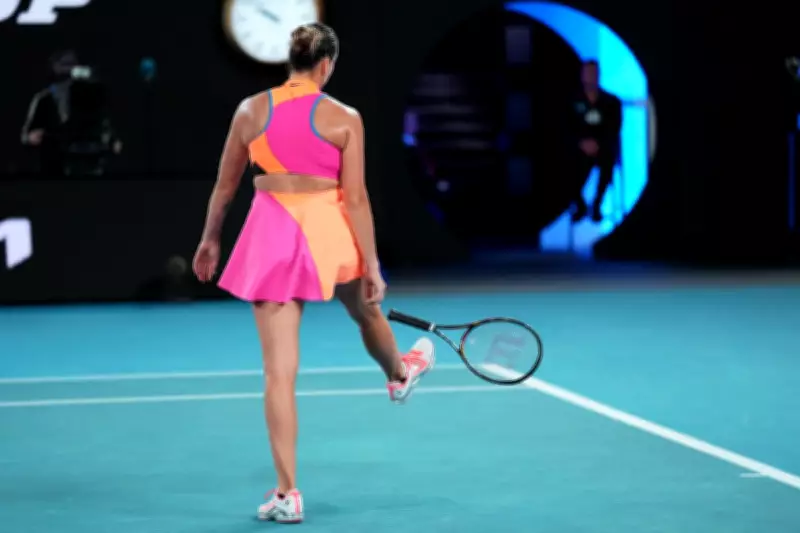
In a moment of pure frustration that encapsulated her ongoing struggle with tennis's biggest occasions, Aryna Sabalenka kicked at her racket as the Australian Open final slipped from her grasp. The world number one's 4-4 record in grand slam finals might appear statistically balanced, but the manner of her latest defeat to Elena Rybakina reveals deeper psychological challenges that continue to haunt her at the sport's pinnacle.
The Statistical Paradox of Sabalenka's Career
Few players in tennis history have positioned themselves for major titles as consistently as the Belarusian powerhouse. Sabalenka has reached five of the last six grand slam finals and eight overall throughout her career. In her past thirteen major tournaments, she has advanced to twelve semi-finals, with the sole exception being a quarter-final exit at the 2024 French Open where she battled food poisoning yet still pushed Mirra Andreeva to three sets.
This extraordinary consistency demonstrates remarkable mental fortitude during the early and middle stages of tournaments. For approximately ninety percent of her matches, Sabalenka appears as the most formidable competitor on the circuit, dominating opponents with her powerful serve and aggressive baseline game. However, this strength becomes her vulnerability when championships are within reach.

The Psychological Battle in Decisive Moments
Sabalenka has been refreshingly candid about her mental challenges in pressure situations. She has previously worked with sports psychologists and openly discusses how she becomes unsettled during crucial points. Her loss to Rybakina followed a familiar pattern: after brilliantly recovering from a slow start and building a 3-0 lead in the decisive third set, she surrendered five consecutive games as visible agitation replaced her earlier composure.
Compared to some previous final disappointments, such as her defeat to Coco Gauff in last year's French Open championship match, this Australian Open loss wasn't catastrophic. Rybakina represents one of the few players capable of matching Sabalenka's power and even surpassing her serving prowess in key moments. Yet surrendering such a commanding position in a grand slam final remains unacceptable for the world's top-ranked player.
Career at a Crossroads with Legacy in Balance
Sabalenka departs Melbourne at a significant juncture in her professional journey. Her achievements are already extraordinary: four grand slam titles, seventy-five weeks as world number one, and twenty-two tournament victories. At twenty-seven, she remains the central figure in women's tennis and one of her generation's most accomplished competitors.
The paradox of her career lies in the contrast between her remarkable consistency in reaching finals and her struggles to convert those opportunities. With her physical peak coinciding with her most complete technical game, the pressure intensifies for Sabalenka to conquer her final-round anxieties. Her window for establishing herself among tennis's legends remains open but won't remain so indefinitely.
Following another painful post-match analysis where she addressed her defeat with characteristic dark humour and brutal honesty, Sabalenka looked toward the future. "Ambitions are still the same," she stated after a deep breath. "Keep fighting, keep working hard, keep putting myself out there, and try my best if I'll have another chance in the final. Just go out there and do my best."
Her determination remains unwavering, but the question persists: can she transform her mental approach when championships hang in the balance? As Sabalenka continues to provide herself with opportunities at every major tournament, the tennis world watches to see if she can finally overcome the psychological barriers that separate very good champions from true legends of the sport.