Team GB's Winter Olympics Ambition: Chef de Mission Predicts Historic Medal Haul
Team GB's chef de mission Eve Muirhead has boldly declared that the British squad heading to the Milano Cortina Winter Olympics represents one of the most potent teams ever assembled for the Games. With a target of four to eight medals set by UK Sport, Muirhead expresses confidence that Britain can disrupt the traditional dominance of winter sports powerhouses.
A New Era for British Winter Sports
Historically, Britain has made only occasional ripples at the Winter Olympics, with just twelve medals collected between 1952 and 2010. However, recent Games have shown promising signs of progress, with five medals won in both Sochi 2014 and Pyeongchang 2018, followed by a dip to just two in Beijing. Muirhead, who captained Britain's women's curling team to their sole gold medal four years ago, believes this current team of 53 athletes is poised to break new ground.
"I believe that we are taking one of the most potent teams of athletes that we have taken to a Winter Olympic Games," Muirhead states. "We have the capability to disrupt the norm. I see a set of athletes with a real pedigree in terms of recent results on the winter circuit."

Rising Stars and Recent Successes
The optimism surrounding Team GB is firmly grounded in recent performances. In the weeks leading up to the Games, several British athletes have secured impressive victories:
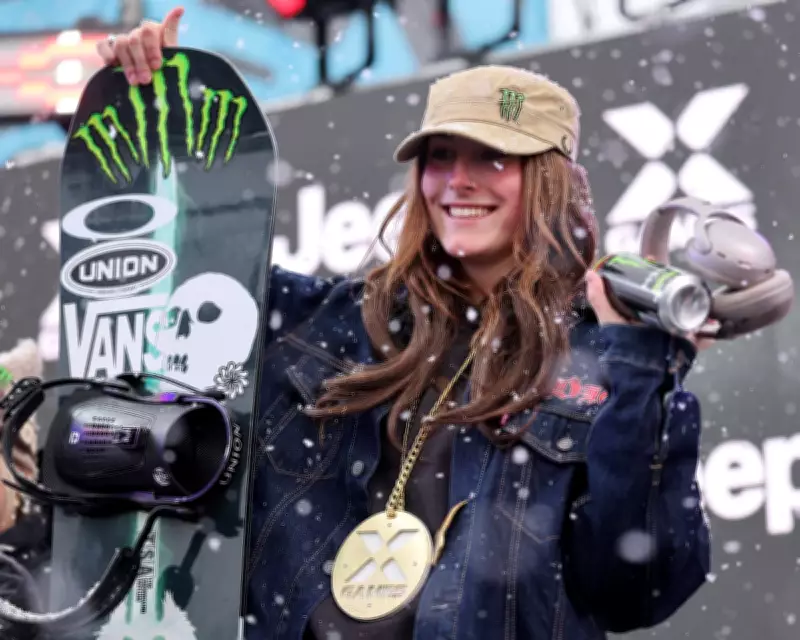
- Snowboarder Mia Brookes, a 19-year-old sensation who became slopestyle world champion at just 16, recently won gold at the X Games
- Freestyle skiers Kirsty Muir and Zoe Atkin have both claimed X Games titles this season
- Skeleton athletes Matt Weston and Marcus Wyatt have dominated their sport, winning all seven World Cup races this season
- Charlotte Bankes secured her first World Cup victory since recovering from a broken collarbone
According to bookmakers, Britain's men's and mixed curling teams are also strong favourites to medal, adding to the overall medal potential.
Technological Edge and Innovation
Beyond raw talent, Team GB has invested significantly in technological advancements to gain competitive advantages. UK Sport has allocated £25.5 million across winter sports, funding innovations that could prove decisive in Cortina.
At the University of Bath, engineers have converted a flight simulator to replicate any skeleton track worldwide, allowing athletes like Weston and Wyatt to practice extensively on the exact course they'll face in competition. The skeleton team is also awaiting approval for new aerodynamic helmets that could provide crucial milliseconds of advantage.
"We try to push the boundaries and find those gains," explains Weston. "This is just one part of the innovation we do as GB, and I think we do it pretty well."
In speed-focused disciplines, special tech skinsuits have been developed to reduce drag, while British sports scientists constantly monitor rival nations' advancements. Kate Baker, UK Sport's head of performance, acknowledges the competitive landscape: "I wouldn't go so far as to say it's an arms race. It is definitely an expertise race, though."
The Pressure of Olympic Competition
Despite the technological advantages and recent successes, athletes recognise that Olympic competition brings unique pressures. For many winter sports competitors, their entire Olympic fate can hinge on mere milliseconds or millimetres of performance.
"None of us really want to make the Olympics a big thing, but it is in reality and there's no hiding that," admits Mia Brookes, who could emerge as Britain's breakout star with potential medals in both big air and slopestyle events. "I've been scared that I'll go to the Olympics, do the best I can, and it not be enough. You know the whole world's going to be watching, and that definitely adds more pressure."
Muirhead acknowledges the fine margins in winter sports: "A lot of these athletes have 20-30 seconds of competition. Then there's the jeopardy of winter sports. A wrong edge, that could be it over. It comes down to millimetres, milliseconds. But let's just hope we're on the right side of the inch."

Britain's Top Medal Prospects
Several British athletes enter the Games with particularly strong medal credentials:
- Mia Brookes (Snowboarding) - The teenage sensation has legitimate medal chances in both big air and slopestyle events, having already achieved world champion status at just 16 years old
- Kirsty Muir (Freestyle Skiing) - After finishing fifth in big air as a 17-year-old in Beijing, Muir has recovered from a serious ACL injury to win World Cup and X Games events this season
- Zoe Atkin (Freestyle Skiing) - The Stanford student and world champion halfpipe skier aims to emulate her sister Izzy's bronze medal performance from Pyeongchang
- Matt Weston (Skeleton) - The double world champion has dominated the World Cup circuit this season and would be considered a major surprise if he didn't medal in Cortina
The Opening Days and National Interest
Team GB hopes to begin strongly with Muir and Brookes competing for gold in ski slopestyle and snowboard big air respectively on Monday, while the mixed curling team aims for semi-final qualification. Regardless of individual results, Muirhead expects the nation to embrace its quadrennial fascination with winter sports.
"What does the Winter Olympics not have?" she asks. "You've got speed, flair and I guess a bit of chaos thrown in as well. And that's what people love to watch on TV."
With substantial investment, technological innovation, and a generation of athletes achieving unprecedented success on the world stage, Team GB approaches the Milano Cortina Games with genuine belief that they can rewrite Britain's winter sports history and deliver their most successful Winter Olympics ever.