From Backpacker to Blind: A Sudden Journey into Darkness
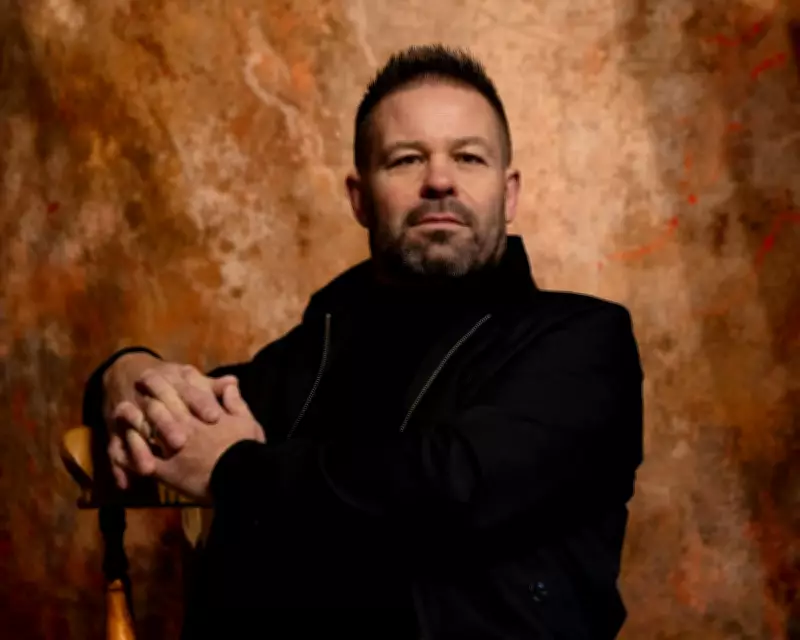
In 1990, Gary Williamson was an 18-year-old adventurer backpacking across Europe, full of youthful optimism. His grand tour took a terrifying turn in Gibraltar when his vision began to blur while reading a book. "I thought maybe I was tired or run down," Williamson recalls. "But the next day, it was worse. The lines were blurring, and I realized my map would soon become useless."
Stranded and Sightless: The Struggle to Get Home
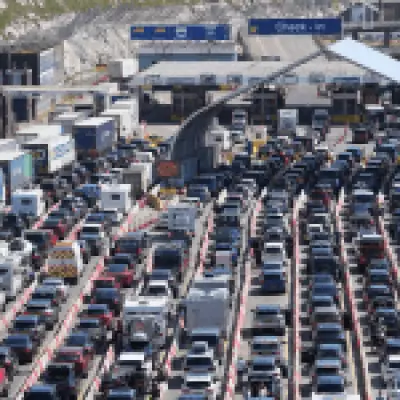
Penniless and alone, Williamson faced a daunting reality. With no money left and deteriorating vision, he decided to hitchhike back to the UK. For three days, he waited by Gibraltar's port gates, hoping for a UK-bound lorry. "I was panicking," he admits. "None of the lorries stopped. I slept on sandy ground behind a sandwich stall, wishing for better luck tomorrow."
His condition worsened dramatically. While washing in a public toilet, a tourist asked about his face. "I couldn't see myself in the mirror," Williamson says. "That was when I started losing the memory of faces—my own and others'. I touched my face all over, trying to map it in my mind."

A Chance Encounter and Rescue
On the third day, an American backpacker approached him. "I remember his blond hair and bright colors, but not his face," Williamson says. When he explained his situation, the backpacker revealed a crucial mistake: Williamson had been waiting at the wrong spot. "He said, 'Look, they're all Spanish lorries.' I replied, 'I can't see them.'"
Following the backpacker's directions, Williamson found the UK-bound lorries. Within 20 minutes, a driver from Bolton offered him a lift. "The relief was overwhelming," Williamson remembers. "I felt rescued."
The Diagnosis and Life After Sight Loss
Back in Clitheroe, Lancashire, Williamson spent three weeks in hospital. Doctors diagnosed him with Leber hereditary optic neuropathy, a genetic condition with no cure. "They told me not to wait for my sight to return," he says. "Live your life to the full."
Initially, Williamson struggled with the implications. "I thought I wouldn't get a job I wanted, live independently, or meet someone," he confesses. But he found purpose through youth disability groups, eventually becoming a youth worker for 25 years and now working in disability services for Lancashire County Council.
Photography Through Blurs: An Unlikely Artistic Path
What surprises many is Williamson's career as a photographer. "I see blurs," he explains. "My vision is like the Predator film—if people stand still, I can't see them, but movement creates a mismatch of blur." He works in black and white for better contrast and focuses on portraits to connect with people. "I miss seeing faces," he says. "On screen, I can zoom in to see details."
Williamson's photography became a form of defiance. "I think one reason I took up photography was to prove I could," he states. Despite dropping out of art school decades ago, he now creates art that resonates with his unique perspective.
Reflections on Resilience and Adaptation
Now 53, Williamson reflects on his journey. "If this had to happen, early adulthood was possibly the best time," he says. He married nearly 20 years ago, has four children and a grandchild, and found meaningful work. Yet challenges remain—like missing his son's football goals or struggling to find items in supermarkets.
"Things can get you down," Williamson acknowledges, "but I don't let them. I always say: this won't beat me." His story is a testament to human resilience, showing how adversity can forge new paths and unexpected triumphs.