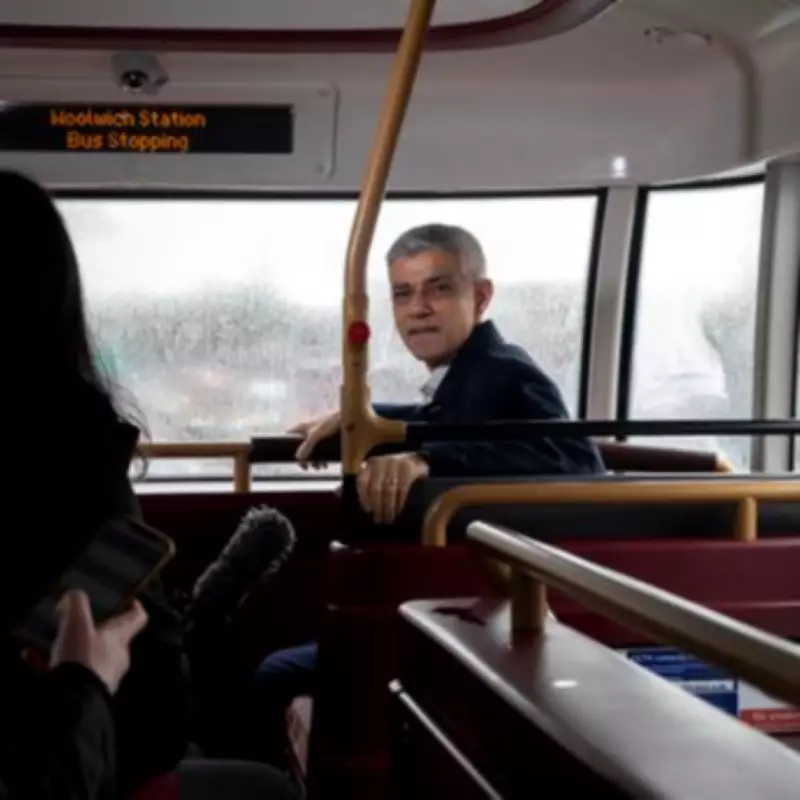
London Mayor Sadiq Khan has strongly criticised what he terms "mischief makers" and "scaremongering" over claims that eight bus routes in the capital are set to be axed. The Mayor moved swiftly to reassure passengers after Britain's largest bus operator, Go-Ahead Group, decided to trigger a break clause in its contract, putting the future of routes 80, 93, 151, 154, 155, 163, 164, and 470 at risk.
Contract break due to economic pressures
Go-Ahead Group backed out of its seven-year contract after just four years, citing rising operational costs and declining bus speeds that have impacted revenue. In January, Go-Ahead managing director Andrew Edwards explained that higher inflation and increased national insurance contributions have made these routes from Sutton, Merton, and Stockwell unsustainable under the current contract terms.
This announcement sparked significant concern across South West London, with local residents fearing the area could become a "public transport desert" if the services were withdrawn. However, at a Transport for London (TfL) board meeting on Wednesday, February 4, Mayor Khan emphasised that such contract breaks are not unusual in the current challenging economic climate.

Mayor's reassurances to passengers
"To reassure those who are mischief makers or scaremongering, we're going to make sure that there isn't a reduction in frequency, and there won't be services withdrawn," Khan told the TfL board. Responding specifically to concerns raised by Merton council leader Ross Garrod, the Mayor added: "I'll make sure Claire keeps you abreast of developments in relation to the interim period to make sure nobody is worried about their regular bus not being available."
Khan was referring to Claire Mann, TfL's chief operating officer, who informed the board that Go-Ahead has actually re-bid for the same contract under new terms. Other operators could also potentially take over the routes, ensuring continuity of service for passengers.
Broader context of London's bus challenges
The situation occurs against a backdrop of significant challenges facing London's bus network. Official figures reveal that bus ridership has dropped by 23% over the past decade, with a particularly sharp 4.3% decline recorded between April and December last year alone.
Stagecoach managing director has pointed to several factors contributing to declining bus speeds, which have fallen below 8mph according to recent data, with some routes averaging just over 6mph. These factors include:
- Extensive roadworks across the capital
- Implementation of low traffic neighbourhoods
- Widespread 20mph speed limits
- Expansion of cycle lanes
- Road narrowing schemes
These slower speeds have deterred people from using bus services, creating a challenging environment for operators like Go-Ahead.
Looking forward: The eight-month transition
Go-Ahead will continue operating all eight affected routes for an eight-month period until the contract break is complete. This provides TfL with sufficient time to secure alternative arrangements, whether through Go-Ahead's re-bid or through another operator taking over the services.
Mayor Khan has emphasised the importance of reassuring Outer London residents who rely heavily on bus services. "It's important to reassure those, particularly in Outer London, who use our buses that this is not unusual and it happens all the time," he stated during the board meeting.
Long-term solutions for bus speeds
Recognising the broader issue of declining bus speeds, the Mayor of London has announced an action plan aimed at tackling slow bus speeds by 2030. A key element of this strategy involves utility companies, who will face charges of up to £2,500 for digging up main roads during busy times.
This measure is designed to reduce disruption during peak hours, though industry body Street Works UK has warned that it may simply shift noise and inconvenience to later evening hours for residents living along affected roads. The initiative forms part of a comprehensive approach to improving London's bus network reliability and encouraging greater public transport use across the capital.