German Drivers Resist Speed Limits on Autobahn Amid Energy Crisis
In Germany, the debate over imposing a blanket speed limit on the Autobahn has intensified, with passionate drivers arguing that high-speed driving is ingrained in the national identity. Despite mounting pressure from environmental groups and international agencies, many Germans remain steadfast in their opposition to restrictions, viewing fast driving as a symbol of freedom and technological prowess.
The Cultural Connection to Speed
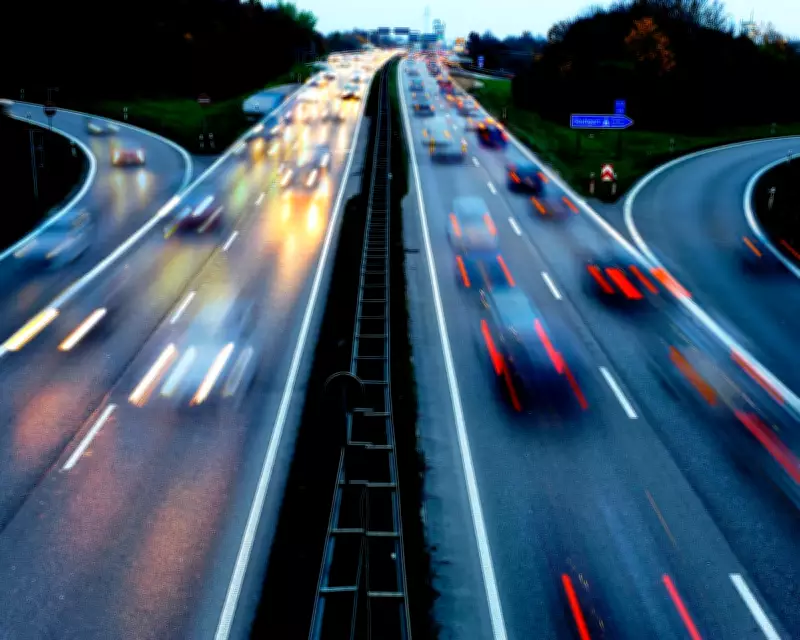
Lutz Leif Linden, president of the Automobile Club of Germany (AvD), describes driving at extreme speeds as an "almost loving relationship." He has reached up to 400 km/h on the Autobahn, comparing the experience to flying an airplane. "It's like the German DNA," Linden asserts, highlighting how this practice has endured through decades of political and environmental challenges. The Autobahn, unique as the world's only major motorway network without a universal speed limit, allows drivers on about 30% of its sections to exceed the recommended 130 km/h guideline.
Political and Public Opinion Shifts
Public support for a Tempolimit has grown slightly in recent years, with polls showing a majority in favor among voters of most major parties, except the far-right Alternative für Deutschland and the Free Democrats. However, political leaders, such as former finance minister Christian Lindner and centre-right chancellor Friedrich Merz, have dismissed the idea as "nonsensical" or "purely symbolic." In Bavaria, home to carmakers like BMW and Audi, the Christian Social Union campaigned with the slogan "Tempolimit? Nein, danke!" echoing anti-nuclear sentiments.

Arguments For and Against Limits
Opponents of a speed limit argue that it is unnecessary, citing the greater dangers on country roads and advocating for dynamic speed adjustments based on traffic and weather conditions. They emphasize the time savings and personal freedom associated with setting one's own pace. Ariane Lattke, president of the German Women's Automobile Club, describes entering a "flow state" when driving fast, where focus and mental clarity peak.
In contrast, researchers and activists point to significant benefits from slowing down. A 2023 study estimated nearly €1 billion in annual societal gains from a 130 km/h limit, while the German Environment Agency in 2024 projected a 2.2% reduction in greenhouse gas emissions. A landmark study in October 2025 found that a 120 km/h limit could cut motorway deaths by 36%, though a 130 km/h limit showed less statistically significant life-saving effects.
Environmental and Economic Pressures
The International Energy Agency has repeatedly urged countries to implement speed limits to mitigate oil supply shocks and reduce fuel consumption. In response, civil society groups, including environmental activists and police unions, have called for comprehensive speed restrictions, proposing caps of 80 km/h outside urban areas and 30 km/h in cities. Climate activist Luisa Neubauer argues that the absence of a limit "kills people" and challenges the mentality that prioritizes fast cars.
Historical Context and Industry Crisis
Germany's automotive heritage dates back to Carl Benz's invention in the late 1800s, with the post-World War II boom cementing cars as central to national prosperity. The "Made in Germany" brand, renowned for engineering excellence, was bolstered by international buyers testing high-speed vehicles on the Autobahn. Today, the industry faces crises from high energy prices and competition from Chinese electric vehicles, leading to factory closures and job losses. Germany has also lobbied to weaken EU bans on combustion engines, with the VDA car lobby downplaying the climate impact of speed limits as "minimal" in an increasingly electrified fleet.
As regional transport ministers convene, the clash between environmental imperatives and cultural traditions continues to define Germany's road policy, with no immediate resolution in sight.