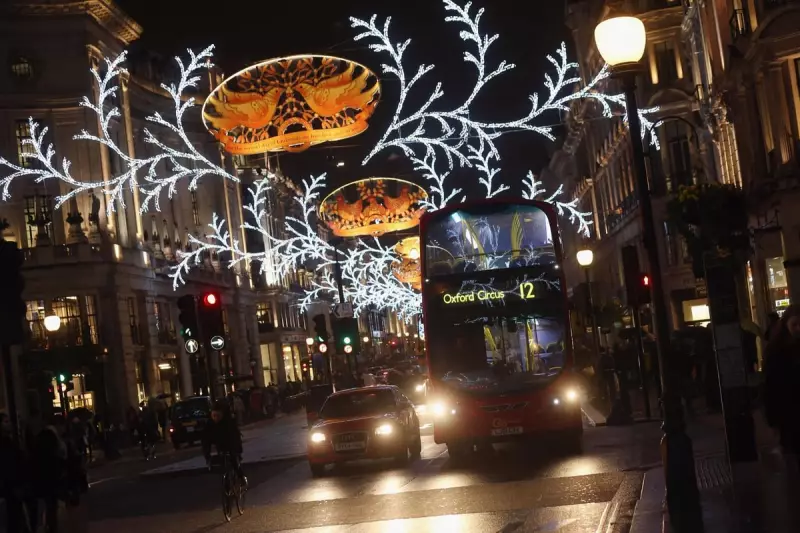
London's drivers are being urged to maintain their composure as the capital's roads reach peak congestion in the final week before Christmas. New research highlights a surge in hostile behaviour, with stressed motorists facing not only confrontation but also the risk of significant legal penalties.
Capital Stress Reaches Boiling Point
According to a major survey of 2,000 UK adults by dash cam leader Nextbase, the week before Christmas is now considered the most hostile time on the roads by 15% of London drivers. The festive exodus from the city is creating a perfect storm of aggression, with one in four Londoners (25%) reporting they have already been a victim of road rage.
Incidents commonly involve threatening hand gestures, aggressive shouting, and persistent horn-beeping. The underlying causes are clear: nearly a third (30%) of all drivers find Christmas motoring more stressful than usual. When asked about potential delays to their Christmas journeys, 44% admitted they would feel frustrated, 27% disappointed, and 15% outright angry.

The High Cost of a Heated Moment
The fallout from a road rage incident carries serious and often overlooked legal consequences. Nextbase's study found that 27% of London drivers feel anxious and distracted after a confrontation. Continuing to drive in this state can be prosecuted as careless driving.
Penalties can escalate from a £100 fixed penalty notice and 3 points for minor cases, to a maximum fine of £5,000 and up to nine penalty points if the case goes to court. New drivers, who have passed their test within the last two years, face automatic licence revocation if they accumulate six or more points.
Meanwhile, 18% of Londoners admit to driving more aggressively after being targeted—7% higher than the national average. Aggressive driving risks unlimited fines, a driving ban for at least one year, and even a prison sentence of up to two years.
Expert Strategies for Staying Safe and Legal
In response to the findings, Nextbase has partnered with leading British psychologist Anjula Mutanda to provide science-backed techniques for handling roadside tension.
"These findings show just how unprepared most people are for road rage confrontations," Mutanda states. "London drivers, who are significantly more likely to panic and go silent when confronted, need these strategies."
The research revealed that across the UK, many are unsure how to react:
- 16% panicked and went silent.
- 15% can't remember their reaction.
- 15% apologised despite not being at fault.
- 11% simply froze.
In London, 21% panicked and went silent—5% above the national average—and 26% later regretted their reaction.
Five Key Techniques for Drivers
1. Recognise Your Body's Threat Response: When you notice physical signs like a racing heart, use a quick grounding technique. Name three things you can see, take three deep breaths, and relax your shoulders and jaw.
2. The Science of De-escalation: Research indicates matching aggression escalates conflict 90% of the time. Avoid eye contact, do not gesture back, and create physical distance if possible.
3. Regulate Your Emotions: Use box breathing to calm your nervous system: inhale for four counts, hold for four, exhale for four, hold for four. This can reduce stress hormone levels by 50% within two minutes.
4. Recover Before Driving On: Studies show attention can be impaired for up to 20 minutes after an incident. Pull over safely, continue breathing exercises, and reframe your thoughts before continuing.
5. The Psychological Safety of Dash Cams: A visible dash cam can deter aggressive behaviour by up to 40%. It provides passive, safe evidence collection. Nextbase research shows 57% of drivers would feel safer with one fitted.

Bryn Brooker, Head of Road Safety at Nextbase, concluded: "As thousands of Londoners prepare to leave the capital for Christmas, pressure on the roads is intensifying. Practical coping strategies are crucial." He urged drivers with dash cam footage of any intimidating incident to upload it to the National Dash Cam Safety Portal, where it can be securely shared with police to help prosecute dangerous driving.