London has been identified as the world's slowest driving capital according to comprehensive new research, with widespread 20mph speed limits being cited as a significant contributing factor to the city's reduced traffic speeds.
Research Reveals London's Traffic Slowdown
Mapping technology company TomTom has released data showing that travelling one kilometre (0.6 miles) through central London took an average of three minutes and thirty-eight seconds last year. This places London as the slowest driving capital globally, with only Colombia's Barranquilla recording slower average road speeds among the 492 towns and cities included in the study.
Mayor's Transport Policy Under Scrutiny
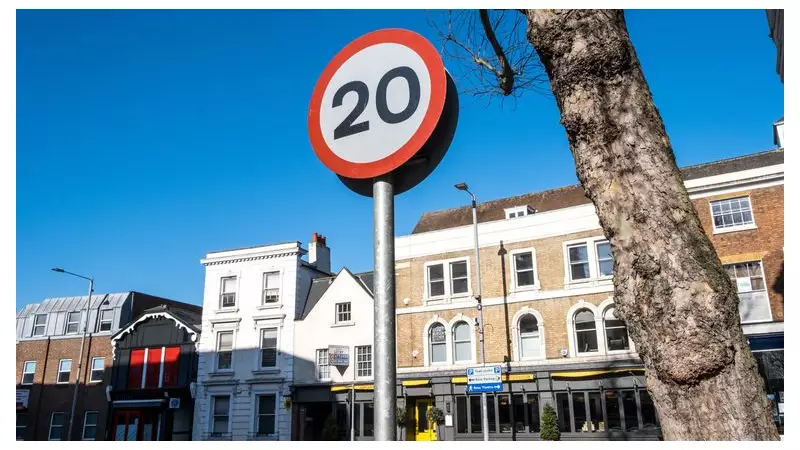
The implementation of 20mph speed limits across more than half of London's roads has become one of Mayor Sadiq Khan's signature transport policies. The initiative aims to reduce road casualties, with Transport for London statistics indicating that pedestrians are five times more likely to survive being hit by a vehicle travelling at 20mph compared to 30mph.

A spokesperson for the Mayor of London defended the policy, stating: "Comprehensive TfL data suggests that journey times on the TfL road network actually remain at similar levels to those in 2019, while analysis from around the UK suggests that lower speed limits have not increased congestion."
Traffic Expert Provides Context
TomTom traffic expert Andy Marchant offered important context about London's traffic situation: "Low average speeds in London are often interpreted as extreme congestion, but that misses the full picture. Average speeds are heavily shaped by static factors such as the widespread 20mph limits, street design that doesn't match today's needs, and consistently high traffic volumes, which means journeys can be slow even when roads are flowing."
Congestion Levels Across UK Cities
The research also examined congestion levels across British urban centres. London ranked as the UK's eighth most congested town or city with a congestion level of 52%, measured by the percentage of additional time spent in traffic compared to free-flow conditions.
Belfast recorded the highest congestion level at 58%, followed closely by Edinburgh at 58% and Cambridge at 54%. The analysis further revealed that London drivers lost an average of 141 hours stuck in rush hour traffic during 2025, with the worst congestion day occurring on 10 September last year, coinciding with a major Tube strike.
Future Urban Mobility Developments
Looking ahead to future transport developments, Mr Marchant noted that this year represents an "interesting time for urban mobility" with autonomous vehicles scheduled for trials across twenty London boroughs. These technological advancements may potentially reshape how Londoners navigate the city's streets in coming years.
The spokesperson for the Mayor added further support for the 20mph policy initiative: "Studies have shown 20mph limits and zones may improve traffic flow and cut traffic jams." This perspective suggests that while current speeds may be slower, the long-term benefits could include more efficient traffic movement and enhanced road safety across the capital.