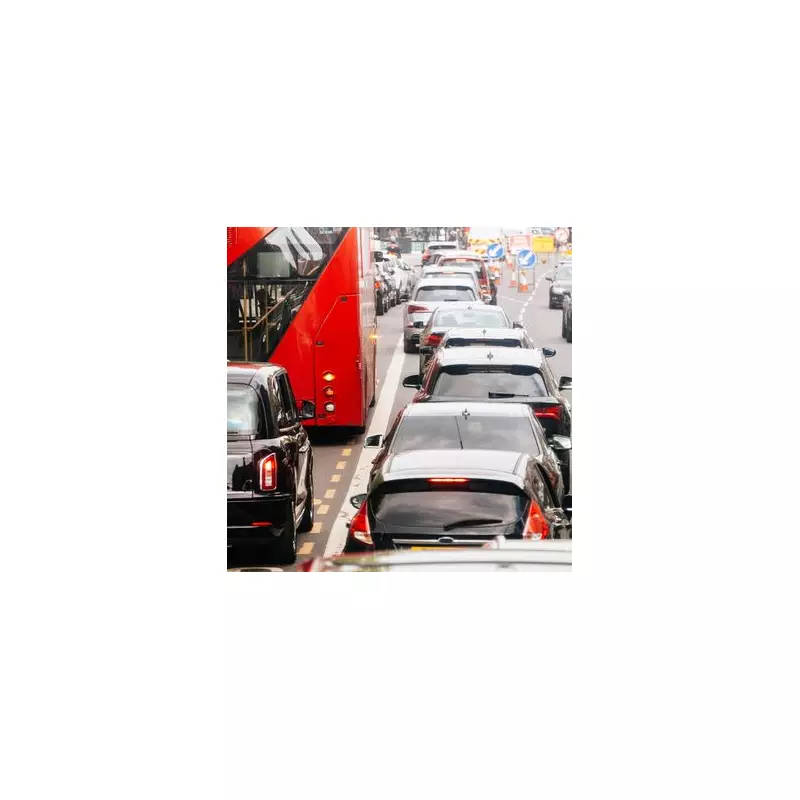
London has been identified as the world's slowest capital city for driving, according to fresh analysis from location technology firm TomTom. The research, which examined 492 towns and cities globally, found that travelling one kilometre in central London took an average of three minutes and 38 seconds last year.
Speed Limits and Safety Policies Under Scrutiny
Widespread 20mph speed limits have been highlighted as a primary contributor to London's sluggish road speeds. This policy forms a cornerstone of Mayor Sadiq Khan's transport strategy, aimed at reducing road casualties across the capital. Transport for London reports that over half of London's roads now operate under a 20mph limit, emphasising that a pedestrian is five times more likely to be killed if struck by a vehicle travelling at 30mph compared to 20mph.
Beyond Congestion: The Static Factors
TomTom traffic expert Andy Marchant explained to the Press Association that low average speeds in London are not solely due to congestion. He stated, "Average speeds are heavily shaped by static factors such as the widespread 20mph limits, street design that doesn't match today's needs, and consistently high traffic volumes, which means journeys can be slow even when roads are flowing." Marchant noted that congestion adds delay on top of an already constrained baseline, rather than being the exclusive cause of slow travel.

Comparative Congestion Data
Within the UK, London ranked as the eighth most congested town or city, with drivers experiencing an average additional time of 52% compared to free-flow conditions. Belfast and Edinburgh topped the list with 58% congestion levels, followed by Cambridge at 54%. The analysis further revealed that London drivers lost an average of 141 hours stuck in rush hour traffic during 2025, with the worst congestion day coinciding with a Tube strike on September 10.
Global and Local Context
Globally, only Barranquilla in Colombia recorded slower average road speeds than London among the locations studied. Looking ahead, Marchant described the coming year as an "interesting time for urban mobility," citing trials of autonomous vehicles being rolled out across 20 London boroughs as a potential future influence on traffic dynamics.
This comprehensive study underscores the complex interplay between safety policies, infrastructure design, and persistent traffic volumes in shaping London's challenging driving environment.