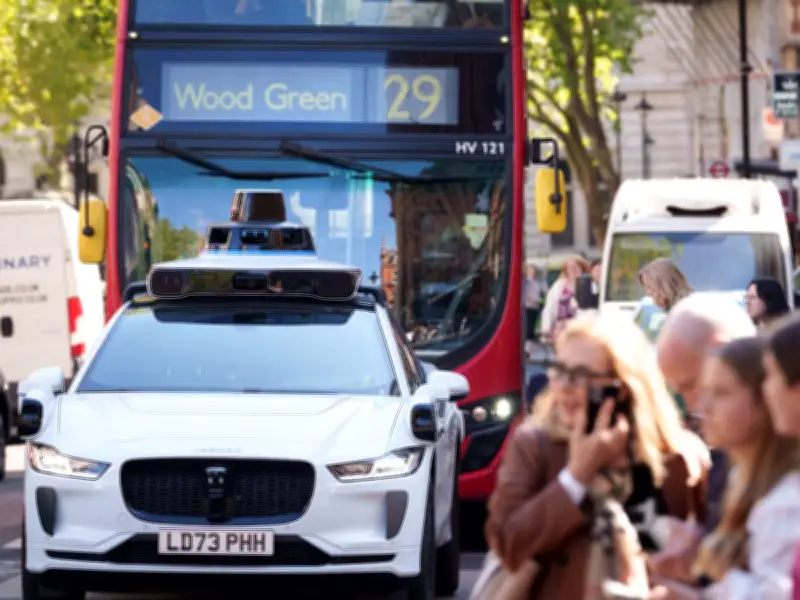
Self-driving car company Waymo is gearing up to launch its commercial robotaxi service in London this summer. The American driverless taxi company has been testing its vehicles on London's streets since last autumn, and has recently begun allowing its autonomous software to take control of cars on public roads, with trained specialists behind the wheel as a precaution. Uber and British startup Wayve are also targeting launches in the capital, with both firms thought to be aiming to begin carrying paying passengers later this summer.
How do they work?
The vehicles use a combination of cameras, radar and sensors to build a detailed picture of their surroundings in real time. They are trained to recognise police officers, emergency vehicles and hand signals. They also learn the unique features of each city they operate in, such as the pitch of local sirens and the meaning of different light patterns used by emergency services. In particularly unusual situations too complex or unexpected for the car to handle on its own, it can contact a remote human operator for guidance. For example, if a police officer is directing traffic at an accident scene, the car might ask: "Is this an authorised person telling me to break the red light?"
The vehicles are also continuously learning, with data gathered from every journey fed into what Waymo calls multimodal AI models, which improve the system over time. The data collected includes tracking how long it takes to travel different routes, to build detailed maps of each city.

What are some of their safety features?
Waymo states on its website that its vehicles are programmed to strictly follow speed limits, encourage passengers to wear seat belts, and remain permanently alert 'in ways a tired or distracted human driver cannot'. The company says its data shows its cars are 'already making streets safer' in the cities where they operate. The company is also an active supporter of Vision Zero, the global initiative to eliminate traffic deaths and serious injuries, which is also a stated goal of the Mayor of London.
Before launching in any new city, Waymo works closely with local police and emergency services, and the company says it has already started this process in London. Panigrahi said: "We train with local law enforcement. We show up multiple months in advance, we engage with local authorities and we train with them."
Why has the launch been controversial?
The introduction of driverless taxis in London has been met with some controversy, and objections have come from multiple directions. Residents in Shoreditch and Spitalfields complained earlier this year that Waymo vehicles repeatedly reversed down narrow residential streets during overnight testing, waking people with persistent warning sounds and sirens. Waymo apologised for the disruption, attributing it to data-collection runs in streets that would rarely, if ever, see demand from actual passengers.
More seriously, a Waymo vehicle veered into an active crime scene in Harlesden, Brent, in April, prompting the local Green Party to launch a 'Say No To Waymo' campaign. The Brent Greens are calling for a pause to the robotaxi trial, which they say poses "a threat to the livelihood" of London's 150,000 private hire drivers.
The potential for job losses is also a broad concern raised by critics. Black cab driver numbers in London have already fallen sharply, from 22,810 in 2014 to 14,800 in 2024, and many in the industry fear a robotaxi rollout could accelerate that decline.
There are also concerns about congestion. A former Transport for London director, Thomas Ableman, warned the London Assembly Transport Committee that without proper regulation, robotaxis could simply add another private hire fleet to already clogged roads. He said: "Best case, it's adding another private hire fleet on the road, like Uber. This means more vehicles on the road, unconstrained by the number of drivers. They will all take up space, delay buses, and lead more people to drive, creating a vicious circle."

How are autonomous vehicles being used elsewhere?
Ableman has urged London to look to Oslo, where self-driving vehicles have been integrated directly into the public transport network since 2019. Rather than competing with buses and trains, Oslo's autonomous vehicles operate in areas poorly served by existing transport, ferrying passengers to rail and bus hubs. The Norwegian capital has even achieved Vision Zero in some years.
Assembly Member Caroline Russell, chair of the Transport Committee, said outer London boroughs, where public transport options are often limited, could benefit greatly if robotaxis were deployed along the lines of the Oslo model. "The biggest opportunities are in those outer London public transport deserts where people feel forced to own a car," she said.
What has TfL said?
TfL has said safety is its "top priority" and that any rollout of autonomous vehicles must support the goals of the Mayor's Transport Strategy, which aims to cut traffic levels and ensure 80 per cent of all trips in London are made by public or active transport. The strategy also includes a Vision Zero target to eliminate all deaths and serious injuries on London's roads by 2041.