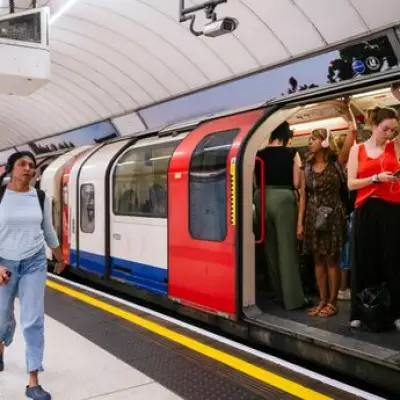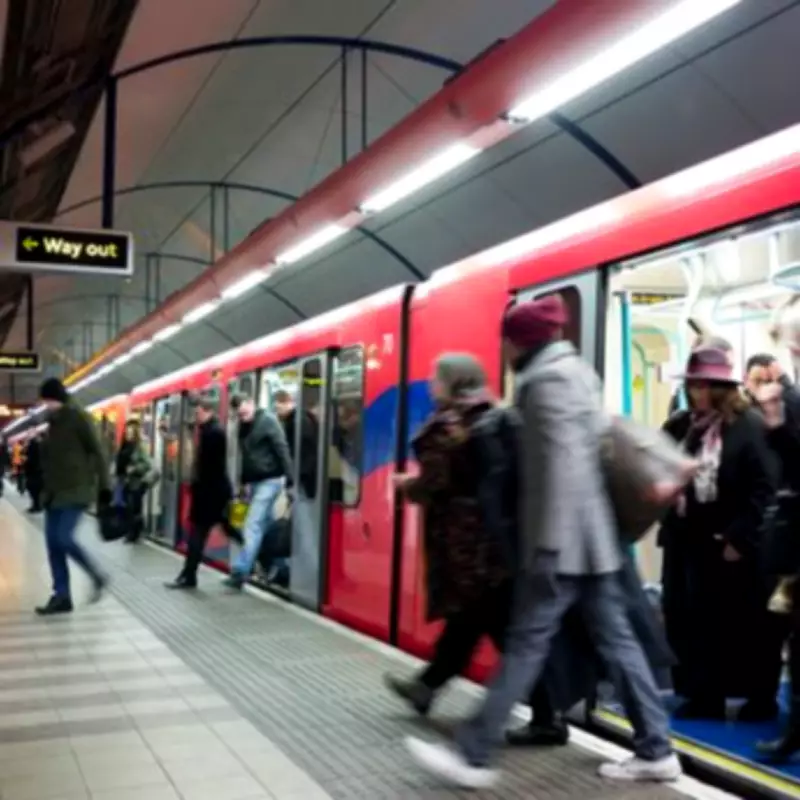
American visitors and residents in London are calling on locals to take greater pride in the city's Underground network, following the rediscovery of a thought-provoking 1970s advertisement for British Rail. The vintage poster, which recently surfaced on Reddit, has sparked a lively transatlantic conversation about urban infrastructure and the relative merits of public transport systems.
A Vintage Warning from the Past
The striking advertisement from the 1970s presents a dystopian vision of London dominated by American-style multi-lane motorways. It depicts Westminster and the Elizabeth Tower surrounded by an elevated highway network, creating a jarring contrast with the city's actual landscape. The accompanying text delivers a powerful message about transportation choices.
The advertisement states: "Every working day, 400,000 people travel in and out of London by British Rail. But there is an alternative. Like Los Angeles, we could rely entirely on roads instead. Of course, some roads would have to be widened to take the extra traffic."

It continues with a sobering calculation: "Not only that, but we'd need to build an estimated 120 additional lanes of highway. Even then, there would still be the problem of what to do with all the cars as they converged on Central London." The advertisement concludes with the logical argument: "Looking at it that way, it makes a lot of sense to invest in our way," followed by the British Rail slogan: "The backbone of the nation."
American Perspectives on London's Transport
The resurfaced advertisement has prompted numerous Americans to share their experiences with London's public transport system, often contrasting it unfavourably with infrastructure in the United States. One American commenter who has lived in London for four years stated emphatically: "I'm never going back to live in that hot mess. Being car dependent is a terrible thing."
Another recent visitor from America commented: "American here. Just got back from London last week to see a game at the O2. I was very impressed with the tube, much more so than my time in NYC on the subway. Loved the integration of public transport in London. Sadly, my city is completely based off of cars and private travel, and will never compare. Our public transportation system is terrible. London is great, you should be proud of the Tube."
British Reflections on American Infrastructure
Londoners have also contributed to the discussion, sharing their own experiences with American transportation systems. One local recalled a visit to relatives in the United States during the 1990s: "I remember when I visited a relative who was studying in the USA in the 90s. He didn't have a car and told me how there were no footpaths where he lived and he had to walk along a snowy grass verge on a busy road to wait for a bus."
The commenter added: "We are indeed blessed to not be over developed by motorways in our major cities and towns like in America. Not driving or using a car is almost like a disability in the states my cousin told me and he moved to New York where he is a lot happier because of a good public transport system."
Another Londoner shared a recent experience: "Had some relatives over from America last week, they couldn't understand why we didn't drive everywhere. After they were gone I ended up binging on some urban planning videos on YouTube and hadn't appreciated how car-centric their lives are until now. So glad we didn't end up like this even if I do complain about TfL."
The Broader Conversation About Urban Planning
The discussion has expanded beyond simple comparisons to address fundamental questions about urban design and quality of life. One commenter observed: "People who haven't visited the US don't understand how much of a blessing it is to have good public transportation. American cities are built more for cars than people and it's a nightmare. London wouldn't be far off from this pic."
Another simply asked: "God can you imagine if there were American style motorways running through the entire city?" This rhetorical question highlights the appreciation many have developed for London's current infrastructure after considering the alternative presented in the vintage advertisement.

The conversation serves as a timely reminder of the value of public transport systems in major cities, with many participants expressing gratitude that London avoided the car-centric development path taken by many American cities. While complaints about Transport for London services are common among regular users, this transatlantic perspective provides valuable context about what might have been, and what exists in other parts of the world.