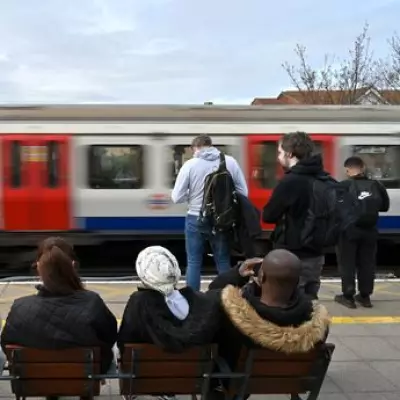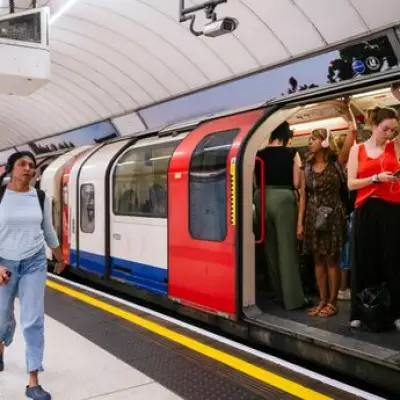
Regular users of the London Underground know that the iconic Tube map is a masterclass in simplified design, but its clarity sometimes comes at a cost. A curious omission has caught the eye of observant commuters: Gloucester Road station is not marked as an interchange on official Transport for London maps, despite allowing passengers to switch between the Piccadilly line and the District and Circle lines.
The Missing White Circle
On TfL's network map, both in carriages and on posters, stations where you can change lines are typically denoted by a white circle ringed with black. This symbol is a quick visual cue for planning your journey. However, at Gloucester Road, this symbol is conspicuously absent. The dark blue Piccadilly line and the green and yellow District and Circle lines appear to run independently, with no indication that a connection is possible between them.
This is not a new error on the map. Discussions on forums like TripAdvisor have highlighted similar past omissions. As user Cam131999 pointed out, Turnham Green and Barons Court stations were also once missing their interchange status. Interestingly, TfL has since updated its maps to correctly show these two as interchanges, yet Gloucester Road remains unmarked.

Why Is Gloucester Road Different?
The prevailing theory for this exclusion points to the station's notoriously inefficient interchange layout. For passengers alighting from the deep-level Piccadilly line platforms, reaching the sub-surface District and Circle lines is a trek. It involves walking to the platform end, climbing a long staircase, navigating corridors, and finally waiting for one of two large lifts (or tackling another lengthy stair climb).
This process is often congested, as passengers from the surface descend in the same lifts. To manage passenger flow and reduce crowding, TfL appears to deliberately downplay this connection. Instead, the map encourages travellers to use the more streamlined interchanges at nearby South Kensington and Earl's Court.
Map Anomalies and OSIs
The situation seems inconsistent when considering that TfL's map does feature Out-of-Station Interchanges (OSIs). These are indicated for locations like the two separate Hammersmith stations, where you can cross the road between services without incurring an extra fare, provided you complete the transfer within a set time limit.
The case of Gloucester Road highlights the delicate balance TfL must strike between geographical accuracy, passenger information, and operational management. While the map is a diagram, not a literal geography lesson, the absence of a key interchange symbol can confuse those unfamiliar with the network's quirks.
Beyond this cartographic curiosity, Gloucester Road is also noted for its distinctive character, hosting an array of artworks that make it one of the more culturally interesting stops on the network. Yet, for now, its full role as a connecting hub remains a secret kept from the casual map reader.