My Ride in a Self-Driving Taxi: London's Robotaxi Revolution Begins
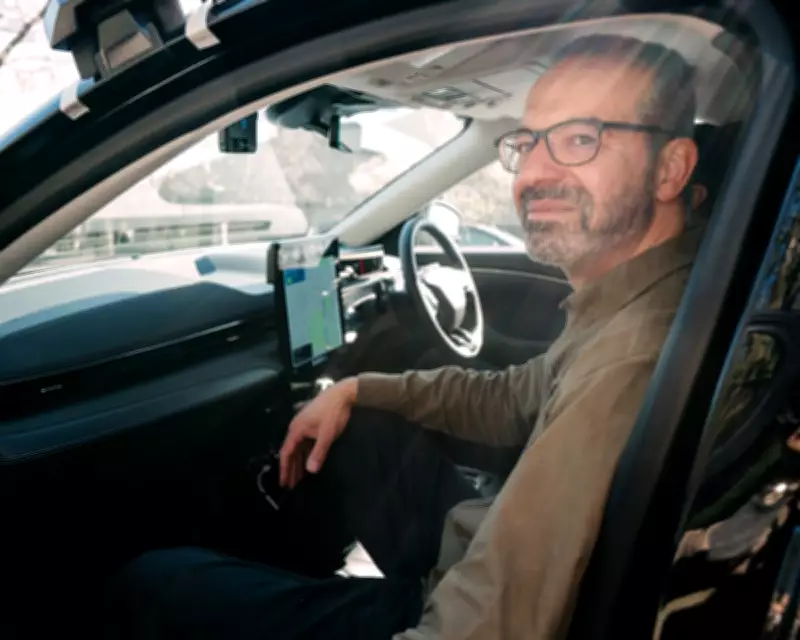
I step into the passenger seat of an electric Ford Mustang, with Alex Kendall, the CEO of Wayve, behind the wheel. But as we approach a busy junction in King's Cross, he does nothing. The car pulls up all by itself, its steering wheel spinning autonomously. "We don't tell the car what it should do; it learns the body language," Kendall explains, as the vehicle smoothly navigates an unprotected turn, waiting for a gap in traffic. This is my first experience in a self-driving car, and it's both terrifying and reassuringly unremarkable.
London's Unique Challenge for Autonomous Vehicles
By the time I step out 20 minutes later, I'm convinced Wayve's AI is a better driver than most humans. But London presents a formidable test. With narrow roads, a medieval street plan, unpredictable pedestrians, errant ebikers, and pushy drivers, it's far more complex than cities like San Francisco. Kendall notes that London has about 20 times more roadworks and 11 times more cyclists and pedestrians. Yet, during our test, the car aced every challenge, from halting for a man with a walking stick at a zebra crossing to understanding when another driver flashed their lights to let us go first.
Wayve's technology differs from earlier autonomous vehicles. Instead of breaking driving into discrete, rule-based components, it uses an end-to-end AI—a single neural network that predicts risk and understands scene dynamics. This allows it to adapt to new situations, much like a human driver. Since 2018, Wayve has trained across the UK and driven over 7 million miles autonomously in over 500 cities worldwide, including 340 it had never visited before.

The Global Race for Robotaxi Dominance
Wayve is not alone in this race. Following the Automated Vehicles Act of 2024, the UK government aims to approve self-driving taxis by the end of next year. Competitors include the US giant Waymo, which operates a fleet of modified Jaguar i-Paces in London, and China's Baidu, planning to bring its Apollo Go service to the capital. Tesla has also showcased a driverless Cybercab, though it lags behind with supervised services in the US.
Waymo and Apollo Go are the world's largest robotaxi operators, with Waymo completing 450,000 rides weekly and Apollo Go recording 250,000. Both see London as a gateway to European markets. Technology policy expert Jack Stilgoe suggests Britain could become the rule-maker for this technology, balancing Silicon Valley's wild west with Beijing's wild east.
Impact on London's Iconic Black Cabs
The arrival of robotaxes raises concerns for London's black cab drivers, who have been a staple since the 17th century. Steve McNamara, head of the Licensed Taxi Drivers' Association, says he's "not worried in the slightest." He argues that taxi drivers offer irreplaceable services, from handling lost property to assisting passengers with disabilities or unpredictable needs. "Nobody ever wants to go from A to B," he quips, citing frequent route changes and last-minute stops.
Black cabs have faced challenges before, from Uber's disruption in 2012 to the Covid-19 pandemic. While private-hire vehicles have grown, taxi numbers have slightly declined. McNamara believes robotaxes will be "bullied" by pedestrians and drivers, and he's confident in a trial where black cabs would outperform them in route knowledge and efficiency.
Safety, Public Acceptance, and the Future of Urban Transport
Robotaxis boast impressive safety records; Waymo claims involvement in five times fewer injury-causing collisions than human drivers. However, incidents like traffic cones disabling vehicles or cars freezing during power cuts highlight vulnerabilities. Questions about autonomy persist, with remote assistance operators based in the US and Philippines raising cybersecurity and job replacement concerns.
Public acceptance may hinge on price. In San Francisco, Waymo costs 12.7% more than Uber and 27.3% more than Lyft. McNamara predicts robotaxes will be more of a tourist attraction than a real competitor. Yet, Kendall envisions a future where all cars are autonomous, improving road safety through better communication between vehicles.

Ultimately, the debate extends beyond who drives the cars. Cars themselves are inefficient for moving large numbers in cities, with public transport, cycling, and walking offering better solutions. Kendall agrees his technology must coexist with these modalities. As London prepares for this shift, the streets may change forever, but the goal should be reclaiming civic spaces, not just swapping drivers.