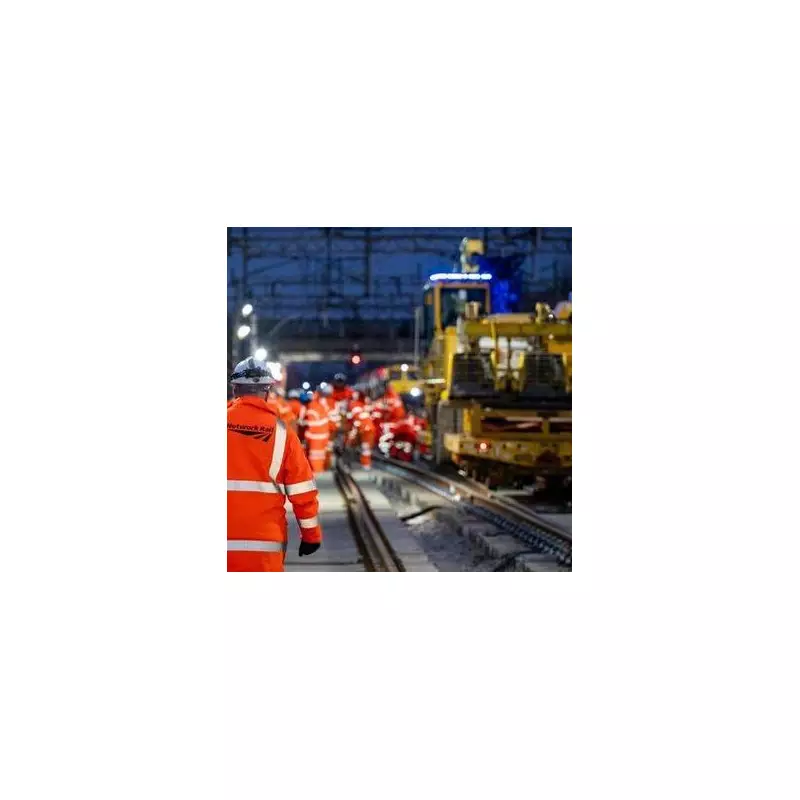
Major Investment Announced for Britain's Busiest Rail Corridor
Transport authorities have revealed comprehensive plans for a £400 million upgrade to the West Coast Main Line, Britain's most heavily used railway route connecting London Euston with Glasgow and Edinburgh. This represents the most significant modernisation programme for this critical infrastructure in over fifty years, addressing what officials describe as "infrastructure struggling to meet modern demand."
Addressing Growing Capacity Pressures
The railway line, which traverses the West Midlands and North West England, currently supports approximately 2,000 daily passenger services while transporting 15,000 tonnes of freight each day. With passenger numbers projected to double by 2050, Network Rail has emphasised that this substantial investment is essential for ensuring the railway can "keep pace with the future" and maintain its vital role in national connectivity.
Multi-Year Improvement Programme
Engineers will implement hundreds of individual improvements and renewals over the coming years as part of this ambitious scheme. Julien Dehornoy, Network Rail's north west and central deputy regional managing director, stated: "This is about securing the future of one of Britain's most vital railway lines. The improvements will take time, but by investing now, we're laying the foundations for a more reliable, resilient railway that communities and businesses can depend on for decades to come."

Network Rail has confirmed that each project within the programme will be carefully coordinated with train operators to minimise disruption, with advance notice provided to passengers about any journey alterations. The organisation has stressed its commitment to maintaining service continuity throughout the extensive works.
Addressing Performance Challenges
The announcement follows concerning performance data revealing significant punctuality challenges on routes utilising the West Coast Main Line. According to a 2025 House of Commons report referencing 2024 statistics:
- Great Britain's average on-time service percentage stood at 67.0%
- Avanti West Coast managed just 40.6% punctuality
- CrossCountry achieved 47.3%
- TransPennine Express reached 49.4%
- West Midlands services achieved 63.3%
- Northern Trains recorded 58.2%
The report noted that "each selected train operator that uses the West Coast Main Line, except for TransPennine Express, was below the Great Britain average" for punctuality, highlighting the pressing need for infrastructure improvements.
Long-Term Benefits and Objectives
Network Rail has outlined that benefits from the £400 million investment will accumulate gradually, with each upgrade contributing toward multiple strategic objectives:
- Fewer delays and smoother journeys for passengers
- Stronger connections between towns, cities and communities
- Enhanced resilience against extreme weather and climate change impacts
- Increased freight capacity, reducing lorry traffic and carbon emissions
- Support for local economies through job creation and investment
The organisation describes this initiative as "the start of a long-term programme to make journeys more reliable and resilient along the vital rail corridor," acknowledging that while the works will require considerable time, they will ultimately deliver substantially enhanced services for both passengers and freight operators.