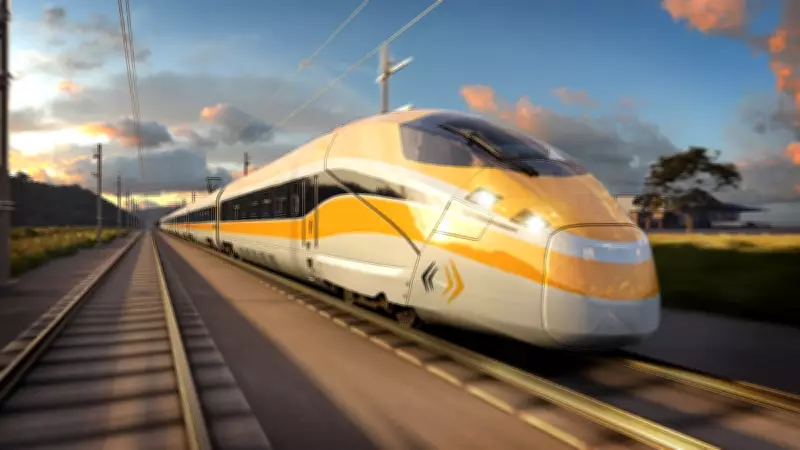
The Australian government has announced a significant step forward in its long-mooted high-speed rail ambitions, with plans for a bullet train link between Sydney and Newcastle potentially becoming "shovel-ready" within just two years. Transport Minister Catherine King will pledge an additional $230 million for detailed planning work on the first phase of an eventual east coast high-speed rail network.
Revolutionizing Travel Times
According to Minister King, the proposed high-speed rail could dramatically reduce travel times between key regions. Rail journeys between Sydney and Newcastle could take as little as one hour, compared to the current 2.5 hours. The trip from Sydney to the Central Coast could be slashed to just 30 minutes, down from nearly 1.5 hours currently. This represents a transformative shift in intercity connectivity for Australia's most populous region.
Massive Economic Benefits Projected
The government's business case, to be released in Newcastle on Tuesday, claims the high-speed rail project would boost the Australian economy by an astonishing $250 billion over the next half-century. Additionally, it's projected to support approximately 99,000 new jobs across construction, manufacturing, and tourism sectors. While the full business case hasn't been shared publicly ahead of the announcement, these figures underscore the project's potential national significance.

The Funding Challenge
Despite the ambitious plans, significant hurdles remain. The Sydney-Newcastle leg alone is estimated to cost up to $90 billion, with taxpayers likely bearing most of this mammoth financial burden. Minister King acknowledged that the government is still considering how to finance the multibillion-dollar project, with the new development phase expected to run for several years before construction could even begin.
"Carefully planned, costed and detailed preparation takes time, but it means when construction starts, it is built to last," King emphasized. The development phase will involve meticulous planning "metre by metre" to lock in design, approvals, scope, and costs.
Long-Term Vision for East Coast Connectivity
The Sydney-Newcastle link represents just the first phase of a much broader vision. The federal High Speed Rail Authority is planning for a comprehensive rail network that would eventually connect Brisbane, Sydney, Canberra, Melbourne, and regional communities in between. Prime Minister Anthony Albanese, who as transport minister in 2013 unveiled a Brisbane-to-Melbourne rail plan costed at $144 billion, recently stated that high-speed rail connecting "Newcastle to Sydney to Canberra to Melbourne makes absolute sense."
Political and Practical Challenges
High-speed rail has been a dream of Australian politicians and a mainstay of federal election campaigns for decades. However, realizing this vision presents substantial challenges beyond just funding. Securing required land and negotiating agreements with local and state governments will be significant hurdles. The project requires what King calls a "disciplined approach to planning and construction sequencing."
Prime Minister Albanese has been realistic about timelines, admitting that the project "won't be open while I'm prime minister" but expressing hope to see high-speed rail between Sydney and Melbourne "in my lifetime." He noted that Australia is "the only inhabited continent on Earth that doesn't have high-speed rail" and suggested private investment, potentially from Japanese companies and government entities, might play a crucial role in making the project financially viable.
Next Steps and Development Phase
The new $229.6 million funding announcement brings total investment in the development phase to $659.6 million. This two-year process will ensure that what's designated as "Line 1" becomes construction-ready. As recommended by Infrastructure Australia, this detailed work is essential before major construction contracts can be awarded.

"The High Speed Rail Authority will go metre by metre, to lock in the design, approvals process, scope and cost of the future rail line. At the end of this two-year process, the project will be shovel-ready," King's office stated. The development phase will also assess potential public and private financing options to inform future government investment decisions once project scope, cost, and risk are finalized.
Albanese has emphasized the broader regional development benefits, suggesting that high-speed rail could help take pressure off capital cities while stimulating regional economic growth along the route, including in the national capital of Canberra. The project represents not just a transportation initiative but a potential catalyst for reshaping population distribution and economic activity across Australia's eastern seaboard.