HS2 Tunnel Excavation Commences at Euston Despite Station's Uncertain Future
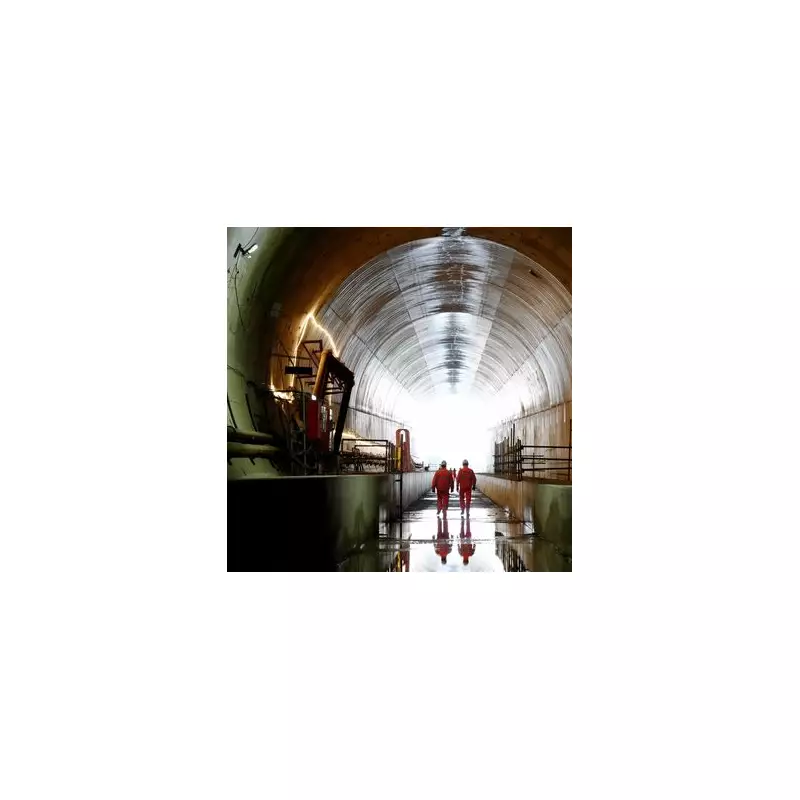
In a significant development for Britain's high-speed rail project, engineers have initiated the excavation of HS2's tunnel from Euston to Old Oak Common. This move comes despite persistent doubts surrounding the future of Euston station itself, highlighting the complex and phased nature of the infrastructure endeavour.
The Madeleine Machine Begins Its 4.5-Mile Journey
The tunnel boring machine, aptly named Madeleine in honour of Madeleine Nobbs, the former president of the Women's Engineering Society, was officially activated on Tuesday, January 27. The ceremony was attended by Chief Secretary to the Prime Minister Darren Jones and Rail Minister Lord Hendy. The colossal machine, measuring 190 metres in length, was manufactured in Germany by Herrenknecht AG and transported to the Old Oak Common site in sections.
A substantial 750-tonne crane was employed to lower the components into an underground box at the eastern extremity of the station, where Madeleine was meticulously reassembled. The tunnelling operation is projected to take approximately 18 months to complete the 4.5-mile route from Old Oak Common in Ealing to the planned Central London terminus at Euston. This twin-bore tunnel will reach impressive depths of up to 50 metres beneath the city.

Funding Uncertainties and the Euston Station Conundrum
This tunnelling milestone occurs against a backdrop of considerable uncertainty regarding the Euston station development. Major construction work at the Euston site has been suspended since March 2023 due to escalating funding concerns and budgetary reviews.
In a pivotal announcement in October 2023, then Prime Minister Rishi Sunak declared that the project would pivot towards relying on private investment in a bid to conserve an estimated £6.5 billion of public funds. Consequently, the station's development would no longer be managed directly by HS2 Ltd.
The current Labour Government, in office since June 2025, has proposed the formation of a Euston Delivery Company to oversee the area's redevelopment. This entity is actively exploring the potential utilisation of private finance to resurrect and complete the station project. For the immediate future, Old Oak Common will serve as the provisional London terminus for initial HS2 services, a direct result of the delays plaguing the Euston development.
Political and Executive Confidence in the Project's Path
Despite the challenges, senior figures have expressed robust confidence in the project's trajectory. Chief Secretary Darren Jones remarked, "There's nothing boring about tunnel boring. Today's launch was a brilliant moment for the UK's railways, building on six major rail tunnel and road milestones completed ahead of schedule last year." He emphasised the project's role in enhancing connectivity between major cities to foster trade and social interaction.
Echoing this sentiment, Rail Minister Lord Hendy described the machine as "an engineering marvel" and stated its activation brings "HS2's journey to Euston another step closer to reality." He underscored the critical importance of linking the railway to central London to fully unlock its potential for generating jobs, homes, and providing a sustained boost to the national economy.
Cost Escalations and a Comprehensive Project Reset
The HS2 project has been marred by significant cost inflation and timeline revisions over the past decade. Originally conceived as a network stretching from Euston to Birmingham, Manchester, and Leeds, the scheme was drastically scaled back by the previous Conservative administration due to spiralling expenses.
Initial cost estimates from 2013, priced in 2009 values, projected the entire network at £37.5 billion. By June 2024, HS2 Ltd's assessment indicated the cost for the London to Birmingham phase alone could soar to as much as £66 billion. The inaugural phase, once slated for completion by the end of this year, has seen its opening window pushed back to between 2029 and 2033, with recent confirmations indicating even this revised schedule may not be met.

Overseeing a strategic reset is HS2's chief executive, Mark Wild, who assumed his role in December 2024. Mr Wild characterised the launch of the Madeleine boring machine as "a show of confidence that HS2 will be built into central London." He is leading a thorough review of the project's cost and schedule, with a revised plan slated for publication later this year. "Over the past 12 months, I have been leading a comprehensive reset across HS2 to get it back on track," Wild stated, expressing confidence in delivering the project safely and efficiently.
A second tunnel boring machine is scheduled to be launched in the coming months. These engineering giants will excavate and construct the tunnel simultaneously, methodically slotting concrete segments into place as they advance. This latest development represents a tangible, albeit complex, step forward for one of the UK's most ambitious and debated infrastructure projects.