Spain has entered a period of national mourning following a catastrophic high-speed train collision that has claimed at least 40 lives and left dozens injured, marking the country's worst rail disaster in over a decade.
A Night of Horror and a Desperate Search
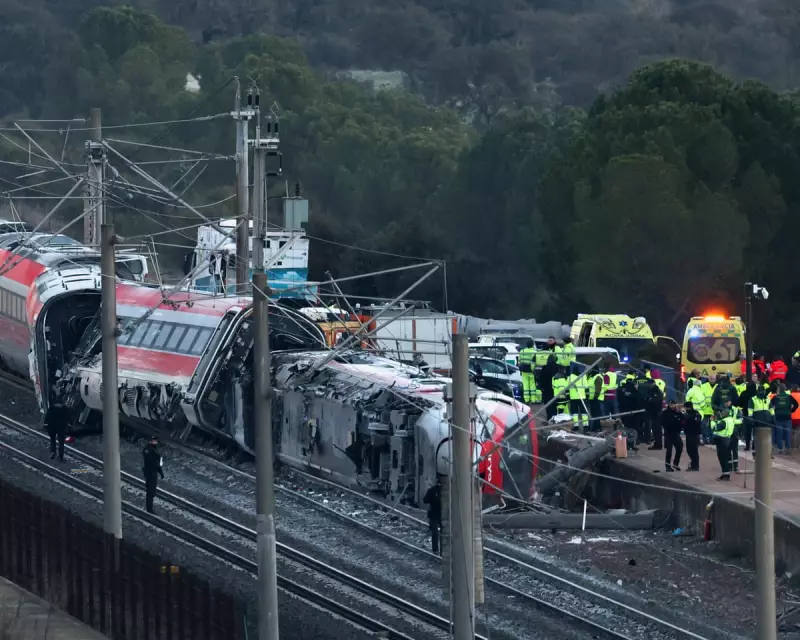
Emergency crews worked through the night and into Monday, combing through a scene of twisted metal and scattered debris near the town of Adamuz in Córdoba province. The tragedy unfolded just before 8pm on Sunday when the rear section of a Madrid-bound train, carrying around 300 passengers, derailed on a straight stretch of track and collided with an oncoming service.
The force of the impact was devastating. Spain’s transport minister, Óscar Puente, confirmed the first two carriages of the southbound train were knocked off the rails, plummeting down a 4-metre (13ft) slope. For more than 18 hours after the crash, families across Spain were frantically trying to locate missing relatives.

Juan Barroso told reporters that five members of his extended family had been on the train travelling from Madrid to Huelva. Only a six-year-old child had been accounted for. "Now we’re searching for the four who are missing," he said, detailing a desperate tour of hospitals in Jaén, Úbeda, and Córdoba.
The scale of the search was immense. The head of the Andalucían government, Juanma Moreno, described the carriages as a "twisted wreck" and revealed the violence of the impact had scattered bodies hundreds of metres from the site. "The impact was so incredibly violent that we have found bodies hundreds of metres away, which means that people were thrown through the windows," he told broadcaster Cope.
Questions Mount Over Cause of 'Strange' Derailment
As the rescue operation continued, urgent questions emerged about how such a disaster could occur on Spain's modern, high-speed network. Transport Minister Puente called the derailment on a straight section of track "really strange," noting the particular section had been renovated as recently as May.
The private operator of the derailed train, Iryo, stated the train was less than four years old and had been inspected just four days before the crash. Álvaro Fernández Heredia, president of the state rail company Renfe, said it was too early to determine a cause but noted the accident happened in "strange conditions," adding that "human error is practically ruled out."
A source told Reuters that technicians on site had identified a broken joint on the rails, which may have created a dangerous gap. This faulty joint could prove crucial to the investigation. The state-owned rail infrastructure administrator, Adif, which has flagged 10 infrastructure issues in the area since 2022, did not respond to requests for comment.
A Nation in Mourning and a Community in Shock
Prime Minister Pedro Sánchez visited the scene on Monday, declaring three days of national mourning beginning at midnight. He vowed a full and transparent investigation. "Spanish society, like all of us, is wondering what happened, how it happened, how this tragedy could have occurred," he told reporters.
The small Andalusian town of Adamuz, a few kilometres from the remote crash site, was thrust into the heart of the crisis. Its municipal hall became an improvised emergency centre, offering first aid, food, and warmth to dazed survivors. Mayor Rafael Moreno, among the first on the scene, described it as "horrific" and "a tremendously tough, sad night."
The accident has sent shockwaves through a nation where the extensive high-speed rail network—the largest in Europe and second globally after China—is a source of immense pride. In 2024 alone, Renfe reported more than 25 million passengers on its high-speed services. As the official mourning period begins, the focus remains on the victims, the ongoing search, and the pressing demand for answers about what went so tragically wrong.