Spain has commenced a solemn three-day period of national mourning following a devastating high-speed train collision in the province of Cordoba, with authorities warning that the death toll could still rise as recovery operations progress.
Recovery Efforts Underway Amidst Rising Casualty Figures
Interior Minister Fernando Grande-Marlaska has confirmed that at least three deceased individuals remain trapped within the wreckage, though it is unclear if these are included in the current official count of 41 fatalities. Police reports indicate that 43 people are listed as missing by their families, mirroring the provisional number of victims from the crash.
Sky News Europe correspondent Alistair Bunkall, reporting from the scene, noted that more bodies are expected to be recovered as cranes begin moving at least one of the carriages on Tuesday morning. Officials have repeatedly cautioned that the death count may increase in the coming hours.

Injuries and Hospitalisations Following the Collision
At least 159 people sustained injuries in the collision, which involved two trains travelling at approximately 130 miles per hour. Health authorities reported that 39 individuals remained hospitalised on Tuesday morning, with 83 others treated and discharged.
Royal Visit and National Mourning
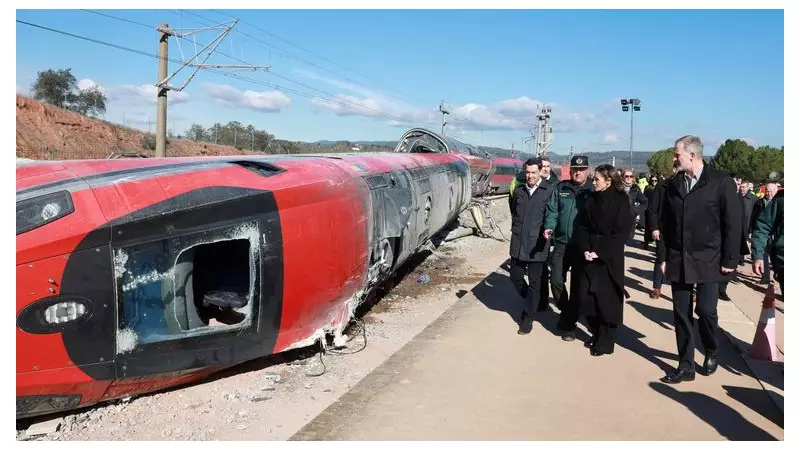
Spain's King Felipe and Queen Letizia visited the rural crash site near the town of Adamuz, about 230 miles south of Madrid, on Tuesday. The nation has begun three days of mourning to honour the victims of this tragic incident.
Details of the Crash and Investigation
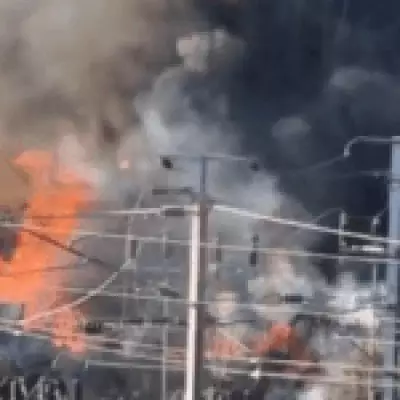
The collision occurred when the end of a Malaga to Madrid service derailed and crossed the tracks, where it was struck by a train travelling from Madrid to Huelva in the Andalusia region. El Pais newspaper reported that the 27-year-old driver was among those killed.
Authorities appear perplexed by the cause of the derailment, with a source suggesting a faulty rail joint as a potential factor. However, Alistair Bunkall noted that officials seem "totally baffled" as to why the first train left the tracks.
Fernandez Heredia, the head of Spain's national railway company Renfe, has ruled out human error, while Transport Minister Oscar Puente described the crash as "truly strange" given it happened on a flat stretch of track. He explained that the back of the derailed train slammed into the other service, knocking its first two carriages off the track and down a four-metre slope.
Survivor Accounts and Escape Efforts
Footage from the scene showed passengers climbing out of smashed windows to escape the wreckage. Survivors have shared harrowing accounts of the moments before and after the collision.
Lola Beltran told Spanish broadcaster TVE that she had moved seats from one of the worst-affected carriages to sit with a colleague just moments before the crash, a decision that may have saved her life.
Bianca Birleanu, a 23-year-old travelling to Huelva, recounted to El Pais: "We felt the first jolt and, in a fraction of a second, another very strong one. The table in front of our seat fell on top of us, the lights went out, and the carriage roof collapsed."
Railway Safety Context and Historical Comparisons
Despite this tragedy, Spain's recent rail safety record ranks among the best in the European Union, according to the European Commission. In 2024, eighteen people were killed in rail accidents, equivalent to approximately one fatality per 1,000 kilometres of track.
The worst Spanish railway accident this century occurred in July 2013, when a train derailment in Santiago de Compostela claimed 79 lives. Unions had previously raised concerns about wear and tear on the stretch of track involved in the latest incident, though it underwent significant upgrades in May.