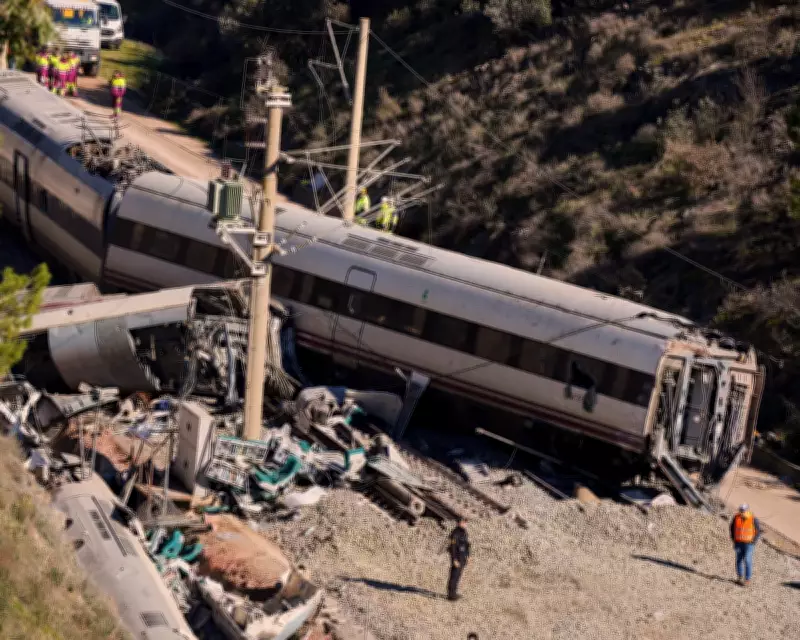
Spain's High-Speed Rail Network Faces Safety Scrutiny After Deadly Accidents
Spain, home to Europe's most extensive high-speed rail network and the world's second-largest after China, has long celebrated its train system as a source of national pride and political consensus. However, this month's tragic accidents near Adamuz in Andalucía and in Catalonia have shattered that unity, exposing deep concerns about infrastructure maintenance and sparking bitter partisan conflict.
The Calamities That Shook a Nation
On 20 January 2026, a devastating derailment and collision near the town of Adamuz claimed 45 lives and left dozens injured. Mere days later, a second accident in Catalonia, caused by a wall collapse during severe weather, killed a commuter train driver in Barcelona. These incidents have forced Spaniards to confront uncomfortable truths about their beloved rail system, which carries over 56% of all transport and saw 85 million long-distance passengers in 2024 alone.
The investigation into the Andalucían tragedy is focusing on a critical point: a broken weld connecting rails from 1989 and 2023. This has raised urgent questions about whether the Madrid-Seville line, among the oldest in the high-speed network, received adequate overhauls. Transport Minister Óscar Puente has already acknowledged errors in his initial statements, while the opposition People's party (PP) has seized the moment to launch broadsides against the Socialist-led government.

Political Point-Scoring Versus Practical Solutions
Despite the immediate blame game, the reality is more nuanced. Spain's high-speed rail achievement represents decades of cross-party commitment, yet a persistent pattern has emerged: politicians of all stripes consistently prioritise inaugurating new lines over maintaining existing infrastructure. Photo opportunities at gleaming new stations prove more appealing than the unglamorous, vital work of upgrading remote tracks.
The current centre-left government has indeed invested more in rails and maintenance than its conservative predecessor, which governed during the austerity following the financial crisis. Nevertheless, Spain still spends less per kilometre on maintenance than Germany or Switzerland, even accounting for differences in network age and construction costs.
The Human and Economic Stakes
For ordinary Spaniards, trains are not just symbols of national progress but essential components of daily life. The Madrid-Barcelona journey, covering 600km in under three hours for around €65, exemplifies the network's efficiency and affordability. Yet local networks have suffered years of delays and malfunctions, with depopulated areas gradually losing services entirely.
The recent accidents have highlighted this troubling dichotomy: while Spain's high-speed trains remain cheaper, faster and more comfortable than most in Europe, the foundation upon which they run may be crumbling. The Catalonian incident completely halted Barcelona's local network for days, underscoring systemic vulnerabilities.
A Path Forward Beyond Partisanship
Moving forward demands a serious, careful approach from both government and opposition, rather than another unscrupulous race to the bottom for political gain. The PP-led regional government in Valencia faced severe criticism for mismanaging 2024 floods, leading to its president's resignation. Now, many conservatives are attempting to pin the train disaster solely on the national government, though some, like Andalucía's president, have shown restraint.
Ultimately, Spain must reconcile its legitimate pride in rail achievements with the boring but vital task of sustaining them. With growing traffic, new lines and increasing passenger numbers, the need for robust, depoliticised investment in maintenance has never been clearer. The alternative—more tragedies and eroded public trust—is unthinkable for a nation where trains are woven into the fabric of modern life.