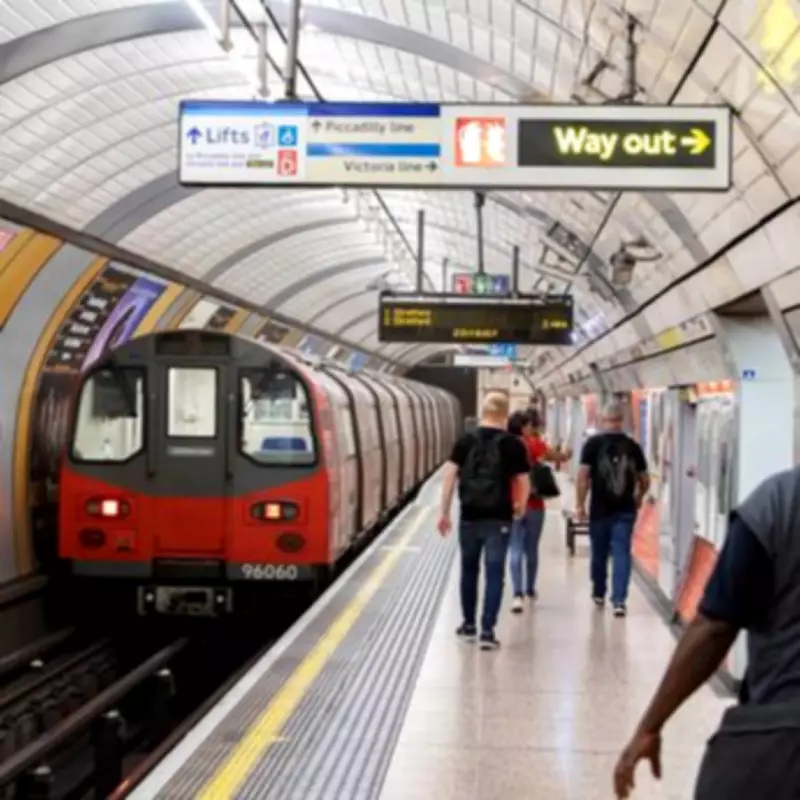
The Science Behind London Underground's Sweltering Temperatures
For generations of London commuters, the oppressive heat of the Underground has become an accepted part of daily life. Even during the coldest winter months, temperatures deep within the Tube network can soar to uncomfortable levels, leaving passengers wondering why this essential transport system feels more like a tropical environment than a public service.
From Chilly Beginnings to Thermal Saturation
Remarkably, the London Underground wasn't always this warm. When the pioneering underground railway first opened in the 19th century, temperatures in the tunnels typically ranged between 10-15 degrees Celsius. The clay soil beneath London's streets acted as a natural cooling system, absorbing the modest heat generated by early steam trains and maintaining relatively comfortable conditions for passengers.
Professor Hannah Fry, a prominent mathematician, recently explained on The Rest is Science podcast that London's subterranean clay possesses a high thermal mass. This geological characteristic allows it to absorb and store substantial amounts of heat energy. However, after approximately 150 years of continuous operation, this natural cooling mechanism has reached its limit.

The Physics of Underground Heating
The transformation from cool tunnels to sweltering passageways results from a simple but profound scientific principle. Every train that travels through the network, every braking action, every electrical system, and every passenger generates heat. For over a century, this energy has been steadily transferred to the surrounding clay.
"The clay cannot take on any more heat, effectively," Professor Fry explained in an Instagram clip that has captured public attention. "After 150 years or so of all these trains moving in and out of tunnels, of people, of that energy being continually pushed in, it's saturated the heat capacity of the clay itself."
This thermal saturation means the clay beneath London has absorbed all the heat it possibly can. With nowhere left for this energy to dissipate, it remains trapped within the Underground network, creating temperatures that can reach 40 degrees Celsius even during winter months.
Winter Fainting Phenomenon Explained
One surprising consequence of this thermal saturation is that more passengers faint on the Underground during winter than in summer. This counterintuitive statistic makes perfect sense when considering human behavior and clothing choices.
During cold weather, Londoners typically dress in multiple layers, thick coats, scarves, and hats to combat the chill above ground. When they descend into the unexpectedly warm Underground environment, their bodies struggle to regulate temperature effectively. The sudden transition from bitter cold to intense heat creates physiological stress that can lead to fainting episodes.
"It doesn't surprise me that more people faint in the winter," one social media commenter observed. "They get on the train with their outdoor clothes and don't remove anything. Standing on a tube with a big, thick jacket on is quite uncomfortable."
Public Reaction and Commuter Experiences
The scientific explanation has resonated strongly with both London residents and visitors who have experienced the Underground's intense temperatures firsthand. Social media platforms have been flooded with reactions from people who finally understand why the Tube feels so oppressively warm.
One Australian visitor expressed astonishment at the conditions: "I was astounded by how hot it gets - and I'm an Australian. No air conditioning. Crazy." Another commenter recalled a specific incident: "I remember visiting London in October 2011, it was minus 10 degrees above ground. The Tube I was travelling on was delayed due to someone fainting!"
Tourists particularly notice the contrast between expectations and reality. "Only been to London once and it shocked me how hot and cramped the Underground felt," shared one traveler. "Not just in the trains themselves but the platforms and connecting tunnels."

The Future of Underground Climate Control
This scientific understanding presents significant challenges for Transport for London and urban planners. With the clay's thermal capacity completely exhausted, traditional passive cooling methods are no longer effective. The heat generated by modern trains, improved lighting systems, and increasing passenger numbers continues to accumulate with nowhere to dissipate.
The situation represents a fascinating case study in urban infrastructure and environmental physics. London's Underground serves as a living demonstration of how human activity can fundamentally alter subterranean environments over time. What began as a cool refuge from surface conditions has transformed into a heat-trapped network that reflects 150 years of continuous energy input.
As London continues to grow and its transport network expands, addressing this thermal saturation becomes increasingly important for passenger comfort, safety, and the overall efficiency of the city's vital underground transportation system.