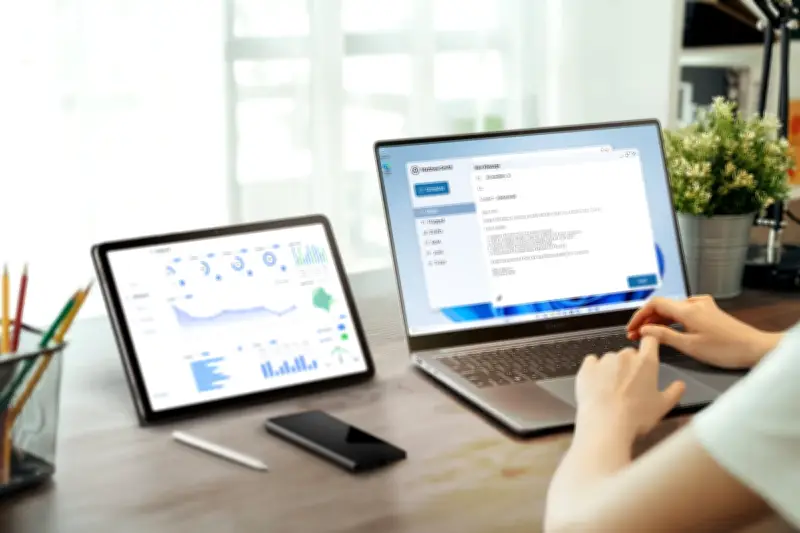
A recent survey has revealed that 70% of UK employees use their work-issued laptops for personal activities, a trend that could pose significant cybersecurity risks and impact workplace productivity.
Survey reveals widespread personal use
The study, conducted by the technology company Brother UK, found that seven out of ten workers admit to using their work laptops for non-work-related tasks. These activities include online shopping, streaming services, social media browsing, and even managing personal finances.
According to the survey, younger employees are more likely to engage in this behavior, with 84% of 18- to 34-year-olds using work devices for personal reasons, compared to 55% of those aged 55 and over.

Common personal activities on work laptops
The research detailed the most common personal tasks performed on work laptops. Online shopping topped the list, with 45% of respondents admitting to making purchases during work hours. Streaming music or videos was reported by 38%, while 32% used social media. Additionally, 28% managed their personal banking or finances, and 22% booked holidays or travel arrangements.
Despite the widespread use, many employees are unaware of the potential risks. The survey indicated that 41% of workers do not believe their personal activities pose any security threat to their employer.
Cybersecurity and productivity concerns
Cybersecurity experts warn that personal use of work devices can increase vulnerability to malware, phishing attacks, and data breaches. When employees access unsecured websites or download personal files, they may inadvertently expose their company's network to threats.
“Employees might not realize that a seemingly harmless personal download or click on a suspicious link can compromise the entire company's data,” said a cybersecurity analyst from a leading firm. “It’s crucial for businesses to implement clear policies and provide regular training on safe device usage.”
Productivity is another area of concern. The survey found that employees spend an average of 45 minutes per day on personal activities using their work laptop. Over a year, this amounts to nearly 20 full working days lost to non-work tasks.
Employer responses and recommendations
In response to these findings, some companies have tightened their IT policies, using monitoring software to track device usage or restricting access to certain websites. However, experts suggest that a balanced approach is more effective.
“Rather than outright bans, employers should foster a culture of trust and responsibility,” the analyst added. “Clear guidelines, combined with cybersecurity training, can help employees understand the boundaries while still allowing some flexibility for personal use during breaks.”
The study also highlighted that 23% of employees would be less likely to use their work laptop for personal tasks if they were aware of the security risks. This indicates that education could be a key tool in mitigating the issue.
Broader implications for remote work
With the rise of hybrid and remote working, the line between work and personal life has become increasingly blurred. The survey noted that remote workers are 20% more likely to use their work laptop for personal activities than those based in an office. This trend underscores the need for robust cybersecurity measures in distributed work environments.
As companies continue to adapt to flexible working models, addressing the personal use of work devices will remain a challenge. Balancing employee autonomy with organizational security will be essential for maintaining both productivity and data protection.