Formula 1 may have been away from our screens for over a month, but its technology has been all around us. Matt Hardy digs deeper into how F1 innovations are influencing everyday life.
Fuel Efficiency on London Buses
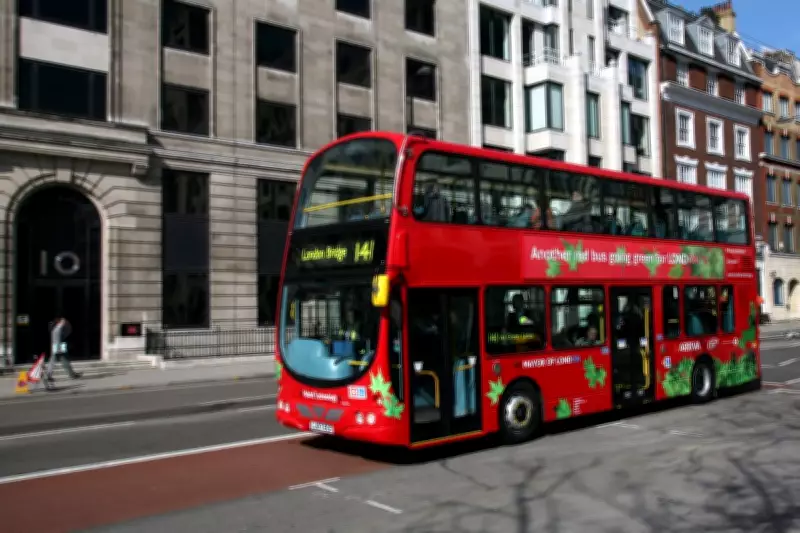
Ever sat on the famously busy – and traffic heavy – 149 bus route from London Bridge to Edmonton Green, the one that weaves its way through the City before heading through Hackney towards the Tottenham Hotspur Stadium? Well, if you have, there’s a chance the bus was saving fuel thanks to Formula 1 team Williams Racing – their technology has been used to improve fuel efficiency on the red routemaster.
But this is nothing new. The world’s premier motor racing series has long been involved with civvy street. McLaren technology is in Heathrow’s air traffic control tower, Mercedes were key to the development of a ventilator during the Covid-19 pandemic, and last week both teams, alongside Aston Martin and Williams, headed to the Cornwall Air Ambulance Trust to give the first responders a pit-stop lesson. The results? Getting a helicopter in the air has already gone from taking five minutes to four minutes and 30 seconds, with plans to lower that further to three minutes.

Formula 1 on Civvy Street
“It was an inspiring and interesting day,” Williams’ race team manager Dave Redding tells City AM. “The quick wins were from where the blood is stored, where the helmets are, which were on the third floor. If the helicopter’s in the hangar, who’s pushing it back? And the helicopter startup time and how you start the helicopter up.”
The raw nature of Formula 1’s technological space race – where nanoseconds saved on the track can be the difference between winning or losing a world title – means the sector is one of Britain’s most ambitious. F1 contributes £12bn to the UK economy every year. But that number will be, indirectly, a lot larger when fuel savings on London buses or NHS cost-cutting is taken into account.
Running Shoes Inspired by F1 Aerodynamics
Formula 1 aerodynamics firm Swiss Side has used its expertise with racing cars and adapted it to running, partnering with Salomon. Just days after Sabastian Sawe credited his sub-two hour marathon – in part, thanks to his shoes – F1 technology could shape the next challenger.
“The average consumer views a Formula 1 car as a spectacle of speed,” Swiss Side chief Jean-Paul Ballard says, “but to an engineer, it is a high-speed laboratory for the invisible forces of physics. Most people do not realise they are interacting with F1-derived technology every single hour of their lives. We didn’t just design a shoe; we applied the F1 total performance methodology to the human body to create a piece of precision-engineered equipment for the human power unit. This process was governed by a zero-tolerance validation loop. In the pit lane, if the wind tunnel doesn’t validate the digital simulation, you simply don’t race. We applied that same uncompromising rigor to the Salomon S/LAB Phantasm 3, using 3D printing to iterate complex geometries in days rather than months.”
Concerns Over Speed of Advancement
Some have privately raised concerns over the speed of advancement in Formula 1, however, with technology in places being used confidentially across sectors such as defence. It has been likened to the ongoing AI race, where firms could be seen as useful on more than just surface level.
F1 Use Beyond Motorsport
Selin Tur of Williams Grand Prix Technologies says: “In Formula 1 you’ve got quite competitive racing teams and individuals across the grids – you’re always trying to achieve those marginal gains with an innovative approach. Hence it has always been a cutting-edge technology field. So in the end whatever you prove in Formula 1 goes towards other sectors – many of our competitors have similar kinds of setups. When I talk at a defence event, people struggle understanding how Formula 1 and defence can be connected.”

Tur goes on to say that Formula 1 cars are like Lego, where every little data point can be deconstructed and rebuilt in another way for another purpose. When the season gets back underway on Sunday in Miami, it is worth taking a moment to appreciate that the 22 cars aren’t just toys or billboards for rich companies. Instead they’re global pioneers changing the game, often across the sectors you wouldn’t even consider. Next stop on this journey? Who knows.