

Mumsnet Launches Provocative National Campaign Demanding Social Media Ban for Under-16s
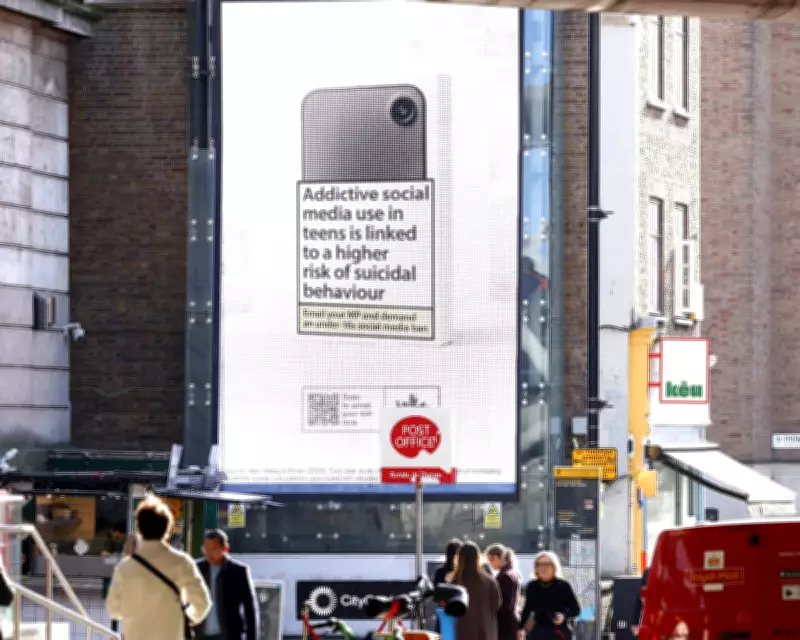
Mumsnet has launched a deliberately provocative national advertising campaign calling for a total ban on social media for all children under the age of 16. The campaign, titled 'Rage Against the Screen,' features stark health warnings deliberately styled after those found on cigarette packets, appearing on billboards and across social media platforms themselves.
Shock Tactics and Stark Health Claims
The campaign's advertisements make several direct and alarming claims about the impact of social media on young people's mental health. The ads state that spending three hours or more on social media daily makes teenagers more likely to self-harm. They further claim that teen phone addiction doubles the risk of anxiety, that social media use can significantly increase the risk of eating disorders in young people, and that addictive social media use in teens is directly linked to a higher risk of suicidal behaviour.
Each advertisement urges the public to take immediate political action by emailing their Member of Parliament to "demand an under-16s social media ban." The campaign represents the latest escalation in Mumsnet's ongoing efforts to secure stronger regulation of youth access to social media platforms.

Founder's Statement: A Call for Political Action
Justine Roberts, founder and CEO of Mumsnet, announced the campaign's launch with a powerful statement. "Families are living with the harm caused by social media every single day," Roberts said. "This isn't about parents failing to set boundaries. It's about children being exposed to products deliberately designed to be addictive. Parents are watching the consequences unfold in real time: compulsive use, lost sleep, rising anxiety and collapsing self-esteem, while the companies responsible continue to profit."
Roberts dismissed the notion that better parenting or more guidance could solve the problem, calling it "a convenient fiction." She argued, "You can't out-parent a business model built on addiction. This campaign shines a light on the damage phone addiction is doing to under-16s and calls on politicians to stop wringing their hands and take decisive action to protect children from addictive technology."
Overwhelming Parental Concern and Personal Testimony
Research conducted by Mumsnet among its user base in spring 2025 found that 92% of parents are concerned about the effect of social media on their children's mental health. More than 60% of those surveyed believe their child is addicted to their phone or to social media platforms.
The campaign has received support from individuals with direct experience of the dangers. Sedona Jamieson, a student who has experienced mental illness, welcomed the initiative. "At 15, when I first became unwell mentally with anxiety, depression and an eating disorder, I turned to social media hoping to find support," Jamieson explained. "Instead, I encountered a darker side of the internet – so-called 'recovery' spaces that were saturated with harmful content, including pro-anorexia, self-harm and suicide. Rather than offering help, these spaces risked deepening the very struggles I was trying to overcome."
Jamieson emphasised the vulnerability of young people, stating, "As young people, our developing brains make us especially susceptible to what we consume online. That makes it essential for digital platforms to prioritise safeguarding and responsible content moderation."
Political and Expert Responses: Caution Amidst Concern
The campaign launch follows a recent promise from the Prime Minister to introduce measures to curb under-16s' access to social media within "months, not years," though officials have clarified this does not necessarily mean implementing a total ban.
Dame Rachel de Souza, the Children's Commissioner for England, declined to comment directly on the Mumsnet campaign. However, she issued a statement of caution, noting that while measures to tighten online safety were vital, a social media ban for under-16s would not provide an "immediate guarantee" that children would be safer online. "Any social media ban must be enforced in such a way that it does not drive children to other, darker parts of the internet," she warned.

Government and Medical Community Weigh In
A government spokesperson acknowledged the widespread concern, stating, "Parents are deeply worried about the effects of social media on their children, and we're determined to get this right. Our swift consultation will look at everything from age limits and safer design features to a social media ban. We are listening to a wide range of voices including parents, teachers, young people and experts to give young people the childhood they deserve and prepare them for the future. We will set out our plans in the summer."
The Royal College of Psychiatrists released a detailed statement in response to the campaign's themes. "Protecting children's mental health must be a public health priority whether they are online or engaging with the world away from social media," the statement read. It highlighted a "growing body of evidence" suggesting that early and unrestricted access to social media can have a lasting, damaging impact on young people's mental health, exposing them to harmful content before they are developmentally ready.
The College argued for greater regulation, stating that social media providers "must be compelled to share more of their anonymised data with independent researchers" to better understand the relationship between algorithms, online activity, and mental health. It also advised that parents and carers support children by having open discussions about online safety and ensuring a balance between screen time and other activities like socialising, exercise, and sleep.
The Mumsnet campaign has ignited a fierce national debate, placing immense pressure on policymakers to address what many parents and experts now describe as a public health crisis linked to digital technology and young minds.





