

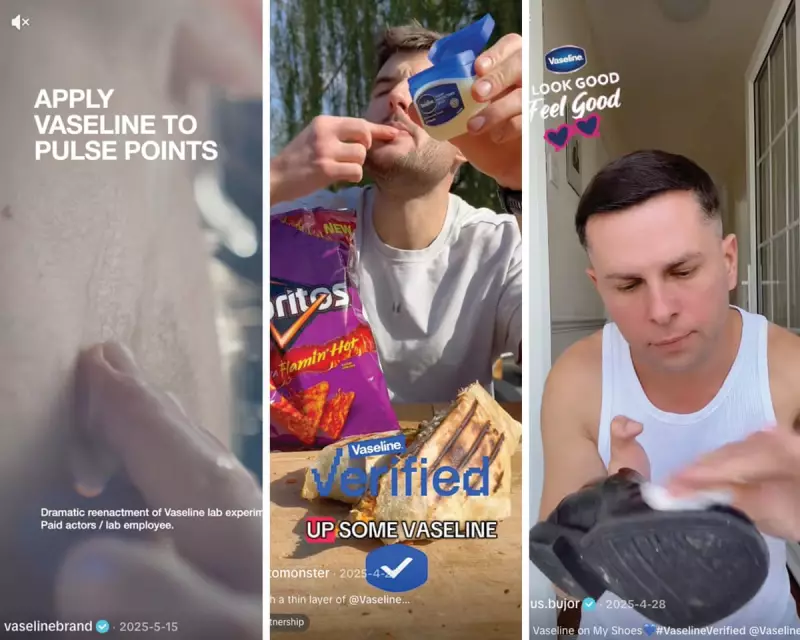
In a remarkable digital-age twist, a humble petroleum jelly invented in the 1870s has become the unlikely star of TikTok, prompting its corporate owner to radically rethink a multimillion-pound advertising strategy.
From Oil Rigs to Algorithmic Fame
Vaseline, first manufactured in the 1870s by chemist Robert Cheeseborough after he observed oil rig workers using a drilling byproduct, is experiencing a renaissance. The product is now at the centre of a viral trend on TikTok, where users showcase its surprising versatility in countless 'life hacks'.
These user-generated videos have touted the jelly as a remedy for cleaning shoes, prolonging the scent of perfume, fixing squeaky doors, and even solving the perennial snack-time problem of crisp flavouring sticking to fingers.

Unilever's 'Social Listening' Strategy in Action
Marketers at Unilever, the multinational conglomerate that owns the Vaseline brand, detected this surge in online chatter. Instead of dismissing it, they embraced a strategy known as 'social listening'—monitoring online platforms to inform business decisions.
They tasked their own scientists to test the popular hacks. Claims that Vaseline could reduce the burn of spicy food on lips, prolong perfume, and restore leather were validated. However, suggestions it could whiten teeth or lengthen eyelashes were debunked.
The company then amplified these findings by collaborating with the content creators themselves. Selina Sykes, the Unilever executive leading the social media push, stated the goal is to authentically join the conversation. "How do brands authentically become part of the conversation?" Sykes asked. "If you can make sure your brand is shared by other people, talked about by other people, that is how you can build trust and relevance."
The Seismic Shift in Advertising Spend
This phenomenon has convinced Unilever's leadership to dramatically increase investment in content creators. The company's new chief executive, Fernando Fernández, has indicated the aim is to devote half of its colossal advertising budget to social media content.
This reflects a broader media convergence where large companies operate almost like production houses, partnering with hundreds of creators. Leon Harlow, group commercial director at talent agency YMU, noted, "A lot of brands are telling us people trust recommendations from the individuals they follow more than they trust ads."
The data underscores the trend: spending on the creator economy is growing four times faster than the overall media industry. In the US, it has more than doubled since 2021 and is projected to reach $37bn (£28bn) by 2025.
The shift comes amid declining traditional media revenues. In the UK, ad income for major broadcasters like ITV, Channel 4, and Channel 5 has fallen by over £600m in real terms since 2019.
A New Model, But Room for the Old?
Despite the huge changes, experts believe traditional advertising still has a role. Both Harlow and Sykes pointed to events like the Super Bowl as retaining massive reach and cultural impact. "One of the highest return-on-investment media opportunities is still the Super Bowl," Sykes remarked, emphasising that it's about capturing attention wherever it resides.
The Vaseline story exemplifies a fundamental rewrite of the marketing rulebook, proving that even a 150-year-old product can find new life—and lucrative new audiences—through the power of community-driven social media trends.






