

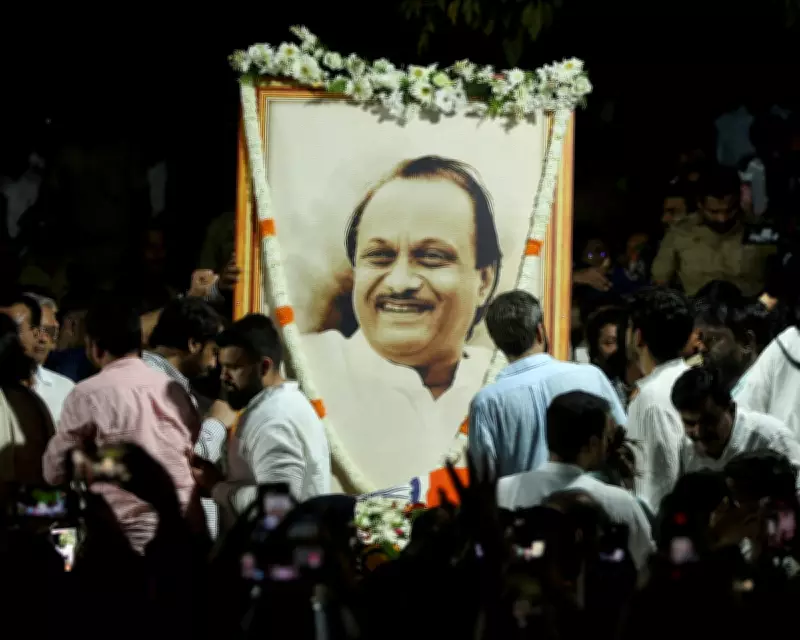
The Indian state of Maharashtra has been plunged into mourning following the tragic death of deputy chief minister Ajit Pawar in a devastating plane crash. The veteran politician, a towering figure in the region's political landscape for decades, was killed when his aircraft crashed and burst into flames during a failed landing attempt in Baramati on Wednesday.
A State in Mourning
Authorities have declared three full days of official mourning across Maharashtra in response to the shocking incident. The crash occurred as Pawar was travelling back to campaign in his home constituency, with the aircraft catching fire upon impact with the ground. Tragically, there were no survivors from the flight, which also claimed the lives of two members of Pawar's staff and two crew members.
Political Legacy and Immediate Aftermath
Thousands of grief-stricken supporters and followers flooded the streets of Baramati on Thursday to pay their final respects during Pawar's funeral ceremony. The veteran politician was cremated with full state honours, with home minister Amit Shah among the dignitaries expected to attend the solemn proceedings.

Prime Minister Narendra Modi led the tributes, describing Pawar as a "leader of the people" who was "widely respected as a hardworking personality at the forefront of serving the people of Maharashtra." This recognition reflects Pawar's remarkable political career during which he served as deputy chief minister of Maharashtra on six separate occasions under various coalition governments.
Creating a Political Vacuum
Pawar's sudden death has created a significant power vacuum in Maharashtra's complex political arena. Born into a prominent political family, he joined the Nationalist Congress Party (NCP) in 1980, the party founded by his uncle Sharad Pawar. For years, Ajit Pawar was viewed as the natural successor to take over leadership from his uncle, though their differing political styles created noticeable tension within the party.
A Dramatic Political Journey
The politician's career took a dramatic turn in 2023 when, after an initial failed rebellion in 2019, he formed a faction within the NCP and broke away to join the Hindu nationalist Bharatiya Janata Party (BJP) as they seized power in Maharashtra. This bold move effectively splintered the NCP into two rival camps, with Pawar's faction taking the party name, symbol, and several influential leaders and legislators with him.
This strategic manoeuvre significantly undermined his once-powerful uncle's political standing. Following the BJP-led alliance's victory in the 2024 state elections, Pawar was once again appointed as deputy chief minister, cementing his position as a key political operator in the region.
Uncertain Future for NCP
In recent months, discussions had begun about potentially reuniting the two NCP factions, raising hopes for political reconciliation. Pawar's untimely death now leaves critical questions unanswered regarding his political successor and whether the fractured NCP factions might eventually merge. The coming weeks are likely to see intense political manoeuvring as various factions position themselves in the wake of this unexpected leadership vacuum.
The crash site in Baramati has become a focal point for both mourning and investigation, with rescue operations continuing as authorities work to determine the exact cause of the fatal incident. As Maharashtra grieves the loss of one of its most experienced political figures, the state faces an uncertain political future without the man who had become a central figure in its governance for generations.






