

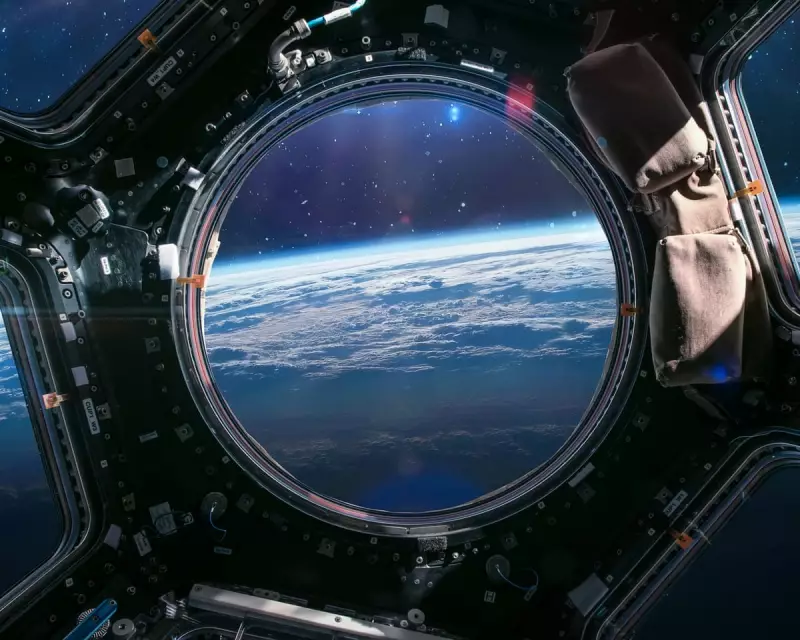
In an unprecedented move for the United States space programme, four astronauts have begun their journey back to Earth from the International Space Station (ISS) following a medical issue. This marks Nasa's first-ever medical evacuation from the orbiting laboratory in its 65-year history of human spaceflight.
A Deliberate, Non-Emergency Return
The crew, comprising American astronauts Mike Fincke and Zena Cardman, Russian cosmonaut Oleg Platonov, and Japanese astronaut Kimiya Yui, undocked from the ISS at 2220 GMT on Wednesday aboard a SpaceX Dragon capsule. Their mission, which began in early August, has been cut approximately one month short.
Nasa officials have been clear that the return is not classified as an emergency. The agency has declined to specify which crew member is affected or detail the medical condition, citing privacy, but confirmed the individual "was and continues to be in stable condition", according to spokesperson Rob Navias.

"First and foremost, we are all OK. Everyone on board is stable, safe, and well cared for," stated pilot Mike Fincke in a social media post. He described the decision as "deliberate" to allow for comprehensive medical evaluation on the ground.
Historical Context and Crew Resilience
While this is a first for Nasa, other spacefaring nations have faced similar situations. The Soviet Union, for instance, had to bring cosmonaut Vladimir Vasyutin home early from the Salyut 7 station in 1985 due to a serious illness.
Computer models had previously suggested a medical evacuation from the ISS might be needed roughly every three years, a statistic that had, until now, not materialised for the American space agency. The Crew-11 quartet had been trained for such contingencies, and senior Nasa official Amit Kshatriya praised their handling of the situation.
Astronaut Zena Cardman reflected on the crew's bond before departure, saying, "What was not surprising to me was how well this crew came together as a family to help each other and just take care of each other."
Implications for ISS Operations
The early departure has immediate operational consequences for the station. Three crew members remain onboard: American astronaut Chris Williams and Russian cosmonauts Sergey Kud-Sverchkov and Sergei Mikaev, who arrived in November.
However, Nasa stated it must stand down from all spacewalks, both routine and emergency, until another crew arrives. Spacewalks require a two-person team outside with backup support from inside the station, and the reduced crew size makes this untenable for now.
The incident also highlights the ongoing, crucial cooperation between Nasa and Russia's Roscosmos on the ISS—one of the few enduring areas of bilateral partnership between the US and Russia. The agencies routinely transport each other's citizens to and from the outpost, which has been continuously inhabited since 2000.
The SpaceX Dragon carrying the four crew members is scheduled to splash down in the Pacific Ocean, off the coast of California, at approximately 0840 GMT on Thursday.






