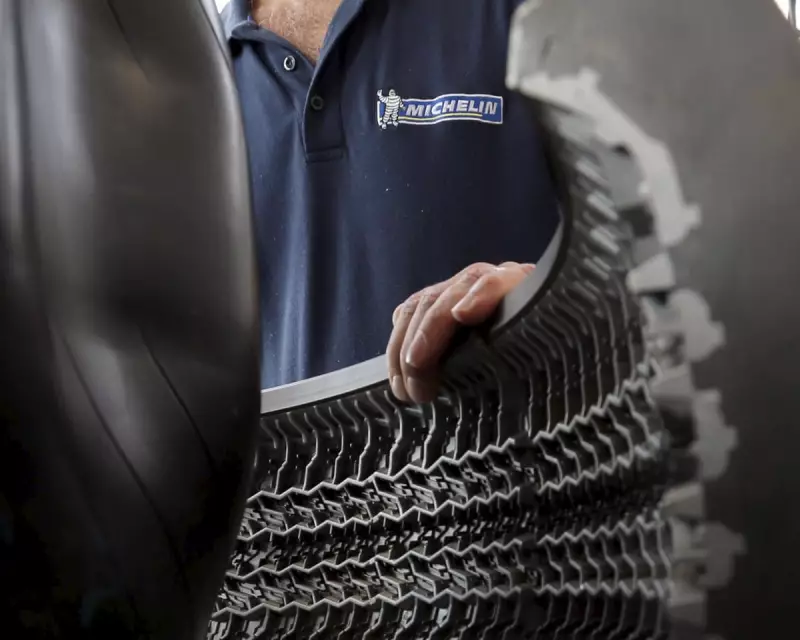
Customs records indicate that Russia has continued to import aviation tyres manufactured by the French company Michelin, despite international sanctions and the firm's own efforts to halt trade following the invasion of Ukraine.
Persistent Trade via Intermediary Networks
New analysis of trade data suggests that a network of intermediary companies, including one apparently based in the United Kingdom, has facilitated the ongoing supply of these critical components. There is no suggestion of wrongdoing by Michelin, which ceased all exports to Russia in March 2022 and closed its commercial activities there.
The records, examined by the Economic Security Council of Ukraine, show that between October 2024 and March 2025, Russia received 2,687 Michelin tyres with a value exceeding $7 million (£5.2 million). This follows a previous Guardian report in September 2024 which revealed $28 million worth of shipments had arrived in 2023.

The Complex Supply Chain and Key Players
The shipments for the full year of 2024 appear to have been orchestrated by intermediaries that are not direct clients of Michelin. Companies based in Turkey, Spain, Saudi Arabia, and India are implicated.
Notably, one firm named in the records is General Trade Solutions (UK). Investigations reveal there is no company registered under that exact name with the UK's Companies House, raising questions about its legitimacy.
The largest Russian importer of these tyres in 2024 was Melaris LLC, an entity identified as a supplier to the Russian military-industrial complex. Michelin has stated that none of the tyres seemingly exported are for military use.
Corporate Response and Calls for Stronger Due Diligence
A Michelin spokesperson affirmed the company's commitment to scrupulously complying with sanctions, highlighting dedicated internal processes. The spokesperson said enhanced controls had been implemented and noted that the recent figures indicated a significant reduction in circumventions.
However, Michelin also cast doubt on the data's accuracy, citing risks of counterfeiting and false declarations, and emphasised the complex, standardised nature of the aviation tyre industry's supply chain.
Roman Steblivskyi, a policy expert with the Economic Security Council of Ukraine, argued that Michelin should take a more proactive approach to prevent illicit re-exports. He pointed out a gap in the company's duty of care frameworks, which address human rights and minerals but not the monitoring of product supply to states under sanctions.
Under France's duty of care law, large companies must publish plans to mitigate risks in their operations and supply chains. Michelin stated that while export control risks are not explicitly required by this legislation, the group has consistently reviewed and strengthened its sanctions compliance policy to address diversion risks.